
Proster LCR Meter Multimeter
4.5Editor score
Rotatable LCD for easy reading
Zero adjustment for capacitance
Comprehensive test lead kit
This guide compares the top Lcr Meter options for precision component testing, reviewing features, accuracy, and usability for electronics professionals.
An Lcr Meter is essential for accurately measuring inductance, capacitance, and resistance in electronic components. Choosing the right tool ensures reliable diagnostics and efficient troubleshooting in repair and design workflows.
We evaluated ten leading models based on accuracy, frequency range, display quality, and ease of use. Our analysis covers handheld units, benchtop devices, and specialized testers to help you find the best fit.
Each pick highlights key specifications, pros, cons, and ideal use cases. Prices and availability change frequently, so verify current details before purchasing to ensure you get the best value for your needs.
4.5Editor score

4.7Editor score

4.4Editor score
This table provides a side-by-side overview of the top ten Lcr Meter models, highlighting their core specifications to help you compare features quickly and make an informed decision.

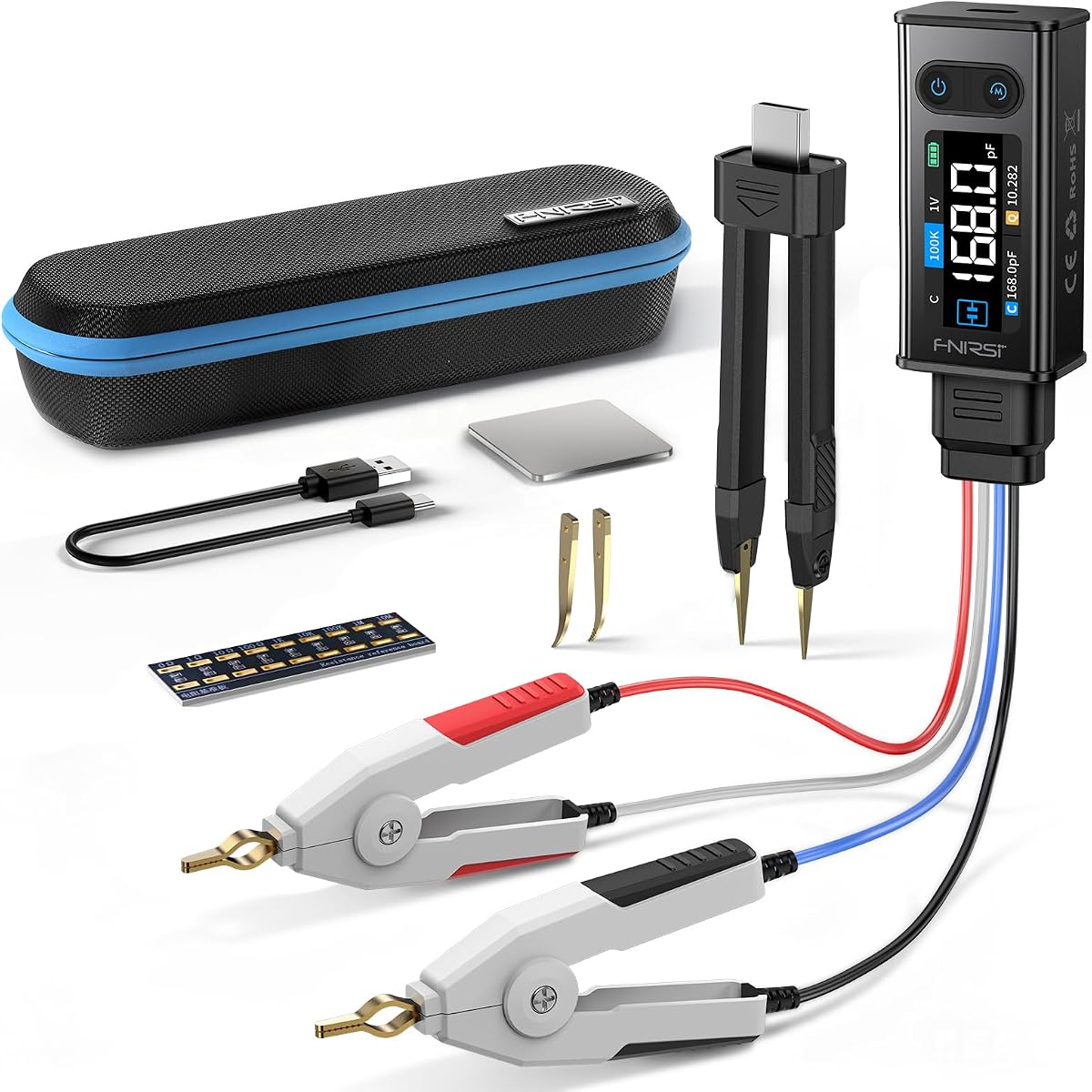


The FNIRSI LC1020E stands out as a top-tier Lcr Meter with a 2.8-inch color TFT display and dual parameter readout. Its 4.7 rating reflects high user satisfaction for precision and speed in component testing.
We may earn a commission when you buy through this link, at no additional cost to you.
It offers five test frequencies up to 100kHz and supports sorting modes that calculate relative error against preset tolerances. The adjustable test voltage and internal bias settings ensure reliable measurements across various component types.
Users must perform open and short calibration before use and avoid measuring live circuits. These steps ensure accuracy and protect the device, making it best suited for controlled environments.
Ideal for electronics professionals and advanced hobbyists, this meter balances performance and usability. Its robust build and comprehensive feature set make it a strong investment for routine diagnostics.
The sorting mode helps quickly identify out-of-spec components by comparing readings against nominal values with alert functions.
Type-C charging and firmware update capabilities keep the device current and powered efficiently over long periods.
We may earn a commission when you buy through this link, at no additional cost to you.
This Proster model offers an accessible entry into Lcr Meter testing with a rotatable LCD and zero adjustment feature. Its 4.5 rating highlights reliability for hobbyists and repair work.
We may earn a commission when you buy through this link, at no additional cost to you.
It measures inductance capacitance and resistance across multiple ranges with data hold to freeze readings. The included kit provides all necessary leads and tools for immediate use out of the box.
While it lacks advanced frequency selection, it covers common component testing needs well. The zero adjustment function is particularly useful for small capacitance values where lead effects matter.
Perfect for beginners and casual users, this meter delivers solid performance without a high cost. It is an excellent choice for educational projects and basic troubleshooting tasks.
The rotatable LCD allows comfortable viewing at any angle on the bench or in the field.
All necessary test leads and accessories are included, saving the need for additional purchases.
We may earn a commission when you buy through this link, at no additional cost to you.
The MATRIX MCR5200 is a benchtop powerhouse with 0.1 percent accuracy and support for frequencies up to 200kHz. Its 4.4 rating indicates strong performance for professional environments.
We may earn a commission when you buy through this link, at no additional cost to you.
It includes RS232C and USB host ports for data logging and remote control. The comparator function automates pass/fail judgments with audible alarms, streamlining high-volume testing.
Its fixed location limits field use, but it excels in labs and production lines. The data saving features ensure traceability and integration with analysis software.
Best suited for engineers and quality control teams, this meter offers precision and automation that justify its cost. It is a top choice for critical component verification.
Software support allows saving data to PC or USB stick for detailed analysis and record keeping.
The built-in comparator with flexible alarming modes automates sorting and speeds up workflow.
We may earn a commission when you buy through this link, at no additional cost to you.
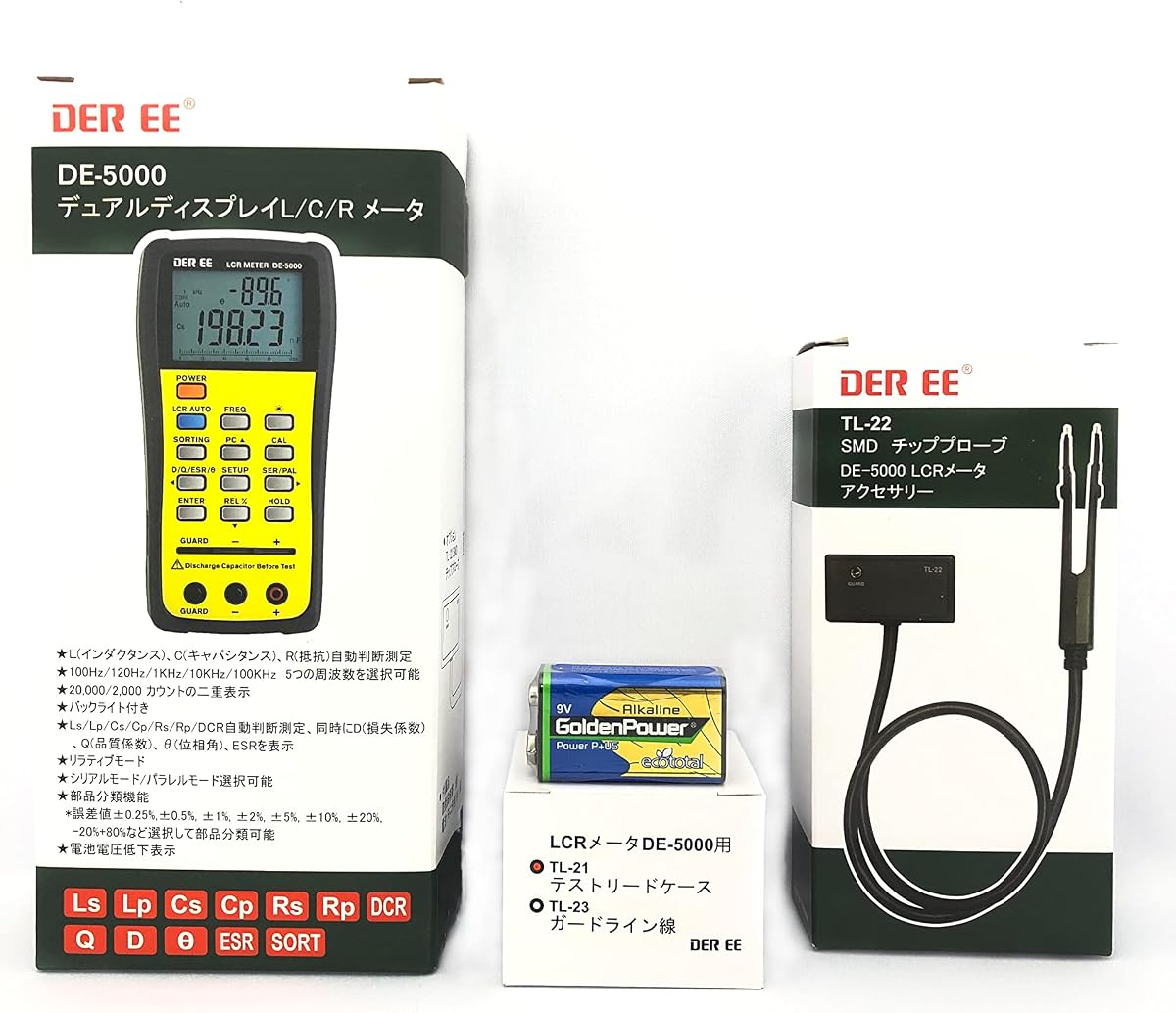
The DE-5000 is a reliable handheld Lcr Meter with auto ranging and dual display functionality. Its 4.6 rating shows consistent accuracy and user friendliness for general electronics work.
We may earn a commission when you buy through this link, at no additional cost to you.
It supports series or parallel measurement modes automatically based on component impedance. The five test frequencies cover a wide range of component behaviors from audio to RF.
Users should note that IR to USB cable is an option not included in the standard kit. This limits data transfer unless purchased separately.
A solid choice for field technicians and hobbyists, it balances portability with detailed readouts. Its intuitive mode selection makes it easy to adapt to different testing scenarios.
Auto mode selects series or parallel configuration to suit the device under test impedance automatically.
The sorting mode helps users quickly organize components by tolerance with visual and audio alerts.
We may earn a commission when you buy through this link, at no additional cost to you.
This version of the DE-5000 comes as a complete set with alligator and SMD test leads. Its 4.6 rating reflects the added convenience and certified quality of the kit.
We may earn a commission when you buy through this link, at no additional cost to you.
The backlit display ensures readability in dim environments, and the ISO certification adds confidence in build quality. It supports detailed tolerance settings for precise component verification.
Carrying the full set may be slightly less convenient than a minimal handheld, but it saves time on setup. The included cases help keep leads organized and protected.
Ideal for professionals needing a ready-to-use solution, this kit offers everything required for immediate deployment. It is particularly useful for repair shops and field service teams.
ISO 9001 certification ensures the device meets high standards for manufacturing consistency and reliability.
Inclusion of both alligator and SMD leads supports a wide variety of component sizes and types.
We may earn a commission when you buy through this link, at no additional cost to you.
This Proster LCR meter focuses on core component testing with a focus on usability. Its 4.5 rating indicates it meets expectations for hobbyists and basic lab work.
We may earn a commission when you buy through this link, at no additional cost to you.
The rotatable LCD and data hold function enhance ergonomics during extended sessions. A storage bag and 18-month guarantee add value and peace of mind for the buyer.
While it lacks advanced connectivity or frequency flexibility, it covers fundamental needs well. The 9V battery requirement is standard but limits rechargeable options.
Best for educational settings and general repair, this unit offers reliable performance at a low cost. It is a practical tool for those learning electronics diagnostics.
The rotatable screen and data hold allow users to record readings without holding the meter.
An 18-month guarantee provides assurance against defects and supports long-term use.
We may earn a commission when you buy through this link, at no additional cost to you.
The FNIRSI LCR-ST2 combines a compact form with tweezer testing for SMD and through-hole parts. Its 4.3 rating reflects its niche appeal for space-constrained workflows.
We may earn a commission when you buy through this link, at no additional cost to you.
It includes built-in magnets to secure the unit on metal surfaces, freeing hands for manipulation. The Type-C charging ensures convenient power management without disposable batteries.
The small 1.47-inch display may be harder to read than larger screens, but it suffices for quick checks. Tweezer tips should be handled with care to maintain accuracy.
Perfect for field repairs or dense PCB work, this meter excels in portability. It is a valuable addition for technicians who need fast component identification without bulky tools.
The built-in magnet allows the meter to stick to metal benches, improving workflow efficiency.
Type-C charging makes recharging simple and aligns with modern device standards.
We may earn a commission when you buy through this link, at no additional cost to you.
Peak Atlas LCR45 offers enhanced resolution for precise small value measurements. Its 4.8 rating highlights user satisfaction with its accuracy and ease of use.
We may earn a commission when you buy through this link, at no additional cost to you.
The fluid measurement system with hold function supports steady readings even in noisy environments. It supports both automatic and manual component selection for flexibility.
While it lacks extensive connectivity, its simplicity is a benefit for focused testing. The one year warranty adds confidence in the manufacturer's commitment to quality.
Ideal for precision bench work, this meter provides reliable results without complexity. It suits those who prioritize accuracy over extensive automation features.
Enhanced resolution ensures small values like 0.2uH and 0.2pF are measured accurately.
An easy menu system reduces learning time and allows quick access to settings.
We may earn a commission when you buy through this link, at no additional cost to you.
B&K Precision 879B brings professional reliability to handheld LCR testing with dual and backlit displays. Its 4.5 rating indicates strong performance for demanding environments.
We may earn a commission when you buy through this link, at no additional cost to you.
It supports universal testing with standard accessories like banana to alligator leads. The backlit display ensures visibility in varied lighting conditions during field work.
The lack of advanced sorting or data export limits its use in high-volume QA. However, it remains a trustworthy tool for general component diagnostics.
Best for technicians needing brand reliability, this meter balances features and portability. It fits well into professional repair and service workflows.
B&K Precision is known for durable professional tools, offering confidence in long-term use.
Dual displays provide simultaneous data, and backlighting ensures readability in low light.
We may earn a commission when you buy through this link, at no additional cost to you.
The Extech LCR200 is a compact unit with a built-in fixture for quick testing. Its 4.4 rating reflects reliable performance for basic component measurements.
We may earn a commission when you buy through this link, at no additional cost to you.
It supports open and short calibration to eliminate stray impedance. The auto power off saves battery but can be overridden when needed for continuous use.
It covers primary and secondary parameters well for general diagnostics. However, it lacks the frequency range found in higher-end models.
Suitable for general repairs and education, this meter offers straightforward usability. It is a practical tool for those needing a simple solution.
The built-in fixture simplifies testing of through-hole components without extra leads.
Auto power off with override allows flexible power saving during extended test sessions.
We may earn a commission when you buy through this link, at no additional cost to you.
Selecting the right Lcr Meter depends on your specific testing needs budget and work environment. This guide outlines key factors to consider before making a purchase.
Accuracy determines how close your readings are to the true value while resolution shows the smallest detectable change. For professional work prioritize models with 0.1 percent accuracy and high counts like 19999.
Look for specifications that match your component tolerance requirements to avoid errors in critical applications.
Different components behave differently at various frequencies so choose a meter with frequencies spanning 100Hz to 100kHz or higher. Wider ranges support RF and high-speed circuit testing better.
Ensure the meter supports the frequencies used in your specific circuit designs for reliable measurements.
Features like series parallel modes and sorting help automate workflows and reduce manual calculations. Dual parameter displays allow simultaneous viewing of primary and secondary values like D and Q.
Prioritize models with sorting and dual display if you perform batch testing or complex diagnostics.
A clear backlit or color TFT display improves readability in all lighting conditions. User friendly menus and rotatable screens enhance comfort during extended use sessions.
Choose a display size and interface that suits your working environment to avoid eye strain.
Calibration options like open and short calibration help eliminate stray impedance for accurate readings. Regular calibration ensures consistent performance over time especially in lab settings.
Select models with easy calibration procedures to maintain measurement integrity without specialized tools.
Handheld units offer mobility for field work while benchtop models provide stability and precision. Consider weight and battery life if you plan to carry the device frequently.
Choose portable designs with rechargeable batteries for efficiency and convenience on the go.
USB RS232 and Bluetooth ports enable data transfer to computers for analysis and logging. Advanced models support SCPI commands for integration with automated test systems.
Ensure connectivity options match your data management needs to streamline reporting processes.
Budget models cover basic needs while premium units offer advanced features and higher accuracy. Balance cost with essential features to avoid paying for unnecessary capabilities.
Invest in a model that meets current requirements and allows room for growth as needs evolve.
Always perform open and short calibration before measuring components to remove lead and fixture effects. This ensures the meter baseline is accurate for precise readings.
Fully discharge capacitors and inductors before testing to prevent damage to the device and ensure safety. Never measure live circuits to avoid inaccurate results or harm to the meter.
Store the meter in a dry place and keep test leads clean and free from damage. Regular calibration and gentle handling extend the device lifespan and maintain accuracy.
An Lcr Meter measures inductance, capacitance, and resistance of electronic components. It helps technicians and engineers verify component values, troubleshoot circuits, and ensure quality in production.
Choose handheld units for portability and field work while benchtop models suit lab environments needing high precision and stability. Consider your typical workspace and frequency of movement.
Calibration removes errors caused by test leads and fixtures ensuring readings reflect the component alone. Regular calibration maintains accuracy especially when working with sensitive or high value parts.
Frequencies from 100Hz to 100kHz cover most general electronics. RF and specialized applications may need higher frequencies so select a model matching your component types.
Yes, Lcr Meters measure capacitance and equivalent series resistance effectively. Always discharge capacitors before testing to prevent damage and ensure accurate readings.
Most handheld models use rechargeable or standard batteries for portability. Benchtop units often require AC power. Check battery options for convenience and runtime before purchase.
The FNIRSI LC1020E offers the best balance of features and accuracy for most users while the Proster LCR Multimeter provides an affordable entry point. High precision needs are met by the MATRIX MCR5200 benchtop model.
Consider your specific testing environment and component types when choosing. Prioritize accuracy calibration and frequency range for professional work while portability suits field technicians.
Prices and availability change regularly so verify current details before purchasing. This guide helps you select a reliable Lcr Meter tailored to your requirements.