
Askar 71F Flat-Field Telescope 71mm
4.9Editor score
Quadruplet air-Spaced APO
Lightweight design
Field flattening optics
Discover the top apochromatic refractors for astronomy and astrophotography. Our expert guide compares optics, portability, and performance to help you choose.
Apochromatic refractors are essential for astronomers seeking sharp, color-free images of the night sky. These telescopes use specialized glass to eliminate chromatic aberration, ensuring crisp views of planets and deep-sky objects.
We compared ten top-rated models based on optical quality, build durability, portability, and value. Each product was evaluated for its suitability in both visual observing and serious astrophotography projects.
This guide highlights the strengths and weaknesses of every option to help you decide quickly. Note that prices and availability change frequently, so always check current listings before purchasing.
4.9Editor score

4.5Editor score

5.0Editor score
This table provides a side-by-side overview of the key specifications and features for each apochromatic refractor reviewed in this guide.




The SVBONY SV550 AP0 stands out as a top choice for astrophotography. It features an 80mm aperture with triplet optics that eliminate color fringing. This makes it perfect for capturing detailed images of nebulae and star clusters.
We may earn a commission when you buy through this link, at no additional cost to you.
Its air-spaced triple optical design ensures minimal chromatic aberration. The 2.5-inch magnesium alloy dual-speed focus mount reduces weight and vignetting. Extinction measures inside the barrel further improve contrast for deep-sky targets.
While it lacks a mount, the OTA is lightweight and portable. The focus travel is sufficient for most accessories. Users should expect a slight learning curve with the focusing mechanism.
This scope is ideal for serious hobbyists who want professional-grade optics. It balances performance and price effectively. We recommend it for anyone entering astrophotography or upgrading from simpler refractors.
The triplet design uses S-FPL51 ED glass to correct blue-edge aberration. This results in crisp images across the field of view.
Extinction barriers and a dual-speed focuser ensure precise focusing and reduced light scatter. These features enhance image clarity significantly.
We may earn a commission when you buy through this link, at no additional cost to you.
The Explore Scientific ED80 Essential offers brilliant views thanks to its high-quality optics. It is designed with portability in mind for spontaneous stargazing. The 80mm aperture captures enough light for detailed planetary imaging.
We may earn a commission when you buy through this link, at no additional cost to you.
FCD1 HOYA ED glass produces stunning details and reduces chromatic aberration. The air-spaced triplet design helps eliminate color fringing. Users benefit from a reliable collimation system for tight stars.
The 480mm focal length makes it compact. However, the dew shield may require careful handling in humid conditions. Some users find the collimation system a bit finicky.
This telescope is great for travelers who need a reliable scope. It balances quality and convenience well. We suggest it for those who value portability without sacrificing optical performance.
The genuine ED glass ensures excellent transmission and color correction. This enhances the clarity of deep-sky objects.
Based in the USA, Explore Scientific provides strong customer service. This adds peace of mind for long-term ownership.
We may earn a commission when you buy through this link, at no additional cost to you.
This bundle provides a complete solution for deep-sky astrophotography. The SV209 field flattener corrects field curvature effectively. It supports both half-frame and full-frame cameras for versatile imaging.
We may earn a commission when you buy through this link, at no additional cost to you.
The magnesium alloy focus mount reduces weight significantly. Extinction barriers enhance contrast for faint targets. The 180mm dovetail plate offers stability for heavy accessories.
Users must handle the camera setup carefully. The 55mm back focal length needs precise alignment. This may take time for beginners but is manageable.
This kit is perfect for serious photographers wanting a ready-to-go setup. It saves money compared to buying components separately. We highly recommend it for efficiency and performance.
The SV209 flattener ensures sharp stars across the entire image. This prevents the typical curved edges seen in other telescopes.
The hollow dovetail plate balances weight well. This improves tracking accuracy during long exposures.
We may earn a commission when you buy through this link, at no additional cost to you.
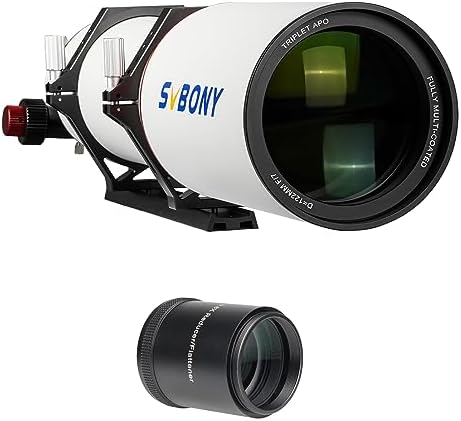
The 122mm aperture gathers more light for fainter deep-sky objects. This telescope features a comfortable carrying handle for easier transport. The FPL-51 triplet lens provides excellent correction.
We may earn a commission when you buy through this link, at no additional cost to you.
Users benefit from sharper images compared to doublets. The portable design allows quick setup anywhere. It is suitable for both photography and visual observation.
The weight is manageable but heavier than 80mm scopes. The price is high, reflecting the larger optics. Setup is straightforward with the included accessories.
This is a top choice for those needing larger apertures. It offers high limiting magnitude for dim targets. We suggest it for advanced astrophotographers.
The 122mm aperture captures significantly more light. This reveals faint objects that smaller scopes miss.
The integrated handle makes it easy to carry. This facilitates spontaneous trips to dark sky sites.
We may earn a commission when you buy through this link, at no additional cost to you.
The Askar 71F is an affordable and high-quality self-flattened OTA. It weighs only 3kg total, making it incredibly portable. The quadruplet optics provide excellent correction for imaging.
We may earn a commission when you buy through this link, at no additional cost to you.
Its design is perfect for birding and visual astronomy too. The focus can rotate 360 degrees for flexible composition. Stray light is reduced by high-quality matte paint.
The aperture is smaller than others, limiting deep-sky reach. However, for beginners or travelers, it is ideal. The optical quality rivals much more expensive scopes.
This telescope offers the best value on the market. It is versatile and easy to use. We recommend it for anyone on a budget who demands quality.
Weighing just 3kg, it is easy to transport. This reduces fatigue during long imaging sessions.
It serves well for both astronomy and terrestrial viewing. This dual purpose adds to its value.
We may earn a commission when you buy through this link, at no additional cost to you.
The SV503 offers a 102mm aperture for bright, detailed views. It features an aluminum retractable hood to prevent dew. The dual-speed focuser allows precise adjustments for critical focus.
We may earn a commission when you buy through this link, at no additional cost to you.
FMC coating improves light transmission and reduces reflections. S-FPL51 ED glass minimizes color fringing. The focus travel is generous for various accessories.
The telescope is heavier than smaller models. It may require a sturdy mount for stability. However, the optical performance is excellent for visual use.
This scope is great for visual observers and beginners. It balances aperture and affordability well. We recommend it for those prioritizing visual clarity.
The dual-speed focuser ensures accurate focus lock. This is critical for both visual and imaging use.
The retractable hood blocks stray light and prevents dew. This protects the objective lens during observation.
We may earn a commission when you buy through this link, at no additional cost to you.
This bundle combines a 122mm aperture with a focal reducer. The 0.8X reducer provides a wider field of view for imaging. The SV209 flattener corrects field curvature effectively.
We may earn a commission when you buy through this link, at no additional cost to you.
Users benefit from clear images of fainter deep-sky objects. The carrying handle makes transport easier despite the weight. The optical design uses FPL-51 triplet lenses.
The reducer requires precise calibration for best results. The cost is high compared to single units. However, it saves money and ensures compatibility.
This is an excellent choice for wide-field imaging. It balances performance and convenience. We suggest it for serious astrophotographers.
The focal reducer allows imaging large nebulae easily. This significantly expands the field of view.
The field flattener ensures straight stars at edges. This prevents common field curvature issues.
We may earn a commission when you buy through this link, at no additional cost to you.
The SV550 122mm triplet kit offers a complete package. It includes a focal reducer for astrophotography. The aperture captures more light for detailed deep-sky images.
We may earn a commission when you buy through this link, at no additional cost to you.
Users enjoy clear and sharp views. The carrying handle improves portability despite the weight. It is suitable for both photography and visual observation.
The price is high, reflecting the optical quality. The weight requires a sturdy mount. Setup is easy with the included accessories.
This is a top choice for travelers needing large optics. It balances performance and portability well. We recommend it for advanced users.
The triplet design ensures excellent color correction. This results in sharp, high-contrast images.
The handle allows easy lifting and moving. This simplifies setup at remote locations.
We may earn a commission when you buy through this link, at no additional cost to you.
This kit includes the SV550 80F6 OTA and a flattener. The triplet structure improves blue-edge correction. Sharp images are delivered across the field.
We may earn a commission when you buy through this link, at no additional cost to you.
The field flattener corrects field curvature for photography. It is designed specifically for this OTA. The carrying handle improves safety during transport.
Users should expect image inversion with eyepieces. The flattener requires precise alignment. This may be tricky for beginners.
This is an excellent all-in-one solution. It balances portability and optical quality. We suggest it for intermediate astronomers.
The included flattener ensures sharp edges. This prevents curved stars in photos.
Triplet optics minimize color fringing. This improves image fidelity significantly.
We may earn a commission when you buy through this link, at no additional cost to you.
This bundle provides a 122mm refractor with a guide camera. The SV905C camera is sensitive for autoguiding. It features a 1.23-megapixel CMOS sensor for precision.
We may earn a commission when you buy through this link, at no additional cost to you.
The guide camera offers high peak QE for faint stars. The scope uses a FPL-51 triplet for sharp detail. It is suitable for deep-sky photography.
The price is high for a complete imaging setup. Camera compatibility may vary with some models. However, it includes essential components.
This is an ideal choice for beginners starting astrophotography. It removes guesswork in gear selection. We recommend it for those wanting ready-to-go imaging.
The guide camera ensures accurate tracking. This is critical for long exposures.
The FPL-51 triplet provides excellent clarity. This ensures high-quality final images.
We may earn a commission when you buy through this link, at no additional cost to you.
Selecting the right apochromatic refractor depends on your specific needs and budget. Here are the key factors to consider.
Aperture determines light gathering capability. Larger apertures capture more faint details but add weight.
Choose an aperture that balances performance with portability.
Focal ratio affects field of view and exposure time. Lower ratios are faster for wide-field imaging.
Select a ratio that suits your target objects and camera.
APO designs use ED glass to minimize aberration. Triplet or quadruplet optics offer better correction.
Prioritize high-quality glass for color accuracy.
Weight and size impact transport ease. Lightweight scopes simplify travel to dark sites.
Opt for compact models if you plan frequent trips.
A smooth dual-speed focuser ensures precise focus. Consider 2-inch mounts for larger accessories.
Look for reliable mechanisms to prevent flexure.
Bundles often include flatteners or reducers. These save money and ensure compatibility.
Check included items to meet your needs.
Robust materials like magnesium reduce weight. Extinction measures improve contrast.
Look for sturdy construction for long-term use.
APO scopes vary widely in price. Higher costs often mean better glass and features.
Balance cost with your photography goals.
Always allow the telescope to acclimate to outdoor temperatures to reduce internal air currents. This ensures sharp focus and prevents dew buildup.
Use a dew heater if necessary to prevent condensation on the lens. This protects the optics and maintains visibility.
Clean the lenses gently with a soft brush or air blower. Avoid using harsh chemicals that might damage coatings.
An apochromatic refractor uses specialized glass to eliminate color fringing. It provides sharp, true-color images ideal for both visual and astrophotography.
Yes, many APO refractors are user-friendly and portable. They offer excellent image quality without complex setup. However, ensure you have a stable mount.
APO refractors generally do not need frequent collimation. However, initial setup ensures optimal performance. Push-pull systems help maintain alignment.
An 80mm to 100mm aperture is versatile for imaging. It balances light gathering with portability. Larger scopes work well for detailed planetary shots.
ED glass reduces chromatic aberration significantly. This results in crisper images with less color fringe. It is essential for high-resolution photography.
Field flatteners correct curvature for flat sensors. They are recommended for DSLR or mirrorless cameras. Without one, stars may appear curved.
Store it in a dry place away from humidity. Check for dew and clean optics occasionally. Proper care ensures long-term optical performance.
The SVBONY SV550 and Askar 71F offer excellent value across different price points. They balance optical quality with portability effectively.
Prioritize aperture and focal ratio based on your targets. A tripod and mount are equally important for stable viewing.
Always verify current pricing and availability before buying. These factors can vary by retailer and time of year.