
Dissolved Oxygen Meter with ATC
Wide measurement range for versatility
Automatic temperature compensation included
Includes calibration powder and fluid
This comprehensive guide compares the top 10 dissolved oxygen sensors 2 for aquaculture and research, evaluating accuracy, durability, and ease of use for
Selecting the right dissolved oxygen sensor is crucial for maintaining healthy aquatic environments. Whether you manage a fish farm or a lab, accurate measurements ensure optimal water quality and safety for all organisms.
We evaluated ten leading models based on performance, build quality, and user feedback. Our analysis covers galvanic, optical, and polarographic technologies to help you find the best fit for your specific monitoring needs.
Each product entry highlights key features, pros, and cons to simplify your choice. Please note that availability and pricing fluctuate frequently, so verify current details before making your final purchase decision today.
4.4Editor score

The following table provides a side-by-side comparison of all ten featured sensors. Review the specifications and key attributes to quickly identify which model aligns best with your operational requirements and budget constraints.



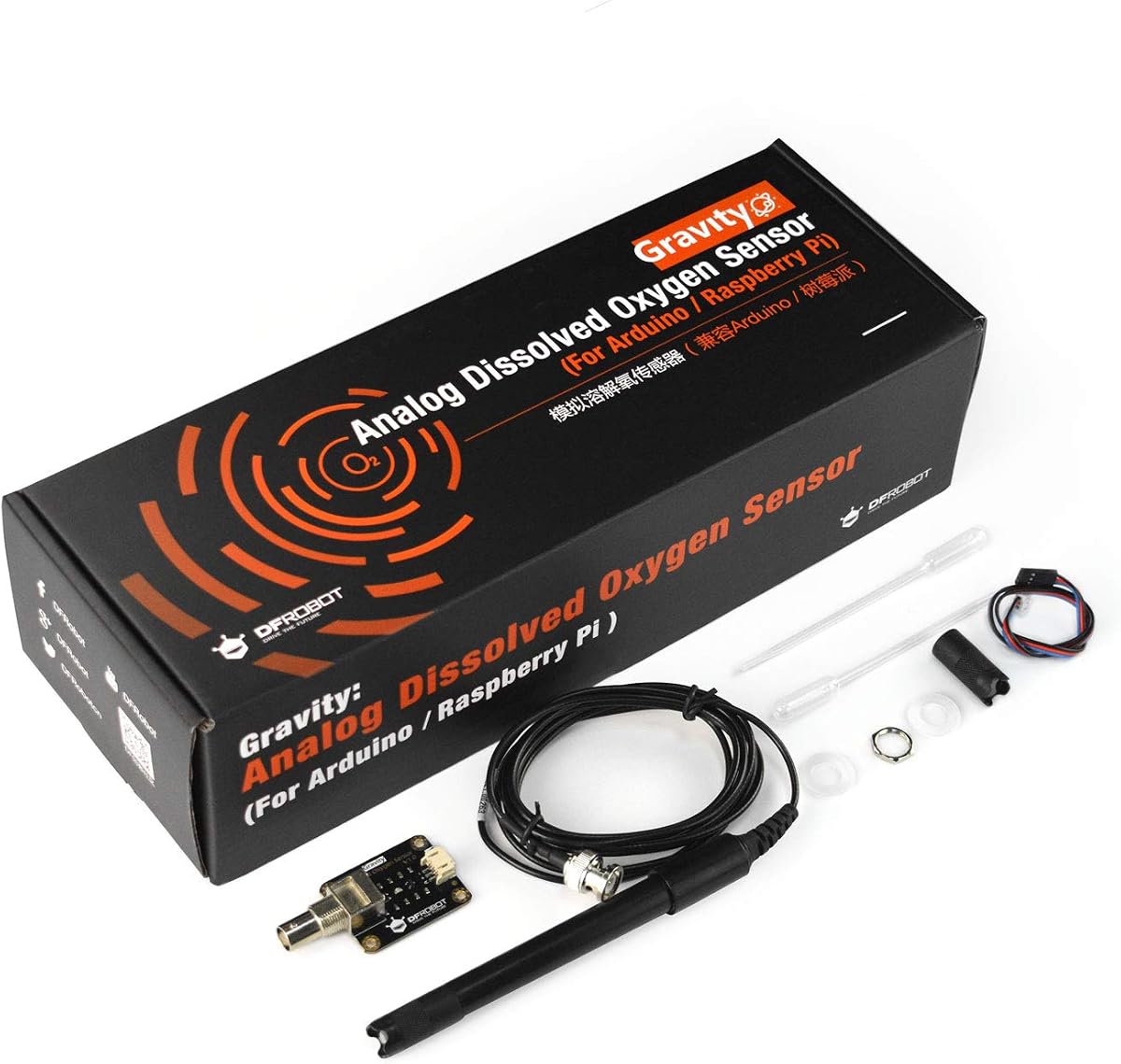
The Gravity Analog Dissolved Oxygen Sensor Kit stands out as a top choice for developers and researchers needing reliable water quality monitoring. With a strong rating from users, this kit offers a galvanic probe that eliminates the need for polarization, ensuring instant readiness for measurements in various aquatic environments.
We may earn a commission when you buy through this link, at no additional cost to you.
Its hardware filtering capabilities provide smooth, low-jitter analog signals, which simplifies integration with microcontrollers like Arduino and ESP32. The inclusion of a spare membrane cap and replaceable consumables significantly reduces long-term maintenance costs, making it ideal for projects where continuous operation is essential.
While the filling solution is not included due to shipping restrictions, preparing it is straightforward with local resources. The requirement for an external ADC module might be a minor hurdle for some users, but the detailed documentation and open-source code mitigate this learning curve effectively.
For hobbyists building IoT systems or small-scale aquaculture setups, this sensor delivers precision and ease of use. Its compatibility with common development boards and robust construction make it a highly recommended option for those prioritizing quick deployment and reliable data collection.
The galvanic probe technology allows for immediate readings without waiting for stabilization, which is crucial for intermittent monitoring tasks.
With replaceable parts and open-source support, users can extend the sensor life and customize its performance for specific applications easily.
We may earn a commission when you buy through this link, at no additional cost to you.
The LDO Dissolved Oxygen Sensor is engineered for demanding environments where consistent accuracy is paramount. Its 10-meter probe cable offers flexibility for testing deeper or more remote water bodies without compromising signal integrity or ease of access.
We may earn a commission when you buy through this link, at no additional cost to you.
Built with materials designed for long-term durability, this sensor ensures reliability in industrial and laboratory settings. The user-friendly design simplifies setup processes, allowing technicians to deploy the system quickly and focus on critical water quality analysis tasks.
While specific ratings are not available, the product description emphasizes efficiency and stable performance. The reduction in maintenance costs is a significant benefit for large-scale operations where frequent sensor replacements can be costly and disruptive to workflows.
For professionals requiring a versatile solution across various applications, this sensor provides the necessary robustness and accuracy. Its design prioritizes operational efficiency, making it a solid choice for organizations managing complex water treatment or environmental monitoring projects.
The ten-meter cable length enables testing in difficult-to-reach areas, enhancing the sensor's utility in large tanks or natural water bodies.
Constructed for longevity, the sensor minimizes downtime and replacement expenses, ensuring sustained performance over extended operational periods.
We may earn a commission when you buy through this link, at no additional cost to you.
The YSI-605203 Pro Series Polarographic Dissolved Oxygen Sensor is a trusted tool for laboratory professionals seeking precise water quality data. With a commendable rating, this sensor reflects user satisfaction regarding its performance and reliability in controlled testing environments.
We may earn a commission when you buy through this link, at no additional cost to you.
As a dedicated lab supply, it adheres to strict quality standards required for scientific analysis. Its compact dimensions make it easy to store and transport, ensuring that researchers can access it conveniently for various experimental setups without storage concerns.
While detailed specifications are limited in the provided data, the Pro Series branding indicates a history of robust engineering. Users should note that it may require compatible YSI instrumentation, which could limit its use to existing YSI ecosystem setups.
For laboratories prioritizing accuracy and brand reputation, this polarographic sensor is a dependable choice. Its design aligns with professional research needs, offering stability and precision that are critical for valid experimental results and regulatory compliance.
Designed specifically for lab environments, this sensor meets the rigorous demands of scientific research and quality control testing procedures.
The Pro Series designation signals a commitment to quality, ensuring users can rely on consistent performance during critical analysis tasks.
We may earn a commission when you buy through this link, at no additional cost to you.
This Dissolved Oxygen Meter offers a comprehensive solution for aquariums and fish tanks, featuring a long cable for flexible testing. Its solid rating indicates reliable performance for users needing consistent water quality data in home or small-scale professional setups.
We may earn a commission when you buy through this link, at no additional cost to you.
The inclusion of features like automatic temperature compensation and 99 data memory slots enhances usability. These tools allow users to track trends over time, ensuring that oxygen levels remain within optimal ranges for aquatic life health and growth.
While the manual salinity adjustment might require additional effort compared to fully automatic models, the overall functionality remains strong. The package includes essential accessories like membranes and electrolytes, providing a complete kit for immediate use upon arrival.
For aquarists and small fish farm operators, this meter delivers the necessary precision and durability. Its portable design and wide testing range make it an accessible tool for maintaining healthy water conditions across various aquatic environments effectively.
The 99 memory slots enable users to log multiple readings, facilitating trend analysis and proactive water quality management.
Includes all necessary accessories for setup and maintenance, reducing the need for immediate additional purchases after arrival.
We may earn a commission when you buy through this link, at no additional cost to you.
The YSI-605202 Pro Series Galvanic Dissolved Oxygen Sensor excels in user convenience with its easy-replaceable design. Boasting an excellent rating, this model is favored for its robust performance and straightforward maintenance features in professional water quality applications.
We may earn a commission when you buy through this link, at no additional cost to you.
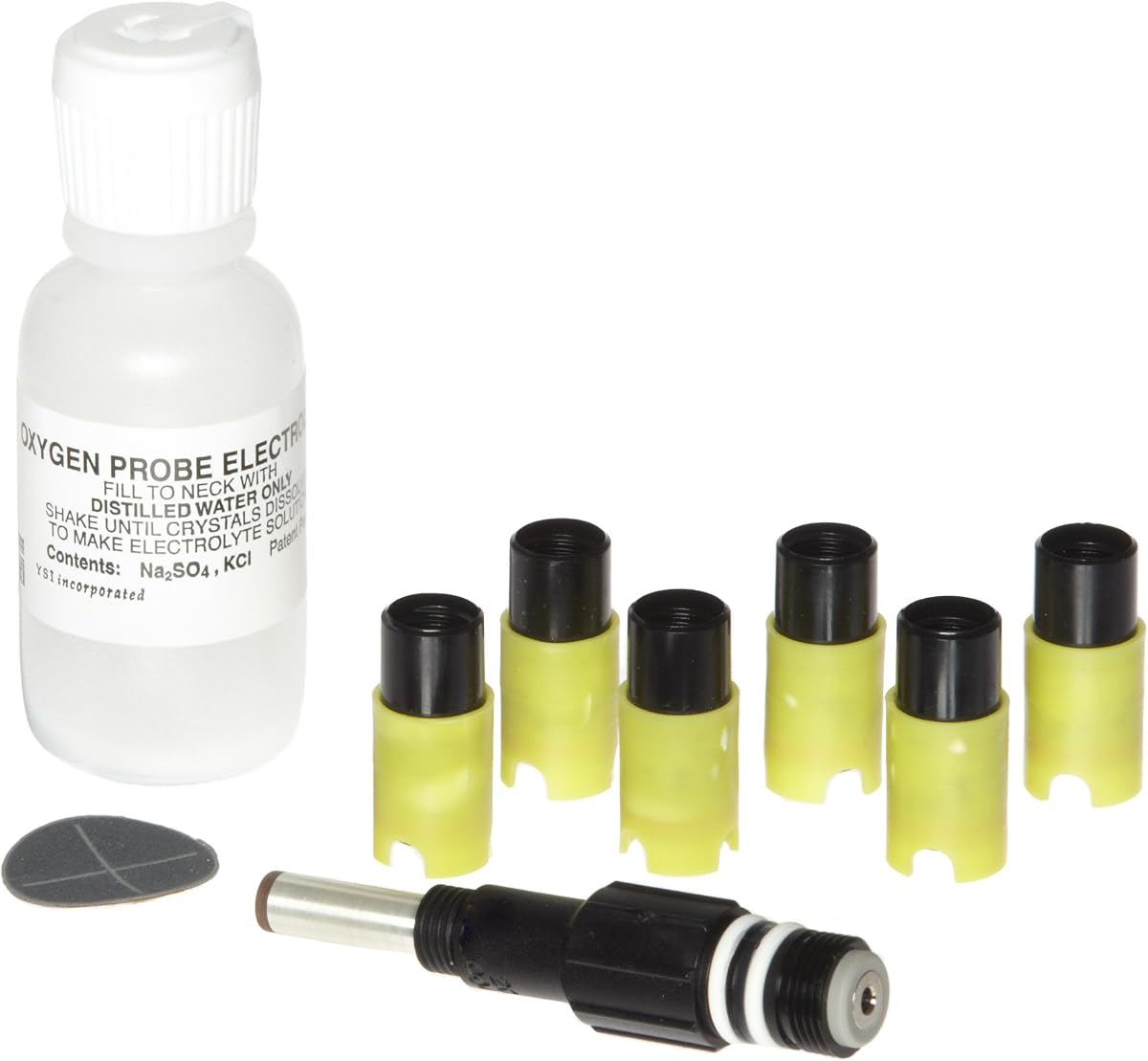
Its design eliminates the need for tools during sensor replacement, saving time during routine maintenance. The included bottle of solution and membrane caps ensure users can keep the sensor operational without delay, reducing downtime significantly in active monitoring scenarios.
While it is specific to YSI systems, which might limit versatility for some users, the ease of use is a major advantage. The screw-on cap membranes simplify the process of maintaining the sensor tip, ensuring consistent accuracy with minimal technical effort required.
For professionals who prioritize uptime and ease of maintenance, this sensor is a top contender. Its reliability and user-friendly features make it an excellent investment for organizations requiring consistent, high-quality dissolved oxygen data in their operations.
Designed for quick changes without tools, this feature minimizes downtime and ensures continuous operation in critical monitoring tasks.
Comes with necessary solution and caps, allowing immediate maintenance and testing without waiting for additional parts to arrive.
We may earn a commission when you buy through this link, at no additional cost to you.
The Zopsc 2 Pack DO Dissolved Oxygen Tester offers a modern approach to water quality monitoring by connecting wirelessly with smartphones. This feature allows for real-time data transmission, making it highly convenient for users who prefer digital records and analysis.
We may earn a commission when you buy through this link, at no additional cost to you.
Built with a fully sealed ABS housing, the device floats on water surfaces and resists environmental damage. This durability ensures reliable performance in wet conditions, protecting internal circuits from accidental submersion during field testing or routine checks.
The companion app supports multiple languages and allows for easy data export, enhancing usability across different regions. However, the reliance on a smartphone app means users must ensure their device is compatible, which might be a consideration for some technical environments.
For field researchers and hobbyists seeking portability and digital integration, this tester is an excellent choice. Its design prioritizes ease of use and data management, making it a practical tool for tracking oxygen levels efficiently in various aquatic settings.
Wireless connectivity enables seamless data transfer to mobile devices, simplifying documentation and real-time monitoring processes.
The sealed floating design protects against water exposure and damage, ensuring long-term reliability in challenging outdoor conditions.
We may earn a commission when you buy through this link, at no additional cost to you.
The YSI DO200 Kit EcoSense DO 200 Dissolved Oxygen Meter Kit is a trusted portable solution for users needing precise measurements. With a strong rating, it demonstrates reliable performance in both educational and professional settings where accuracy is a primary concern.
We may earn a commission when you buy through this link, at no additional cost to you.
Its accuracy of two percent full scale and resolution of 0.01 ppm make it suitable for detailed water quality analysis. The automatic temperature compensation ensures readings are consistent across varying environmental conditions, providing trustworthy data for informed decision-making.
While manual input for salinity and barometric pressure compensation might require user intervention, the portability of the meter offsets this minor inconvenience. It is designed to be handheld and easy to transport, facilitating testing in multiple locations without equipment bulk.
For students, researchers, and field technicians, this kit offers the precision and convenience needed for effective water monitoring. Its reputation for accuracy and ease of use makes it a recommended choice for those prioritizing data quality in aquatic assessments.
With high resolution and accuracy, the meter provides detailed data necessary for professional analysis and compliance monitoring tasks.
Designed to be portable and lightweight, it supports field testing needs where equipment must be easily transported to different sites.
We may earn a commission when you buy through this link, at no additional cost to you.
The YSI 6900 ProDSS ODO Optical Dissolved Oxygen Sensor represents a significant technological advancement in water quality monitoring. While specific ratings are not provided, its optical technology ensures high performance and reliability for professional-grade applications.
We may earn a commission when you buy through this link, at no additional cost to you.
Optical sensors typically offer reduced maintenance compared to traditional electrochemical types, as they do not require membrane changes or electrolyte refills. This feature enhances efficiency for users managing extensive monitoring networks or remote installations where service access is limited.
It is designed to integrate seamlessly with the YSI ProDSS multi-parameter system, ensuring compatibility with other sensors. Users should note that this is sold as an individual sensor, meaning it is intended for system upgrades or specific replacements rather than standalone handheld kits.
For professionals requiring high-fidelity data and advanced sensor capabilities, this model is an excellent investment. Its design prioritizes precision and system integration, making it a suitable choice for laboratories, utilities, and environmental agencies demanding top-tier measurement performance.
Utilizes optical technology to provide accurate measurements with minimal maintenance requirements compared to traditional sensor types.
Engineered to work within the ProDSS ecosystem, ensuring seamless data collection and compatibility with other environmental sensors.
We may earn a commission when you buy through this link, at no additional cost to you.
The DAN&DRE Portable Dissolved Oxygen Meter simplifies testing with automatic two-point calibration buttons. This feature ensures quick setup and accurate readings every time, making it ideal for frequent testing in aquariums or aquaculture environments where precision is essential.
We may earn a commission when you buy through this link, at no additional cost to you.
Equipped with intelligent temperature compensation, the meter adjusts for actual solution temperature automatically, eliminating guesswork. The modular design allows for easy replacement of the electrode, extending the device's life and reducing costs compared to replacing the entire unit.
With a response time of less than fifteen seconds, it delivers real-time data efficiently. The compact ABS construction ensures durability during transport and daily use, supporting a wide range of applications from home tanks to professional fish farms.
For users seeking a balance of convenience, speed, and value, this meter is a strong contender. Its features are designed to minimize user error and maximize operational efficiency, making it a practical choice for maintaining optimal water quality conditions.
Simplifies the calibration process with dedicated buttons, ensuring accurate setup without complex manual adjustments or external tools.
Allows for easy replacement of the electrode, extending the meter's lifespan and reducing long-term maintenance expenses significantly.
We may earn a commission when you buy through this link, at no additional cost to you.
The Dissolved Oxygen Meter with ATC offers a wide measurement range of 0 to 40 mg/L, making it suitable for diverse testing scenarios. Its gold and silver electrodes ensure consistent results, while the built-in temperature sensor supports accurate readings across various water conditions.
We may earn a commission when you buy through this link, at no additional cost to you.
The package includes electrode filling fluid and anaerobic water calibration powder, providing everything needed to start testing immediately. This complete setup saves time and effort for users, ensuring the device is ready for use right out of the box without extra purchases.
With features like a large LCD screen and automatic shutdown, the meter balances functionality with battery efficiency. The inclusion of three extra batteries further enhances convenience, allowing for extended use without interruptions during critical monitoring sessions or fieldwork.
For users needing a versatile tool for aquariums, brewing, or wastewater treatment, this meter is an excellent option. Its comprehensive feature set and included accessories make it a cost-effective solution for maintaining accurate water quality data across multiple environments.
The wide measurement range allows for testing in varied environments, from low-oxygen brewing tanks to high-oxygen aquaculture ponds.
Comes with fluid and powder, ensuring users can calibrate and operate the device immediately without needing additional supplies.
We may earn a commission when you buy through this link, at no additional cost to you.
Selecting the right sensor depends on your specific needs, budget, and operational environment. This guide breaks down the essential factors to consider for making an informed decision.
Dissolved oxygen sensors typically use galvanic, polarographic, or optical technologies. Galvanic sensors require no polarization and are ready instantly, while polarographic sensors need a warm-up period. Optical sensors offer high accuracy and low maintenance but often come at a higher price point.
Choose the technology that aligns with your usage frequency and maintenance capabilities to ensure reliable data collection.
Different applications require different measurement ranges. For example, aquariums need lower ranges while industrial wastewater might need higher capacities. Resolution determines the precision of your readings, with some models offering 0.01 ppm for detailed analysis.
Ensure the sensor covers the full range of your expected water conditions to avoid inaccurate measurements in critical scenarios.
Calibration is critical for accuracy. Look for sensors with automatic two-point calibration to simplify the setup process. Some models require manual input, while others offer user-friendly buttons for zero and hundred percent calibration points.
Automatic calibration features save time and reduce human error, ensuring consistent and reliable readings over time.
Temperature significantly affects oxygen solubility in water. Sensors with Automatic Temperature Compensation (ATC) adjust readings based on real-time temperature data. This feature eliminates the need for manual adjustments and ensures accurate results across varying environments.
Always verify that your chosen sensor includes reliable ATC to maintain accuracy during seasonal or daily temperature fluctuations.
Modern sensors often offer connectivity options like Bluetooth or wireless interfaces to link with smartphones or computers. This allows for real-time monitoring and easy data logging. Some models also include internal memory to store past readings for later analysis.
Consider connectivity needs based on whether you require immediate data access or long-term trend tracking capabilities.
The sensor must withstand the environmental conditions where it will be used. Waterproof designs and robust housing protect against damage. Additionally, check the lifespan of consumables like membranes and electrolytes to estimate long-term maintenance requirements.
Investing in a durable unit reduces downtime and replacement costs, ensuring consistent operation in demanding environments.
Regular maintenance is necessary for sensor accuracy. Models with user-replaceable membranes and included cleaning tools simplify this process. Check if the product includes spare parts like caps or fluids to extend immediate usability without extra purchases.
Simpler maintenance routines encourage regular care, which directly impacts the reliability and lifespan of your sensor.
If you are upgrading or integrating into a larger system, ensure the sensor is compatible with your existing controllers or data loggers. Some brands require specific ecosystems, which might limit your options if you prefer mixed setups.
Verify compatibility details to avoid integration issues and ensure seamless data flow within your monitoring network.
Before first use, ensure the sensor is properly calibrated according to the manufacturer's instructions. Use fresh calibration solutions and follow the two-point or single-point calibration process to ensure accurate baseline measurements.
During testing, submerge the sensor tip completely into the water sample and allow it to stabilize for the recommended time. Stirring the water gently can help reduce response time and ensure the reading reflects the actual dissolved oxygen levels.
After each use, rinse the sensor tip with distilled water and store it in a humid environment or appropriate storage solution. Regular maintenance includes replacing membranes and electrolytes as needed to prevent drift and maintain sensor accuracy over time.
Calibration frequency depends on usage intensity and environmental conditions. For critical applications, daily or weekly calibration is recommended. For general monitoring, monthly calibration may suffice. Always follow the manufacturer's guidelines for optimal performance.
Galvanic sensors generate their own current and require no polarization time, making them faster to start. Polarographic sensors require an external voltage and a warm-up period but often provide stable readings over long durations.
The membrane protects the sensor tip from contaminants and ensures proper diffusion of oxygen. Over time, it can degrade or become clogged, affecting accuracy. Replacing it ensures the sensor remains reliable and precise.
Many modern dissolved oxygen sensors include built-in temperature sensors for Automatic Temperature Compensation. This allows the device to adjust readings based on water temperature for more accurate results.
The lifespan varies by model and usage conditions. With proper maintenance, most sensors last one to three years. Consumable parts like membranes may need replacement every few months depending on usage frequency.
Yes, specific calibration solutions such as zero percent or one hundred percent oxygen standards are used to calibrate the sensor accurately. These ensure the device reads correctly across its full measurement range.
Selecting the right dissolved oxygen sensor depends on balancing accuracy, convenience, and your specific operational requirements. The top picks offer a range of features to suit different needs, from basic monitoring to professional analysis.
Prioritize factors like calibration ease, durability, and temperature compensation to ensure reliable data over time. Proper maintenance and regular checks will extend the sensor life and accuracy in any aquatic environment.
Prices and availability change frequently, so verify current stock and shipping details before making your final decision. With the right tool, you can maintain optimal water quality for healthier ecosystems and successful projects.