
Canon EF 100-400mm f/4.5-5.6L IS USM Lens + Kit
4.0Editor score
Professional L-series build
Advanced optical construction
Ring-type USM autofocus
Explore the top camera lens for long distance wildlife photography. We compare zoom range, stabilization, autofocus speed, and build quality across ten leading
Capturing wildlife from afar requires specialized optics that deliver sharp images without disturbing animals. A good long distance lens provides the reach and clarity needed to photograph birds, mammals, and elusive creatures safely.
We evaluated ten highly rated telephoto options based on optical performance, stabilization technology, and handling. Each model offers unique advantages for different budgets and camera systems used by nature photographers today.
This guide reveals what each pick excels at and who will benefit most. Prices and availability change frequently, so verify current details before purchasing to ensure you get the best value available now.
4.0Editor score
4.7Editor score
4.0Editor score
Compare key specs across all ten lenses to find the right match for your camera system and wildlife photography goals.



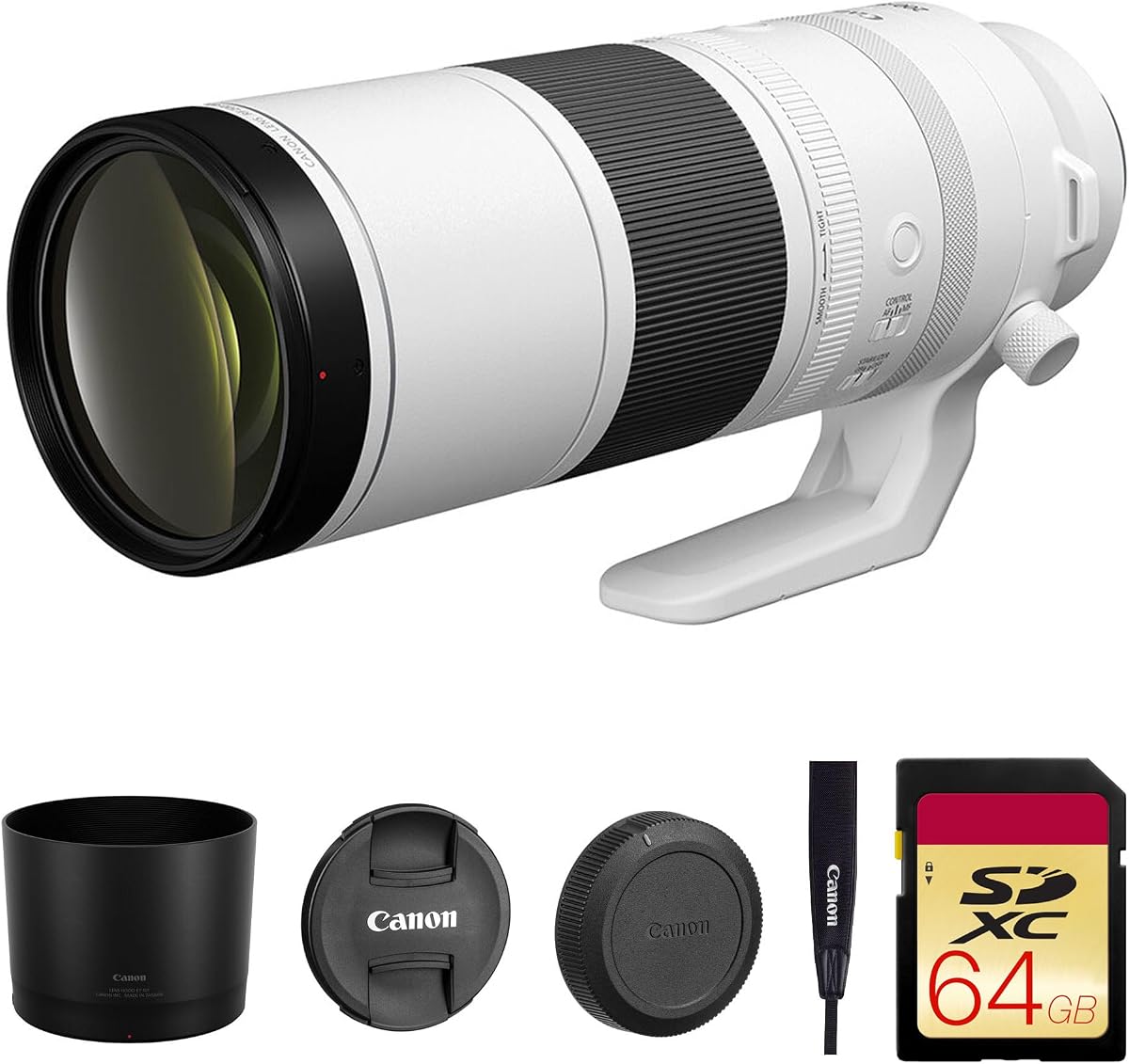
This Canon RF lens bundle offers unmatched reach from 200mm to 800mm, ideal for capturing distant wildlife without disturbance. It holds a strong 4.7 rating and includes stabilization for sharp handheld shots.
We may earn a commission when you buy through this link, at no additional cost to you.
The built-in image stabilization ensures shake-free results even at full zoom, while the USM autofocus system tracks moving subjects quickly and quietly. Its lightweight design makes it field-ready for travel.
Aperture slows to f/9 at 800mm which can limit low-light performance, but stabilization and focus speed compensate well. This trade-off is acceptable for daytime wildlife photography where light is ample.
Photographers seeking maximum reach on RF cameras should choose this lens. Its balance of size, stabilization, and optical performance makes it a top recommendation for serious wildlife shooters.
The 200mm to 800mm range covers most wildlife scenarios, from close birds to distant mammals, without changing lenses.
Built-in stabilization supports handheld shooting at long focal lengths, reducing blur and increasing shot success rates.
We may earn a commission when you buy through this link, at no additional cost to you.
This EF lens delivers professional L-series quality with advanced optics and fast autofocus for wildlife and sports. It includes optical image stabilization and a versatile 100-400mm range.
We may earn a commission when you buy through this link, at no additional cost to you.
Optical construction with fluorite and UD elements minimizes aberrations, while the ring-type USM motor provides quick, quiet focusing. Stabilization improves handheld performance and low-light capability.
It is heavier than modern RF options and stops at 400mm, which may limit reach for distant subjects. However, optical quality and reliability make it a strong choice for DSLR users.
Photographers using Canon DSLRs who prioritize optical quality and durability will appreciate this lens. It remains a trusted tool for wildlife and action photography.
Fluorite and UD elements ensure sharp images with minimal color fringing across the zoom range.
Ring-type USM delivers fast, precise, and quiet autofocus with full-time manual override capability.
We may earn a commission when you buy through this link, at no additional cost to you.
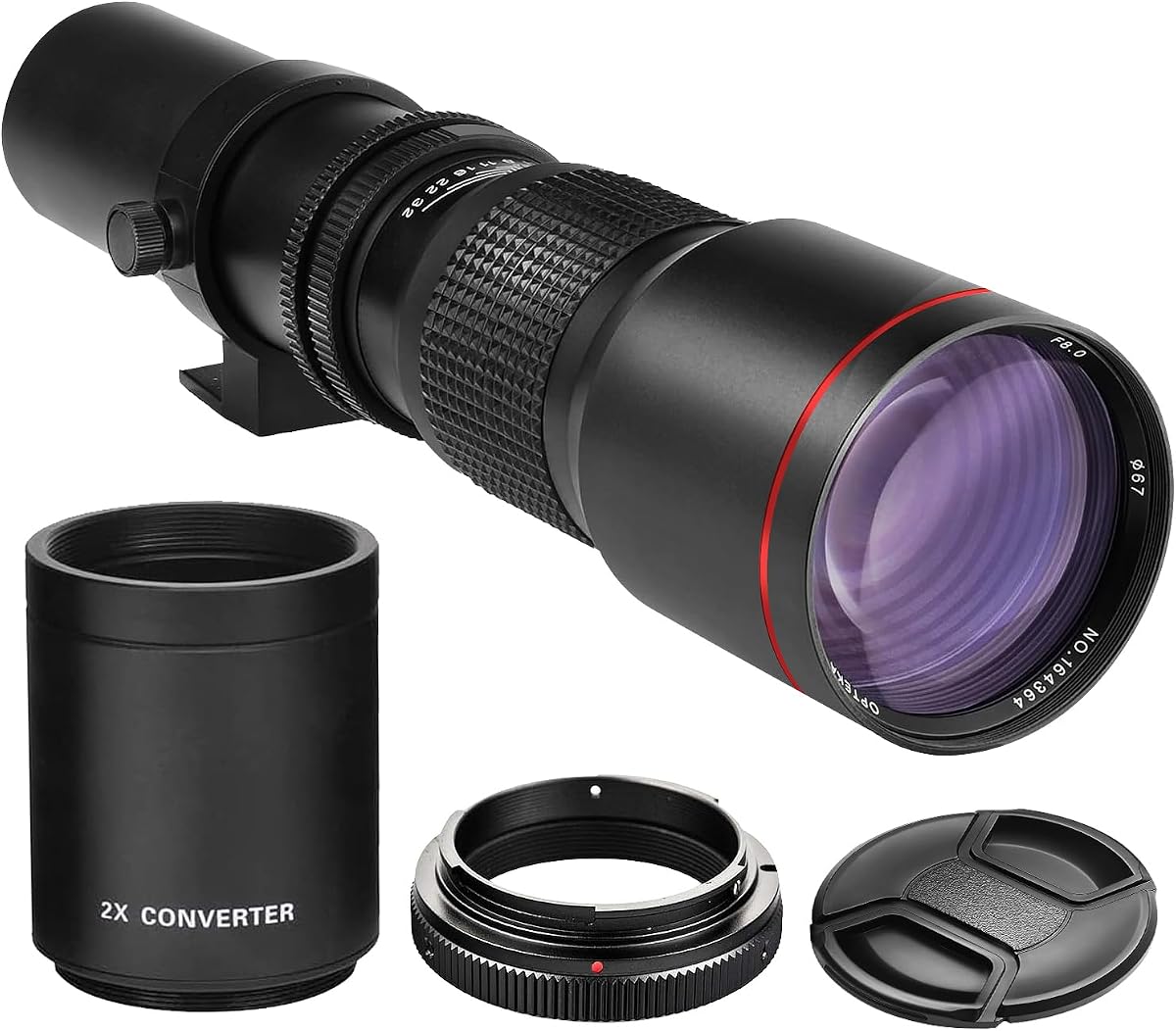
This manual lens delivers incredible reach from 500mm to 1000mm at a budget price. It holds a 4.0 rating and is built to withstand outdoor use with a durable finish.
We may earn a commission when you buy through this link, at no additional cost to you.
Manual focus and aperture give full creative control, ideal for static wildlife. The teleconverter doubles power to 1000mm, bringing distant subjects closer without expensive optics.
Lack of autofocus and slower aperture require steady hands and good light. These limitations are acceptable for photographers prioritizing reach and affordability over automation.
Budget-conscious shooters seeking extreme reach on Canon DSLRs will find this lens valuable. It offers a unique combination of power and value for wildlife photography.
The 1000mm reach allows capturing elusive wildlife that other lenses cannot reach without additional investment.
Full manual focus and aperture enable precise shot composition and creative expression in the field.
We may earn a commission when you buy through this link, at no additional cost to you.
This lens is the worlds first AF super-telephoto zoom ending at 800mm, offering powerful reach in a compact package. It holds a 4.6 rating and enables comfortable handheld shooting.
We may earn a commission when you buy through this link, at no additional cost to you.
Optimized optical design maintains image quality across the zoom range, and compatibility with extenders adds even more reach. Its lightweight design supports mobility during nature photography.
Aperture slows at 800mm, which may challenge low-light shooting without stabilization. This trade-off is typical for such reach and is acceptable for most wildlife scenarios.
Canon RF users needing 800mm reach without a prime lens will appreciate this option. It combines innovation, performance, and portability for wildlife shooters.
As the first AF zoom ending at 800mm, it sets a new standard for telephoto flexibility.
Compact and lightweight build ensures mobility during long hikes or travel for wildlife photography.
We may earn a commission when you buy through this link, at no additional cost to you.
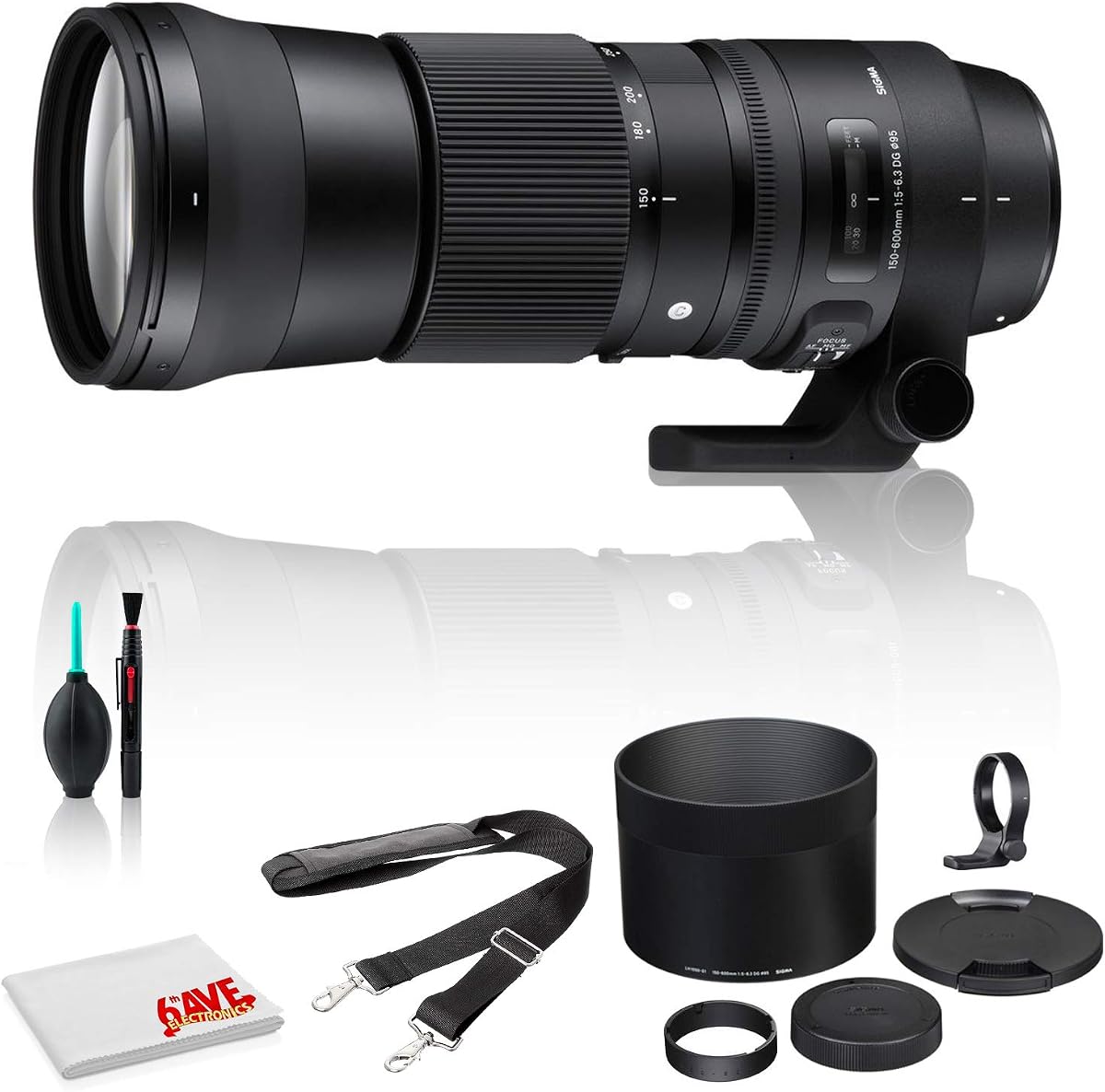
This Sigma lens offers a versatile 150-600mm range at a competitive price with optical stabilization and fast autofocus. It holds a 4.5 rating and includes a cleaning kit.
We may earn a commission when you buy through this link, at no additional cost to you.
One FLD and three SLD elements reduce aberrations, while the Hyper Sonic Motor delivers quick focus. Optical stabilization supports sharp handheld shots even at longer focal lengths.
The lens is heavier and larger than newer RF options, which may impact portability. However, the performance and value remain strong for EF-mount users.
Canon EF shooters seeking super-telephoto reach without breaking the bank will find this lens compelling. It delivers reliable performance for wildlife photography.
Optical Stabilizer with accelerometer ensures sharper images when shooting handheld at long distances.
Hyper Sonic Motor provides quick and quiet autofocus for capturing moving wildlife subjects.
We may earn a commission when you buy through this link, at no additional cost to you.
This manual lens provides extreme reach up to 1600mm at an affordable price point. It holds a 4.0 rating and is designed for Canon DSLRs with EF mounts.
We may earn a commission when you buy through this link, at no additional cost to you.
The teleconverter doubles power to 1600mm, bringing distant wildlife closer. HD glass ensures crisp photos, and manual controls allow precise creative adjustments.
Manual focus requires steady hands and patience. These limitations are acceptable for photographers prioritizing extreme reach and budget over convenience.
Shooters needing maximum zoom without a high price will find this lens useful. It delivers remarkable range for wildlife and distant subjects.
The 1600mm reach allows capturing subjects that are otherwise impossible to photograph.
Manual controls enable detailed creative adjustments for sharp images in varied conditions.
We may earn a commission when you buy through this link, at no additional cost to you.
This RF lens offers a versatile 100-400mm range in a compact and lightweight design. It holds a 4.6 rating and includes advanced optical image stabilization.
We may earn a commission when you buy through this link, at no additional cost to you.
Up to 5.5 stops of stabilization improve handheld shooting, and with IBIS, it reaches 6 stops. Nano USM ensures smooth and quiet autofocus for wildlife.
It stops at 400mm and has a variable aperture, which may limit reach and low-light use. However, portability and performance are strong for general use.
Canon RF users needing a portable telephoto for wildlife and everyday shooting will appreciate this lens. It balances quality and convenience well.
Optical Stabilizer provides up to 5.5 stops correction, ideal for handheld wildlife photography.
Nano USM autofocus delivers smooth and silent focusing for capturing natural animal behavior.
We may earn a commission when you buy through this link, at no additional cost to you.
This EF lens offers a versatile 75-300mm range in a lightweight and portable package. It holds a 4.7 rating and features improved zoom mechanisms for smoother operation.
We may earn a commission when you buy through this link, at no additional cost to you.
Its small size and light weight make it easy to carry for travel or everyday photography. The zoom ring is designed for comfortable handling during use.
Lack of stabilization means faster shutter speeds are needed. This trade-off is acceptable for entry-level photographers seeking an affordable telephoto option.
Canon SLR users new to telephoto shooting will find this lens approachable. It provides good value and portability for learning wildlife photography.
The improved mechanism ensures smoother zooming for easier composition during wildlife shots.
Weighing 16.8 ounces, it is easy to carry for long periods in the field.
We may earn a commission when you buy through this link, at no additional cost to you.
This Nikon bundle includes a super-telephoto lens with a 200-500mm range and Silent Wave Motor autofocus. It holds a 4.2 rating and offers Vibration Reduction for sharp handheld shots.
We may earn a commission when you buy through this link, at no additional cost to you.
Three extra-low dispersion elements improve clarity, and the sport mode supports fast tracking. The rotating tripod collar ensures stable support for long sessions.
The lens is heavy and has a fixed aperture, which may challenge mobility and low-light use. However, performance and reach are strong for Nikon shooters.
Nikon users needing significant reach for wildlife will appreciate this lens. It balances optical quality, stabilization, and versatility well.
Extra-low dispersion elements reduce fringing and improve color precision for sharp wildlife images.
Vibration Reduction provides up to 4.5 stops of stabilization for clearer handheld shooting.
We may earn a commission when you buy through this link, at no additional cost to you.
This renewed lens offers a versatile 75-300mm range with DC autofocus motor performance. It holds a 4.7 rating and provides cost savings without sacrificing reliability.
We may earn a commission when you buy through this link, at no additional cost to you.
The zoom mechanism is improved for smoother operation, and its light weight ensures easy handling. Renewed items include quality checks for consistent performance.
Lack of stabilization requires steady hands. This limitation is acceptable for budget-conscious shooters seeking a reliable telephoto option.
Canon SLR users seeking an affordable telephoto will find this lens useful. It delivers good value and performance for learning wildlife photography.
Renewed items offer significant savings while maintaining performance and build standards.
DC autofocus motor provides quick and reliable focus for everyday photography needs.
We may earn a commission when you buy through this link, at no additional cost to you.
Selecting a long distance wildlife lens involves balancing zoom range, aperture, stabilization, and weight. Use these factors to find the best match for your needs.
For wildlife photography, a focal length of at least 200mm is essential to capture distant subjects without getting too close. Zoom lenses offering ranges up to 600mm or 800mm provide flexibility to frame birds, mammals, and other animals comfortably. A wider starting point like 100mm or 150mm also allows for environmental shots that include habitat context.
Choose a lens with a reach that matches your typical shooting distances. Longer zooms are ideal for shy or dangerous animals, while shorter telephotos work for open parks or captive wildlife.
Image stabilization is critical for handheld shooting at long focal lengths where camera shake can blur photos. Look for lenses with optical stabilization or paired with in-body systems to improve success rates. Stabilization modes may include tracking or panning for moving animals.
Prioritize stabilization if you plan to shoot without a tripod. It enables sharper images in varied lighting conditions and increases the number of keepers during active wildlife sessions.
Fast and accurate autofocus ensures moving animals remain in focus, especially when they dart or fly. Look for lenses with dedicated motors like USM or Silent Wave Motor that deliver quick, quiet focus. Full-time manual override helps refine focus when needed.
Choose autofocus systems with good tracking capability for active wildlife. This feature keeps moving subjects sharp, which is essential for capturing wildlife in natural behavior.
A wider maximum aperture allows more light, which improves low-light performance and depth of field control. Many super-telephoto zooms have variable apertures that narrow at longer focal lengths, which may limit use in early morning or late evening. A constant aperture lens offers consistent exposure throughout the zoom range.
Prioritize aperture based on typical shooting times. Wider apertures are beneficial for low-light wildlife photography, while narrower apertures may suffice for bright daytime sessions.
Wildlife photography often occurs in rugged outdoor conditions, so durable construction with weather sealing is valuable. However, super-telephoto lenses can be heavy, so consider weight relative to your ability to carry and shoot for long periods. Lightweight designs improve mobility during travel or hikes.
Balance durability with portability based on your typical usage. Heavier lenses offer robustness, while lighter ones reduce fatigue during extended wildlife photography sessions.
Ensure the lens matches your camera mount, such as EF for DSLRs or RF for mirrorless. RF lenses often offer optimized optical performance for mirrorless systems. Some EF lenses can adapt to mirrorless but may not fully utilize stabilization or autofocus advantages.
Check your camera body support and whether the lens supports features like IBIS or specific autofocus modes. Compatibility ensures the lens performs as intended with your system.
Prices vary widely based on brand, build, and features. Higher-priced lenses typically offer superior optics and durability, while budget options provide reach at lower cost. Bundle deals may include accessories like filters or cleaning kits that add value.
Set a realistic budget and compare features within that range. Third-party brands can offer great value, and renewed options provide cost savings with tested reliability.
Accessories such as tripods, monopods, and extenders enhance long distance wildlife photography. A sturdy support system stabilizes heavy lenses, and extenders increase reach. Cleaning kits ensure optics remain in good condition during outdoor use.
Consider bundles that include essential accessories. They provide immediate value and save cost compared to buying items separately after purchase.
Set your camera to aperture priority or manual mode to control exposure while focusing on framing wildlife. Use continuous autofocus mode to track moving animals and ensure fast shutter speeds to minimize blur from motion or camera shake.
Position yourself with a steady stance or use a tripod for long focal lengths. Focus on the eyes of animals when possible for sharp portraits, and allow space around moving subjects to anticipate their direction.
Clean lenses with a soft brush and microfiber cloth to remove dust and fingerprints. Store in a dry case with silica gel to prevent moisture damage, and avoid leaving in direct sunlight or extreme temperatures.
For most wildlife, a focal length of 200mm to 600mm is ideal. This range allows you to capture subjects from a safe distance. Super-telephoto lenses reaching 800mm or beyond are excellent for shy animals or distant scenes.
Yes, image stabilization significantly improves handheld shooting at long focal lengths by reducing camera shake. It is especially useful for moving wildlife or when tripods are impractical. Look for lenses with at least 3 stops of stabilization.
EF lenses can be used on RF mirrorless cameras with an adapter. While they work well, native RF lenses offer optimized performance and faster autofocus. Check adapter compatibility for your camera model.
Wider apertures like f/5.6 or lower help in low light and isolate subjects with shallow depth of field. Variable aperture zooms narrow at long focal lengths, so consider fixed aperture lenses if you shoot often in dim conditions.
Prices range from around $100 for manual options to several thousand for professional L-series lenses. Budget-friendly third-party lenses offer good value for beginners, while premium lenses provide durability and optical quality for professionals.
Manual lenses are affordable and offer great reach, but require practice to focus quickly. They work well for stationary subjects or if you prefer full control. Autofocus lenses are faster and easier for moving wildlife.
A tripod provides stability for sharp images, especially with heavy lenses or long exposures. Monopods offer a lighter alternative. Stabilization helps but cannot fully replace a support system for very long focal lengths.
The Canon RF 200-800mm bundle stands out for its unmatched reach and stabilization, making it ideal for serious wildlife photographers on RF systems. The Canon EF 100-400mm L offers professional optical quality for DSLR users, while budget manual lenses deliver extreme reach affordably.
Prioritize focal length and stabilization based on your camera system and shooting style. Fast autofocus and build quality are essential for capturing moving wildlife in the field. Match your lens to your specific needs and budget.
Prices and availability fluctuate regularly. Check current prices before purchasing to ensure you get the best value and warranty for your wildlife photography gear.