10 Best Ais Transponders (October 2026) Expert Guide
Written by Elena · Updated October 2026
Navigating modern waters requires reliable communication tools to ensure safety and situational awareness. Ais Transponders play a critical role by broadcasting your vessel's position to nearby ships and coastal stations, significantly reducing collision risks in busy shipping lanes or isolated waters.
We evaluated ten distinct models ranging from full Class A transponders to compact Class B units and personal locator beacons. Our analysis focused on transmission range, display quality, integration capabilities with existing marine electronics, and overall reliability under harsh environmental conditions.
Each selection in this guide highlights unique strengths tailored to different vessel sizes and operational needs. While we provide detailed specifications and performance insights, remember that market availability and costs fluctuate frequently, so verify current details before making a final purchase decision.
Top 3 Picks for Best Ais Transponders
Best Budget
ACR RESQLINK AIS Personal Locator Beacon – SOS, GPS, Return Link Service, Mobile App and Accessory Clips (Model PLB-450)
As an Amazon Associate we earn from qualifying purchases.
Top 10 Best Ais Transponders in 2026 Compared
The following table provides a side-by-side comparison of all ten selected Ais Transponders, highlighting key specifications and primary functions to help you quickly identify the model that best fits your specific marine safety requirements.
The Icom MA-510TR stands out as a premier choice for mariners seeking comprehensive safety features. Its vibrant 4.3-inch color display ensures clear visibility of vessel traffic even in bright sunlight. This unit integrates seamlessly with existing VHF radios for digital selective calling.
Pros
Large colorful display for easy reading
Silent mode for secure navigation
USB connectivity for data transfer
Collision alarm feature for safety
NMEA compatibility for integration
Cons
Higher price point than basic models
Requires professional antenna installation
We may earn a commission when you buy through this link, at no additional cost to you.
Key strengths include its robust silent mode which allows secure operations without broadcasting unnecessary data. The integrated GPS navigation provides accurate positioning without external dependencies. Users can configure ship details and MMSI numbers easily through the multilingual interface supporting five languages.
Trade-offs exist primarily in cost and installation complexity compared to simpler Class B units. The antenna requirement adds to the initial setup effort. However, these are acceptable for vessels requiring professional-grade collision avoidance and communication capabilities on open waters.
Captain and boat owners prioritizing safety and situational awareness should strongly consider this model. The collision alarm and anchor watch functions provide essential peace of mind. It is highly recommended for larger vessels or commercial operations where reliability is non-negotiable.
Enhanced Situational Awareness
The color display and collision alarm work together to alert crews of potential hazards instantly, allowing for proactive course corrections before situations become critical.
Versatile Connectivity
USB connectivity and NMEA compatibility ensure this transponder can share data with chart plotters and other onboard systems for a unified navigation experience.
This EM-TRAK Class B transponder offers a straightforward solution for vessels needing basic identification capabilities. It supports both 12 and 24 volt power inputs making it versatile for various boat electrical systems. The standard mounting options simplify integration into existing setups.
Pros
Compact form factor
Multi voltage power input
Reliable transmission signal
Standard installation mounting
Cons
Limited feature set for advanced users
Basic visual feedback interface
We may earn a commission when you buy through this link, at no additional cost to you.
Strengths lie in its reliable transmission capabilities and energy efficient design. It functions well in cold weather conditions ensuring consistent performance year round. The compact size allows for discreet placement on the vessel without obstructing views.
However, it lacks advanced display features or interactive interfaces found in higher tier models. Users needing detailed traffic visualization might find it limiting. These trade-offs are acceptable for those who prioritize essential identification over complex data visualization.
Ideal for smaller recreational boats or as a secondary backup unit. It provides the necessary broadcast signals for safety compliance without the cost of full professional systems. It is a practical choice for budget conscious owners seeking dependable performance.
Power Versatility
Supporting both 12 and 24 volt inputs allows this unit to be deployed on diverse vessel types without requiring additional voltage converters or electrical modifications.
Environmental Resilience
Built to withstand cold weather conditions, this transponder ensures that communication signals remain active even in harsh northern maritime climates.
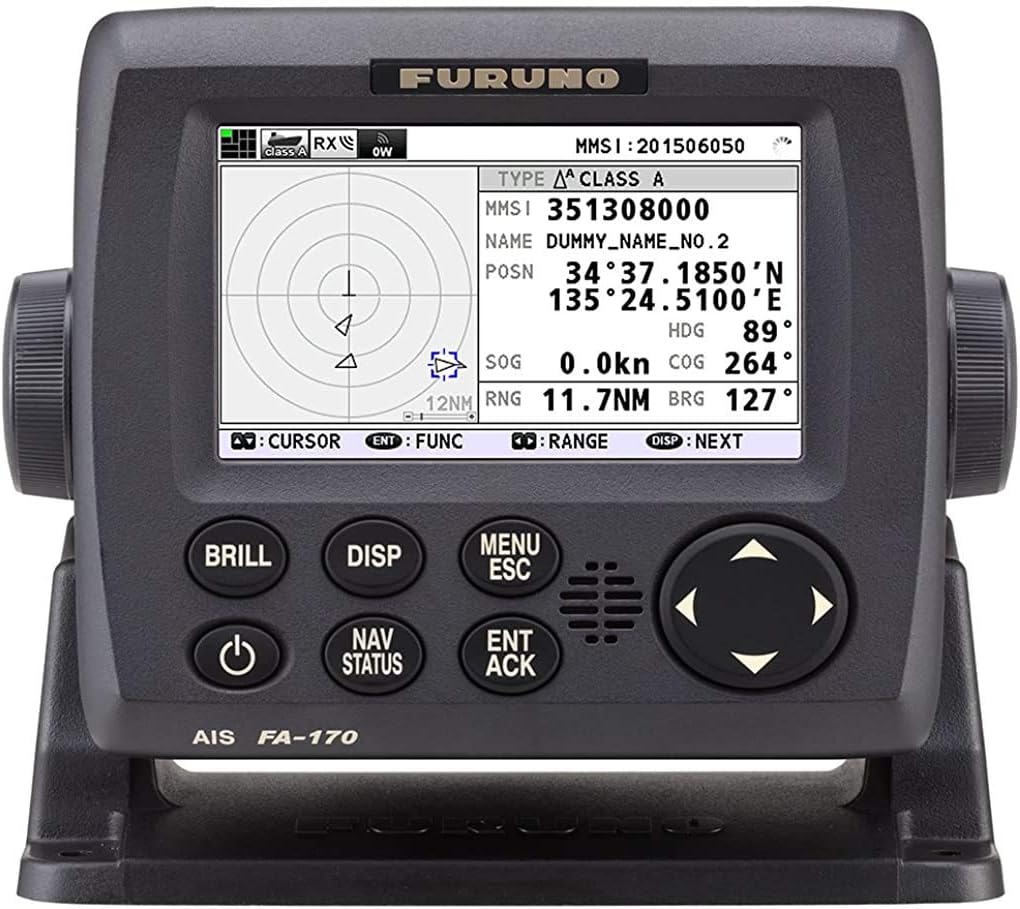
The Furuno FA170 represents the pinnacle of Class A transponder technology for professional maritime use. It stores up to 2048 AIS targets providing extensive situational awareness. The unit includes multiple ports for LAN connectivity alarm outputs and data integration.
Pros
High capacity target storage
Comprehensive port connectivity
Customizable AIS messaging
Advanced dangerous target alerts
Cons
Significant investment cost
Complex installation process
We may earn a commission when you buy through this link, at no additional cost to you.
Key strengths include the ability to create custom AIS messages or send name requests to other ships. The dangerous target list feature automatically highlights vessels posing collision risks. This level of automation is vital for busy commercial shipping lanes.
The cost and complexity of installation are significant trade-offs for recreational users. This unit requires specialized knowledge to integrate fully with ship systems. However, for vessels operating under strict regulations this functionality is necessary for compliance and safety.
Commercial operators and large yachts will find the investment worthwhile. The reliability and feature depth set a high standard for maritime safety. It is the top recommendation for those needing maximum data capacity and professional grade control.
Advanced Traffic Management
With over two thousand target storage capacity, this transponder manages dense traffic scenarios effectively, ensuring no vessel is overlooked during critical navigation periods.
Customizable Communication
The ability to send custom messages or name requests facilitates direct coordination with nearby ships, improving navigation efficiency and reducing communication errors.
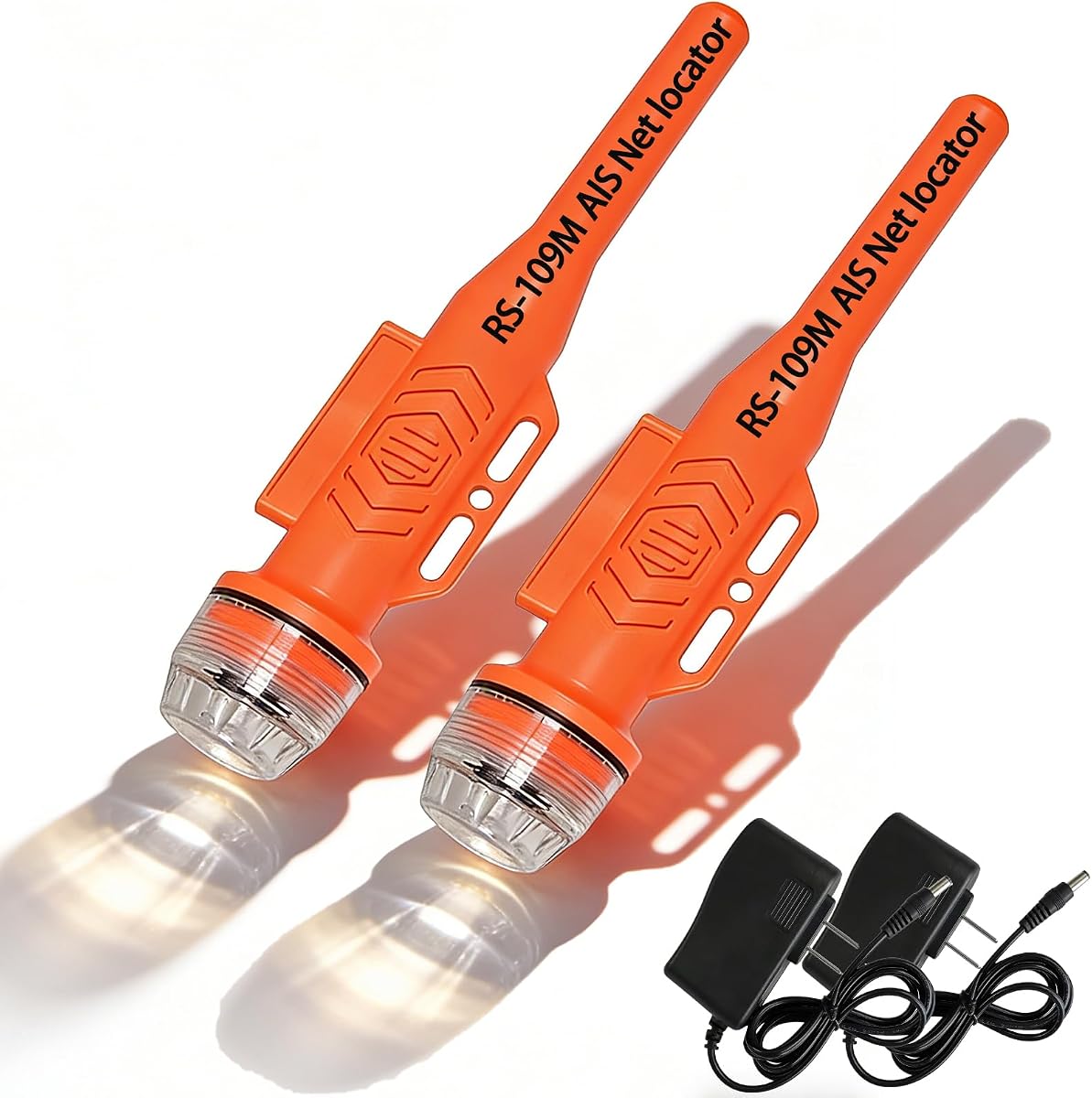
This RS-109M 2-pack offers specialized tracking for net buoys and fishing gear. The IPX7 waterproof design ensures operation even when submerged. Real-time battery sync alerts you to power status before issues arise.
Pros
Fully sealed waterproof housing
Long battery life
Real-time battery level sync
Extended signal range
Cons
Not for main vessel navigation
Limited to buoy tracking use
We may earn a commission when you buy through this link, at no additional cost to you.
Strengths include the 10 nautical mile range and high sensitivity GPS module for precise location updates. The 3000mAh battery supports continuous transmission for weeks reducing maintenance frequency. This data sync ensures you always know gear status.
It is designed specifically for buoy tracking not primary vessel navigation. Users seeking a main ship transponder should look elsewhere. This specialized focus makes it ideal for fishermen needing gear retrieval capabilities.
Commercial fishermen and recreational anglers will benefit from these trackers. They prevent gear loss and ensure efficient retrieval. It is a highly practical add-on for any fishing operation looking to protect equipment.
Gear Protection
By monitoring buoy status in real time, fishermen can avoid losing expensive gear to currents or storms, ensuring long-term operational efficiency.
Maintenance Reduction
The extended battery life means fewer trips to check devices, saving time and resources while keeping gear reliably active throughout the season.
The Raymarine T70424 bundle provides a unified solution for communication and identification. It combines VHF capabilities with AIS functionality in one package. This setup streamlines installation and reduces cabling requirements.
Pros
VHF and AIS combined
Fixed mount accessories
Simplified installation process
Raymarine ecosystem integration
Cons
Requires compatible display system
Higher price than separate units
We may earn a commission when you buy through this link, at no additional cost to you.
Strengths include manufacturer Raymarine support and fixed mount accessories included in the bundle. The system ensures seamless integration with other Raymarine navigation displays. This connectivity creates a cohesive onboard network for all critical data.
A trade-off is the dependency on Raymarine displays for full functionality. Non-Raymarine users may find integration difficult or impossible. However, for existing Raymarine owners this bundle offers significant convenience.
Boats already equipped with Raymarine electronics will maximize value here. The simplified setup and reliable performance make it a smart choice. It is recommended for those seeking a cohesive navigation system without compatibility issues.
Unified Ecosystem
By combining VHF and AIS into one bundle, this system reduces clutter and complexity, ensuring all communication and safety data flows smoothly to your navigation display.
Streamlined Installation
With accessories included and standardized connections, installers can set up the system faster, reducing labor costs and ensuring a professional finish.
The ACR RESQLINK is a vital personal safety tool rather than a ship transponder. It broadcasts distress alerts via satellite and AIS frequencies ensuring rapid rescue. Its compact size allows easy attachment to life jackets.
Pros
Global satellite signaling
Personal portable design
No subscription needed
5-year battery life
Cons
Limited to personal emergencies
No navigation data display
We may earn a commission when you buy through this link, at no additional cost to you.
Strengths include Return Link Service confirmation which notifies you that rescue teams have received your signal. The 406 MHz and 121.5 MHz signals offer dual layer safety. NFC technology provides easy battery status checks via mobile apps.
It is not designed for navigation tracking but strictly for emergencies. Users expecting navigation features will be disappointed. This focused purpose ensures reliability when every second counts during an accident.
Every crew member on small vessels should carry one. It provides peace of mind during solo sailing or offshore adventures. It is the top recommendation for affordable personal marine safety equipment.
Immediate Rescue Coordination
The dual frequency signaling ensures that both nearby vessels and global satellite networks are alerted, maximizing the chances of a quick response in distress situations.
User Confidence
With Return Link Service, users are not left wondering if help is on the way, providing crucial psychological support during high-stress emergency scenarios.
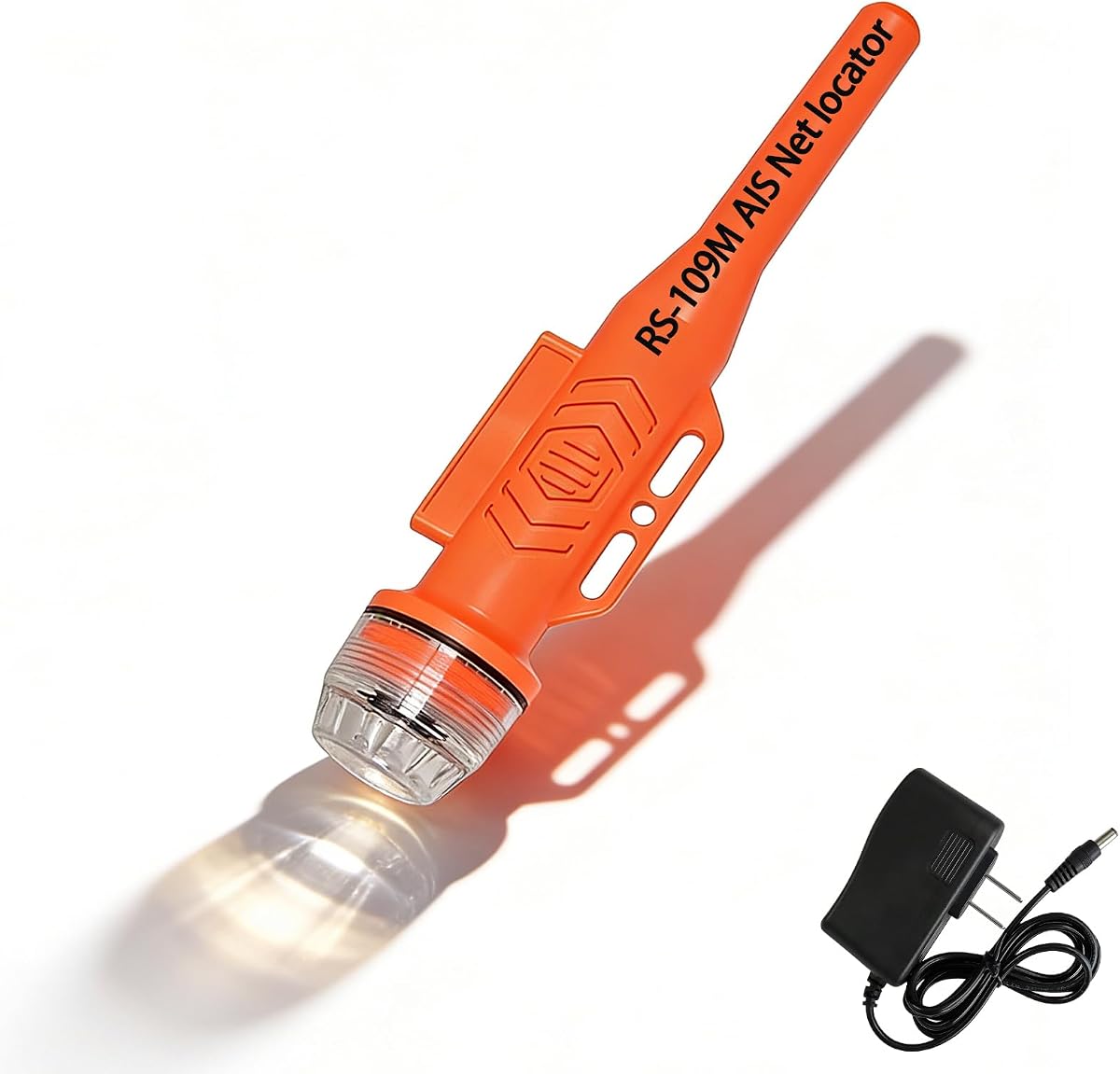
This single RS-109M unit provides robust tracking capabilities for buoy deployment. Like its 2-pack counterpart it features IPX7 waterproofing and a 10 nautical mile range. Real-time battery sync ensures operational awareness without extra effort.
Pros
Fully sealed waterproof housing
Long battery life
Real-time battery level sync
Extended signal range
Cons
Single unit purchase only
Limited to buoy tracking use
We may earn a commission when you buy through this link, at no additional cost to you.
Strengths include the high sensitivity GPS module and 3000mAh battery capacity. These ensure accurate positioning and extended transmission times. It reduces the need for frequent battery replacements during active seasons.
It is strictly for buoy and net tracking not ship navigation. Users needing vessel identification should look at Class B or A transponders. This specific use case makes it perfect for fishing gear management.
Fishermen looking for a single reliable tracker will find value here. It protects investment in nets by ensuring they can be located quickly. It is a practical choice for targeted fishing operations.
Operational Reliability
With a battery capable of sustaining signal transmission for weeks, this unit minimizes downtime and ensures continuous tracking throughout extended fishing periods.
Precise Location Data
The high sensitivity GPS module delivers accurate coordinates even in open waters, enabling quick retrieval of gear without unnecessary search time.
The Icom M94D combines VHF capabilities with a built-in AIS receiver. It is a handheld unit providing communication safety without the bulk of fixed systems. Float and flash features ensure it is easily recovered if dropped.
Pros
Handheld convenience
Integrated AIS receiver
Floats and flashes if dropped
Powerful audio output
Cons
Limited range compared to fixed units
Battery life depends on usage
We may earn a commission when you buy through this link, at no additional cost to you.
Strengths include powerful 1500 mW audio and simplified GPS navigation. The receiver displays nearby vessel traffic which is rare for handhelds. This allows better awareness while away from the main console.
Battery life and range are limited compared to fixed transceivers. It should be a backup not a primary system. However, for small boats or emergencies this level of portability is invaluable.
Sailors and small boat operators will appreciate the extra safety layer. It offers peace of mind when stepping away from the helm. It is recommended as a supplementary handheld for versatile communication.
Portable Situational Awareness
Having AIS data available on a handheld allows crew to stay informed of traffic even while on deck, enhancing safety during open vessel activities.
Durable Design
The float and flash mechanism ensures that the radio is recoverable if it goes overboard, protecting your investment and maintaining access to communication tools.
This Icom M510 EVO integrates VHF communication with NMEA 2000 connectivity. It provides a modern upgrade path for vessels with compatible networks. The inclusion of AIS data enhances safety directly on the radio interface.
Pros
NMEA 2000 connectivity
Integrated AIS support
Modern EVO design
Reliable Icom quality
Cons
Requires NMEA 2000 network
Fixed mount requirement
We may earn a commission when you buy through this link, at no additional cost to you.
Strengths include the Icom brand reputation for reliability and the modern design. It supports standard marine radio functions while adding critical safety data integration. This simplifies the dashboard by reducing the need for separate units.
Installation requires an existing NMEA 2000 network which adds cost. Users without this system may find it difficult to use. However, for modern boats this connectivity is a significant advantage.
Vessels with updated electronics will find this unit ideal. It blends communication and navigation data seamlessly. It is recommended for owners seeking streamlined integration in their helm setup.
Network Integration
By connecting to NMEA 2000 networks this radio shares data with other instruments, creating a unified dashboard that improves decision making during navigation.
Reliability
The Icom brand ensures consistent performance even in challenging conditions, giving crews confidence that their communication tools will function when needed most.
This FLIR RAYMARINE Class B transponder is designed for seamless integration with Raymarine navigation systems. It offers full transmit and receive capabilities for enhanced situational awareness. The built-in antenna splitter simplifies installation significantly.
Pros
Compatible with Raymarine displays
Built-in antenna splitter
SO-TDMA networking
Multiple data compatibility
Cons
Requires specific display system
Limited standalone functionality
We may earn a commission when you buy through this link, at no additional cost to you.
Strengths include SO-TDMA networking for longer range and faster performance. It supports NMEA2000, NMEA0183, and SeaTalkng protocols for broad compatibility. This ensures data flows correctly to any connected navigation chart plotter.
It requires a Raymarine display for full functionality which limits versatility. Non-Raymarine users may find it unusable. However, within the Raymarine ecosystem it is a reliable and high performance option.
Raymarine owners should consider this for upgrading older systems. It improves the reliability of onboard safety data integration. It is a solid recommendation for those invested in the Raymarine hardware ecosystem.
Optimized Networking
Using SO-TDMA networking ensures faster signal updates and better range, keeping your traffic display current even in busy shipping areas.
Installation Simplicity
The built-in antenna splitter removes the need for external hardware, making setup cleaner and reducing points of failure in your communication system.
We may earn a commission when you buy through this link, at no additional cost to you.
Buying Guide – How to Choose the Best Ais Transponders
Selecting the right Ais Transponder involves balancing vessel size, usage patterns, and integration requirements. We have identified eight critical factors to consider when making your purchase.
Class A vs. Class B
Class A transponders are mandatory for commercial vessels and offer higher transmission power and data update rates. Class B units are suitable for recreational boats and provide essential safety data at a lower cost.
Choose Class A for compliance and professional use; choose Class B for cost-effective recreational safety.
Display Integration
Some models like the Icom MA-510TR include built-in color displays for real-time traffic viewing. Others rely on external plotters or marine networks to visualize data.
Ensure you have compatible hardware before buying a unit that requires external display integration.
Power Requirements
Verify that the transponder voltage requirements match your boat's electrical system. Most units support 12V or 24V systems but some may require specific wiring configurations.
Matching power inputs prevents electrical damage and ensures reliable operation during long voyages.
Antenna Configuration
Many transponders require a dedicated antenna or an integrated splitter to share the VHF radio antenna. Proper height and placement affect transmission range significantly.
Install antennas as high as possible to maximize signal range and avoid obstruction by superstructure.
NMEA Compatibility
For data sharing with chart plotters or GPS systems ensure the unit supports NMEA 0183 or NMEA 2000 standards. This allows seamless integration into existing navigation networks.
Compatible data protocols prevent communication errors and allow all instruments to update accurately.
Safety Features
Look for additional safety tools like collision alarms, anchor watch, and DSC calling capabilities. These features add layers of protection beyond simple identification broadcasting.
Prioritize models with active alarm systems to avoid manual monitoring fatigue.
Durability and Weather Resistance
Marine environments are harsh so look for units with water-resistant or IPX7 rated housings. This ensures operation during rain or accidental splashes.
Selecting weather-sealed models extends the lifespan of your investment significantly.
Budget and Value
Prices range significantly from basic units to professional-grade systems. Determine if you need standalone functionality or system integration to avoid unnecessary costs.
Focus on essential features that match your specific sailing needs to maximize value.
How to Use and Care for Your Ais Transponders
Always power on your transponder well before departure to ensure it broadcasts your position correctly. Configure your MMSI number and vessel details accurately to avoid registration errors during checks.
Regularly inspect antenna connections for corrosion or loose wiring to maintain signal quality. Clean the display unit with a soft cloth to prevent scratches that could hinder visibility.
Test the alarm functions periodically by simulating target proximity or anchor loss scenarios. This ensures all safety alerts remain functional when you need them most during actual voyages.
Frequently Asked Questions
What is the difference between Class A and Class B transponders?
Class A transponders are designed for commercial vessels and transmit more data at higher update rates. Class B units are for recreational boats and provide basic identification at a lower power output and cost.
Can I use a Class B transponder on a commercial vessel?
No, commercial vessels are legally required to carry Class A transponders under international regulations. Using Class B units on commercial ships may lead to compliance violations.
Do all transponders require external antennas?
Most require dedicated antennas for optimal performance, but some bundle models include built-in splitters. Always verify the packaging to see if antenna hardware is included.
How far can an AIS signal typically reach?
Typically signals reach around 20 nautical miles depending on antenna height and vessel size. However, in coastal areas with relay systems the effective range can be much greater.
Is a subscription required for basic AIS tracking?
No, most standard AIS transponders do not require a subscription to broadcast or receive data. You only pay for the initial hardware purchase and installation costs.
Why are my traffic data updates delayed?
Delays usually occur due to interference or low transmission power. Ensure your antenna is installed high and clear of obstructions to improve signal speed and accuracy.
Can I use my transponder for GPS navigation alone?
Transponders are for identification and collision avoidance not primary navigation. You should still use a dedicated GPS unit for detailed route planning and charting.
How do I update my MMSI number?
Most units allow MMSI updates via a front panel menu or computer software. Consult the specific user manual for your model to perform this securely.
Final Thoughts on Choosing the Best Ais Transponders
We have reviewed ten top models ranging from professional Class A units to compact personal beacons. The Icom MA-510TR leads for overall integration while the Furuno FA170 dominates professional grade capabilities.
Prioritize safety features and compatibility with your existing electronics when making a final decision. Your choice should align with both regulatory requirements and your specific boating habits.
Remember to check current pricing and availability as these factors change frequently. Verify that you have the correct power and antenna setup before finalizing any purchase.