
Lightning ARRESTOR for CB or Ham Base Antennas – Workman A28
4.5Editor score
PL-259 connectors
Simple ground screw
Affordable price point
This guide compares the top antenna lightning arrestor options for ham radio, CB, and cellular setups to protect equipment from surge damage effectively.
Protecting your sensitive radio and communication equipment from lightning strikes is essential for any serious operator. An antenna lightning arrestor acts as a critical safety barrier, diverting dangerous surges away from your valuable gear and into the earth ground system securely.
We have evaluated ten highly rated models based on their construction quality, frequency range, and ease of installation. Our comparison focuses on key specs like insertion loss, connector types, and gas discharge tube ratings to help you choose the right protection.
Each product pick highlights specific strengths and ideal use cases for different antenna systems. Please note that availability and pricing can change frequently on Amazon, so always check the current details before making your final purchase decision today.
4.5Editor score
4.6Editor score

4.8Editor score
Here is a side-by-side comparison of all ten models to help you quickly identify which connector type and frequency range best matches your specific antenna system needs.


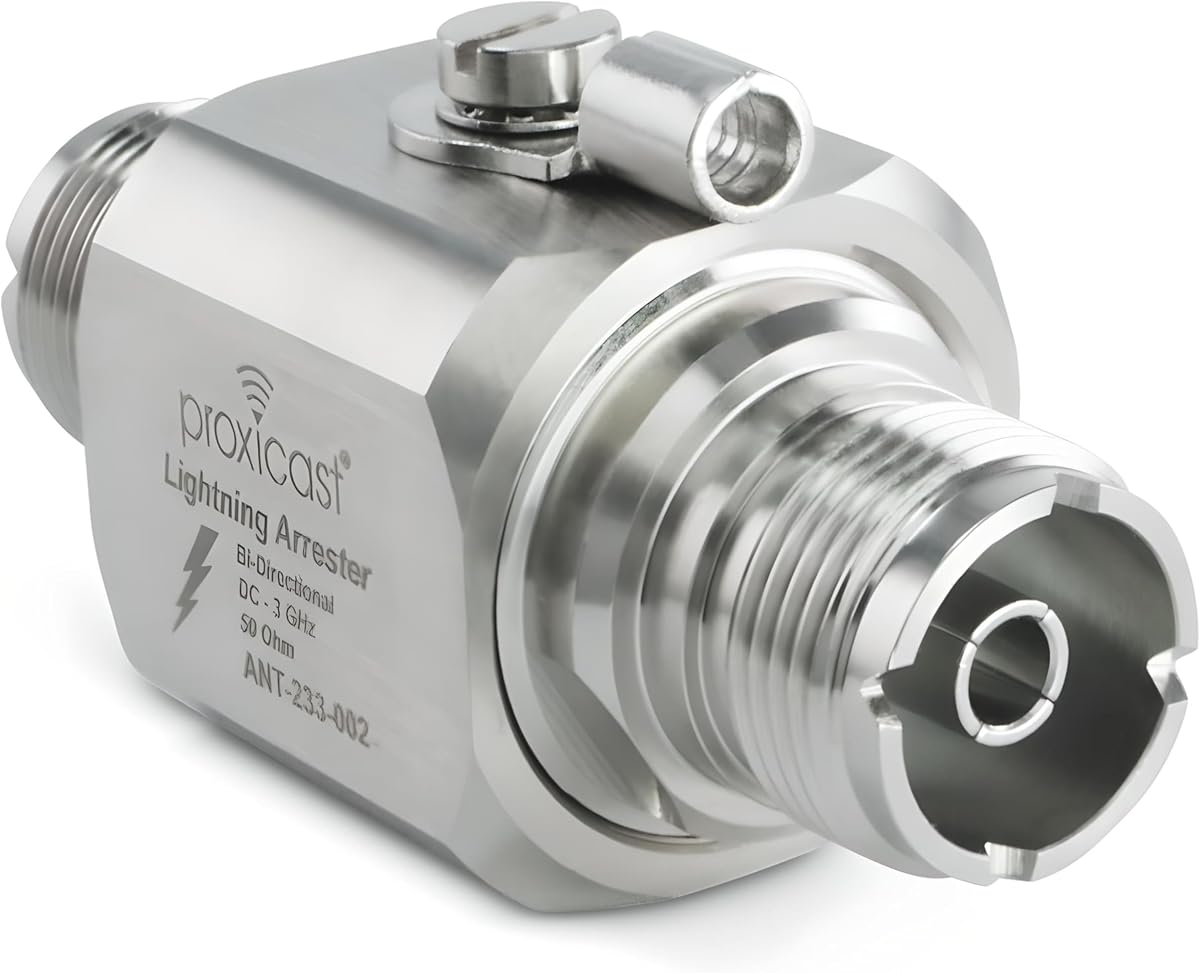
This Proxicast model offers a robust solution for protecting your radio equipment from voltage surges. It features a high-quality gas discharge tube that effectively shunts dangerous energy to ground. Users appreciate the low insertion loss which ensures your signal remains strong even when the device is inline.
We may earn a commission when you buy through this link, at no additional cost to you.
The bi-directional protection design makes it versatile for various antenna setups. It is designed specifically for VHF UHF amateur and CB radios. The connectors are solid and provide a secure connection for your coaxial cables. This durability is essential for long-term outdoor exposure.
One trade-off is that you must provide your own ground cable for proper installation. This is common for high-quality arrestors but adds a small step to setup. However, the reliability of the protection far outweighs this minor inconvenience for most serious operators.
If you need a dependable arrestor for your base station mobile or portable antenna system this unit is a top recommendation. It balances performance and price well. We suggest checking compatibility with your specific coax connectors before ordering to ensure a perfect fit.
The 230V gas discharge tube handles multiple strikes effectively by diverting surges away from sensitive transceivers.
Very low RF insertion loss ensures your communication range remains unaffected by the protection device in the line.
We may earn a commission when you buy through this link, at no additional cost to you.
The Diamond Antenna SP1000 is engineered to protect mobile and base station antennas from lightning induced damage. It safeguards radios and transceivers from harmful surges during electrical storms. This device is particularly popular among operators who use Diamond SP-series antennas for their setups.
We may earn a commission when you buy through this link, at no additional cost to you.
Key strengths include its wideband capability and extremely low loss performance. The insertion loss is less than 0.3 dB which preserves signal integrity effectively. The replaceable surge arrester element adds to its value by extending the life of the unit after a major strike event.
The weather-resistant construction ensures it can withstand outdoor exposure on towers or vehicles. However the price point is higher than some generic alternatives available on the market. This cost is justified by the brand reputation and the specific design features for safety-conscious users.
We recommend this for anyone with Diamond equipment who wants reliable long-term surge protection. It is easy to install in existing systems while maintaining optimal signal. Just ensure you follow grounding best practices for full safety compliance.
The internal surge arrester can be replaced allowing the unit to continue protecting your gear after a discharge event.
Minimal insertion loss means your voice and data signals pass through without noticeable degradation or range reduction.
We may earn a commission when you buy through this link, at no additional cost to you.
This Proxicast arrestor offers reliable wide-band performance from DC to 6 GHz making it suitable for many modern applications. It safeguards 4G 5G cellular modems routers and boosters effectively. The gas discharge tube handles multiple strikes to shunt energy to ground.
We may earn a commission when you buy through this link, at no additional cost to you.
It features bi-directional protection with N-Male and N-Female connectors for flexible installation. The low insertion loss ensures signal attenuation is minimal during normal operation. Bulkhead or panel mounting options make it easy to integrate into various setups.
The main consideration is that you need to attach a separate ground cable for safety. This adds to the installation effort but is standard for surge protection devices. The device is not a standalone fix without proper grounding.
For users with WiFi access points or helium miners this model provides essential protection. It protects against transients and lightning strikes effectively. We suggest this for anyone needing a high frequency arrestor with a robust design.
Operating from DC to 6GHz allows this arrestor to protect both legacy and modern wireless communication devices.
Bulkhead and panel mounting options provide flexibility for integrating the device into enclosures or walls.
We may earn a commission when you buy through this link, at no additional cost to you.
This N type arrestor offers a reliable wide-band performance solution for protecting various radio and cellular equipment. It works for HAM radio GPS receivers and cellular boosters effectively. The 90V gas discharge tube shunts damaging surges to ground efficiently.
We may earn a commission when you buy through this link, at no additional cost to you.
The device is very low loss and has a 50 Ohm impedance to match standard coax. It protects 2.4GHz and 5GHz WiFi antennas as well as ham equipment. This versatility makes it a popular choice for mixed signal setups.
One con is that the ground wire is not included in the package. You will need to source it separately to ensure safety compliance. Additionally the build quality is functional but lighter than premium professional models.
We recommend this for users seeking an affordable protection option for multiple devices. It handles transients well and fits many modern setups. Ensure you connect it properly to earth ground for maximum effectiveness.
Compatible with 3G 4G LTE GPS and WiFi devices making it a versatile choice for many users.
The replaceable tube allows for continued use after a major discharge event if properly maintained.
We may earn a commission when you buy through this link, at no additional cost to you.
The XRDS-RF UHF lightning arrestor features low loss and low VSWR for clear signals. It has a brass nickel plated body with Teflon insulator for quality. The design is suitable for CB and ham radio base stations.
We may earn a commission when you buy through this link, at no additional cost to you.
Key strengths are the reliable frequency band performance from DC to 500MHz. It protects your equipment from dangerous strikes or surges effectively when installed correctly. The brass construction ensures durability in outdoor environments.
It requires an additional ground cable which is not included in the box. Users must ensure they attach it close to the radio equipment for best results. The frequency range is less than some wideband options but sufficient for most CB and UHF use.
We recommend this for CB radio operators who need a solid protection solution. It is easy to install with coax cables and performs well. Just remember to ground it properly for safety.
Brass nickel plated body and Teflon insulator provide durability and reliable electrical performance.
VSWR less than 1.2 ensures minimal signal reflection and maintains system efficiency.
We may earn a commission when you buy through this link, at no additional cost to you.
This coaxial lightning arrester is built with brass nickel plated outer conductor for durability. The PTFE insulating material protects the inner core for a longer service life. It is designed to be all-weather outdoor compatible for permanent setups.
We may earn a commission when you buy through this link, at no additional cost to you.
It uses gas discharge tubes to divert surges during lightning strikes safely. The structure offers wide bandwidth and low insertion loss for good performance. It is compatible with GSM base stations GPS and walkie-talkie systems.
Installation is simple and it can be mounted through an enclosure wall easily. You must connect a ground wire for safety as it is not included. The design is straightforward but effective for protecting home electrical equipment.
We recommend this for users needing basic surge protection for various RF systems. It balances cost and durability well. Ensure you install it at the point of entry for maximum protection.
Brass nickel plated outer conductor improves corrosion resistance for long-term outdoor use.
PTFE material effectively protects the inner core from degradation and ensures stable signal connection.
We may earn a commission when you buy through this link, at no additional cost to you.
The Workman A28 is a basic lightning arrestor designed for CB or Ham base antennas. It features PL-259 male and female connectors on each end for standard coax. A ground screw on the side allows for easy grounding.
We may earn a commission when you buy through this link, at no additional cost to you.
Its main strength is simplicity and low cost making it accessible for casual users. It serves as a surge protector to attach between your radio and antenna. While it does not have advanced specs it offers essential protection.
The design is straightforward and lacks some of the premium features of higher-end models. Users should not expect high impedance ratings detailed testing data. However for budget-conscious operators it performs its basic role adequately.
We recommend this for those with simple setups looking for affordable protection. It is easy to install and provides a basic level of safety. Ensure you ground it properly to get the best results.
The ground screw on the side allows for quick and easy connection to earth ground for safety.
One of the most cost-effective ways to add basic surge protection to your antenna system.
We may earn a commission when you buy through this link, at no additional cost to you.
The RAIGEN Lightning Arrestor is built for professional outdoor deployments and IT installers. It protects cell signal boosters LoRaWAN gateways and outdoor WiFi access points. The wide-band 0 to 6 GHz performance covers many frequencies in one device.
We may earn a commission when you buy through this link, at no additional cost to you.
It features a replaceable 90V gas discharge tube and less than 0.1 dB insertion loss. This ensures your signal stays strong while protecting devices from surges. The weatherproof construction is rated for permanent outdoor mounting.
A key benefit is the ground lug included for proper bonding to building ground systems. However a ground cable itself is not included. The price is higher than basic units but justified by the professional features and build quality.
We recommend this for smart agriculture deployments and IoT infrastructure builders. It provides a safety measure for investments in expensive gear. Ensure you connect it close to your device for best protection.
Includes a ground lug for proper bonding to building ground systems which simplifies professional installations.
Protects a wide range of devices from LoRaWAN gateways to WiFi access points effectively.
We may earn a commission when you buy through this link, at no additional cost to you.
This model is designed specifically for TV satellite AM FM antennas and cable internet use. It features F-Type Male and Female connectors for standard 75 Ohm coax. It is also compatible with 4G 5G signal boosters that have 75 Ohm outdoor antennas.
We may earn a commission when you buy through this link, at no additional cost to you.
The gas discharge tube shunts damaging surges to ground effectively. It has a very low RF insertion loss to keep your TV and internet signals clear. The bi-directional protection works well for indoor and outdoor setups.
You must provide a separate ground cable for installation which is standard practice. Also note that it is specifically designed for 75 Ohm systems not 50 Ohm. Using it on the wrong impedance can affect performance.
We recommend this for users with satellite dishes or cable TV antennas needing protection. It balances cost and performance well for home entertainment systems. Always ground it properly to avoid equipment damage.
Features F-Type connectors specifically for TV and satellite antenna cable connections.
Designed for 75 Ohm impedance systems which is standard for most TV and cable applications.
We may earn a commission when you buy through this link, at no additional cost to you.
The Diamond Antenna SP3000 Lightning Arrester is built for high-power setups. It handles 200W and covers DC to 3000 MHz which suits many ham radio operators. It is designed specifically for Ham Radio antennas and coaxial systems.
We may earn a commission when you buy through this link, at no additional cost to you.
Its high impulse wave discharge capacity provides solid protection against severe storms. The brand reputation ensures quality manufacturing and reliable performance. It is a great choice for those with powerful transceivers.
One downside is the higher price compared to budget options. Also the N-Type Female/Female connectors may require adapters for older setups. However the power handling makes it superior for high-power scenarios.
We recommend this for serious ham operators with high power transmitters. It provides robust protection for expensive gear. Always follow installation instructions to ensure maximum safety.
Rated for 200W which allows it to be used with high-power HF and VHF transmitters.
Covers DC to 3000 MHz which provides protection for a wide range of amateur bands.
We may earn a commission when you buy through this link, at no additional cost to you.
Selecting the right antenna lightning arrestor involves understanding your system specifications and protection needs. This section covers key factors to help you make an informed decision.
The connector type must match your coaxial cables and antenna connectors to ensure a secure fit. Common types include UHF SO-239 PL-259 N-Type and F-Type. Mismatched connectors can lead to signal loss or physical damage.
Always verify your existing coax and antenna connectors before purchasing an arrestor.
Impedance is critical for maintaining signal quality and preventing reflections. Most amateur and cellular systems use 50 Ohm while TV and satellite often use 75 Ohm. Using the wrong impedance can degrade performance significantly.
Choose an arrestor that matches the impedance of your antenna system.
Ensure the arrestor covers the frequency bands you use. Some units work from DC to 500MHz while others cover up to 6GHz for modern cellular and WiFi. A wider range ensures future-proofing.
Check the frequency specs to ensure coverage for all your bands.
Insertion loss measures how much signal strength is reduced by the device. Low loss is vital for maintaining communication range. Look for values below 0.5 dB for optimal performance.
Select models with minimal insertion loss to protect your signal.
Outdoor arrestors must withstand weather and corrosion. Brass or nickel-plated bodies and Teflon insulators are durable choices. Cheaper plastics may degrade over time.
Prioritize weather-resistant materials for long-term outdoor use.
Proper grounding is essential for the arrestor to function safely. Look for a ground screw or lug to connect to earth ground. Without proper grounding the device cannot divert surges.
Ensure you have a ground wire and a good earth ground point.
For high-power transmitters choose an arrestor rated for your wattage. Some models handle only low power while others handle hundreds of watts. Overloading a unit can cause failure.
Match the power rating to your transmitter's maximum output.
Some models allow replacing the internal gas discharge tube after a strike. This extends the life of the device and saves money. Not all arrestors offer this feature.
Consider replaceable elements if you are in a high-strike area.
Install the arrestor close to where your coax enters the building. This location provides the best protection for indoor equipment from surges traveling through the cable.
Connect one end to your antenna coax and the other to your radio or cable. Ensure all connections are tight to prevent signal loss and water entry.
Ground the device using a separate copper ground wire. Connect it to a ground rod or a grounded metal cold water pipe for safety.
Yes, a ground wire is absolutely required for the arrestor to work safely. It diverts dangerous energy from the cable into the earth ground. Without it the device offers minimal protection and could be unsafe.
No, you should use an arrestor that matches your system impedance. Using mismatched impedances will cause signal reflections and loss. For TV and cable use specific 75 Ohm arrestors.
A quality arrestor has very low insertion loss so the impact is negligible. Look for models with less than 0.5 dB loss. Poor quality units may degrade your signal more.
Replace it if it was subjected to a major lightning strike or if you suspect damage. Some models have replaceable gas tubes. Inspect it annually for corrosion or wear.
Ideally use one arrestor per antenna line. Multiple lines might require multiple units to ensure all are protected properly. Using one for multiple lines could overload the device.
It is designed primarily for lightning-induced surges. While it helps with other electrical transients it may not protect against a full EMP event. It is best for direct strike protection.
We reviewed ten top models offering diverse options for ham CB and cellular setups. Whether you need budget protection or high-power handling there is a fit for everyone.
Prioritize proper grounding and connector compatibility to ensure safety and performance. Investing in a quality unit now can save expensive equipment later.
Prices and availability change so check current details on Amazon before buying. Stay safe with a reliable arrestor for your antenna system.