
Handheld Fish Finder Portable Fishing Kayak Fishfinder
4.2Editor score
Portable with neck strap
Works in fresh and salt water
Simple LCD display interface
Finding the right tool to locate fish without breaking the bank is a common challenge for anglers. Modern technology has made it possible to get reliable sonar data at a fraction of the cost of traditional systems. This guide explores the best cheap fishfinder options available today to help you choose wisely.
We have evaluated these products based on their sonar accuracy, ease of use, build quality, and overall value for money. Our analysis includes both wired and wireless models suitable for kayaks, small boats, and shore fishing. Each item was selected to ensure it meets the needs of budget-focused fishermen.
Each pick in this list highlights specific strengths such as display clarity, depth range, or portability. You will find detailed breakdowns of features and real-world performance expectations. Please note that prices and availability can change frequently, so checking the latest offers is always recommended before purchasing.
4.2Editor score
4.6Editor score

4.7Editor score
As an Amazon Associate we earn from qualifying purchases.
The following table provides a side-by-side comparison of the top ten affordable fish finders selected for this guide. It highlights key specifications and capabilities to help you quickly identify which model suits your specific fishing environment and budget constraints.


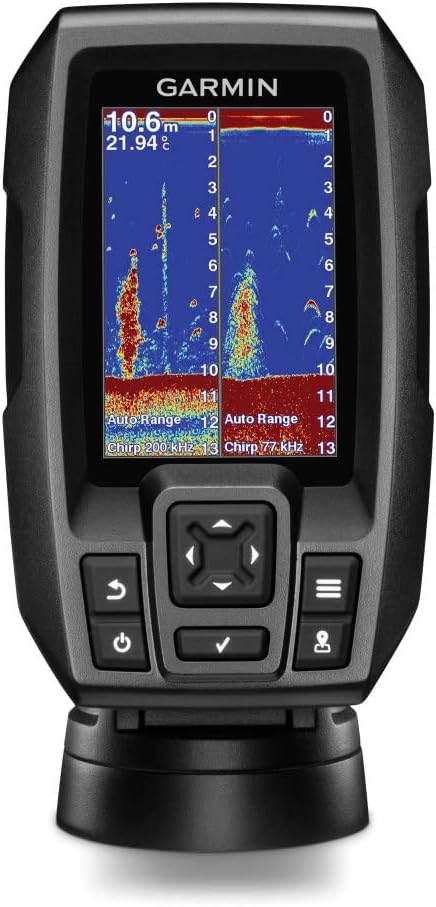
The Garmin Striker 4 stands out as the top choice for those seeking a reliable yet affordable fishfinder. With a high rating from users, it offers a perfect balance of functionality and simplicity. The ClearVü scanning sonar provides near-photographic images that make identifying fish and structure much easier than standard sonar.
We may earn a commission when you buy through this link, at no additional cost to you.
Key strengths include its intuitive keypad interface which requires minimal setup time. The built-in GPS allows you to mark waypoints and navigate back to productive spots effortlessly. This feature is particularly useful for anglers fishing unfamiliar waters where knowing your location is critical for success.
While the screen size is not the largest in its class, the display remains clear even in bright sunlight. Some users might find the lack of a touchscreen limiting, but the physical buttons ensure operation is possible even with wet gloves or in rough conditions where touchscreens often fail.
This model is ideal for small boat owners or kayakers who need robust performance without a premium price tag. If you want a dependable tool that combines sonar imaging with basic navigation, the Striker 4 is the strongest recommendation in this budget category for 2026.
This sonar provides high-frequency images that show detailed representations of objects and structure below the boat for better identification.
Use the map to easily view, mark, and navigate to locations such as brush piles, stumps, and docks for efficient fishing trips.
We may earn a commission when you buy through this link, at no additional cost to you.
The Lowrance Eagle Fish Finder simplifies the process of locating fish by automating many settings that usually require manual adjustment. It is designed to help beginners get started quickly without needing to understand complex sonar settings. The 4-inch IPS screen ensures visibility from almost any angle even when wearing sunglasses.
We may earn a commission when you buy through this link, at no additional cost to you.
One of the main advantages of this unit is the Auto-Tuning Sonar which automatically optimizes settings based on the water conditions. This allows you to focus on the line rather than the screen. The included Bullet Skimmer transducer provides a broad beam that covers more water area which is helpful in open spaces.
Despite its simplicity, the unit does offer useful features like depth zoom and fish alarms though it lacks advanced mapping capabilities. Some users might miss the depth of manual control found in higher-end models but for straightforward detection the automated approach works well.
This device is best suited for anglers who want a plug-and-play experience on small boats or kayaks. If your priority is ease of use and clear visibility without fussing with menus, the Eagle Fish Finder delivers reliable performance at a competitive price point.
This feature automatically provides optimized settings so you can focus on finding fish rather than adjusting frequencies manually.
The screen stays clear in bright sunlight from wide viewing angles and through polarized sunglasses for better readability.
We may earn a commission when you buy through this link, at no additional cost to you.
For anglers on a tight budget, this handheld unit provides essential depth and fish detection capabilities without the need for boat mounting. It is powered by standard AAA batteries which makes it easy to replace during a trip. The lightweight design allows you to take it anywhere from the dock to a kayak.
We may earn a commission when you buy through this link, at no additional cost to you.
The unit detects water depth and approximate fish location along with the size of the fish or bottom structure. It operates effectively in both fresh and salt water making it versatile for different fishing environments. You can adjust sensitivity settings to filter out noise and focus on significant returns.
Because it is not a full system, it lacks GPS and detailed mapping which might be a drawback for some users. The screen is small but readable if adjusted for sunlight. This limitation is acceptable given the very low cost and the freedom it offers for shore or kayak fishing.
This device is perfect for casual anglers or those who just want to check depth before dropping a line. If portability and cost are your primary concerns, this handheld finder is the most accessible way to add sonar capability to your gear without spending much.
It comes with a neck strap allowing you to wear it around your neck when busy on the kayak or storing it in a tackle box.
The fishfinder can be used in fresh water as well as salt or sea water ensuring it works for various fishing adventures.
We may earn a commission when you buy through this link, at no additional cost to you.
The Garmin STRIKER Vivid 4cv brings premium features to a more accessible price point making it a top choice for serious anglers. It includes a color display that helps distinguish fish from structure using vivid scanning sonar color palettes. This visual clarity enhances your ability to target specific fish holding areas.
We may earn a commission when you buy through this link, at no additional cost to you.
Key strengths include high sensitivity GPS which allows for precise waypoint marking and route creation. The built-in Quickdraw Contours mapping helps you understand the underwater terrain without needing additional chart purchases. This adds significant value for those navigating diverse water bodies.
While the price is higher than basic units, the included transducer and advanced sonar justify the cost for many users. The setup might be slightly more complex than simpler models, but the detailed information provided on the screen is worth the learning curve for better results on the water.
This fishfinder is best for those who want advanced imaging and mapping without spending thousands. If you value color contrast and GPS features, the Vivid 4cv offers a robust solution that performs well across various fishing scenarios and conditions.
New vivid scanning sonar color palettes make it easy to distinguish fish and structure on the screen.
Includes built-in Quickdraw Contours mapping to help visualize underwater terrain without buying extra charts.
We may earn a commission when you buy through this link, at no additional cost to you.
The Humminbird PiranhaMAX 4 is a straightforward unit that provides dual beam sonar for flexibility in fishing situations. You can choose between a narrow beam for detail or a wide beam for coverage. This versatility helps in identifying fish and structure across different water depths and types.
We may earn a commission when you buy through this link, at no additional cost to you.
The tilt and swivel mount included with the package allows you to adjust the viewing angle to suit your position on the boat. This mechanical adjustment is simple and effective ensuring you get a clear view of the display even when seated at different heights. It is durable enough for daily use.
Lacking GPS means you will need a separate device for navigation but this keeps the cost down. The screen is functional though not as advanced as color displays. The limited warranty provides peace of mind for your investment ensuring support if issues arise.
This model is ideal for anglers who prefer traditional sonar views and do not need mapping features. If you want a reliable dual beam system that is easy to install and operate, the PiranhaMAX 4 is a solid contender in the budget market.
Choose from a narrow and a wide beam for great detail or a generous coverage area helping you identify fish and structure.
Quickly adjust your viewing area angle with the included Tilt and Swivel Mount for optimal screen visibility.
We may earn a commission when you buy through this link, at no additional cost to you.
Designed specifically for kayak anglers, the LUCKY Portable Fish Depth Finder is lightweight and easy to carry around your neck. It detects fish schools and depth with an audible alarm that alerts you when fish are passing by. This feature ensures you do not miss strikes when your attention is elsewhere.
We may earn a commission when you buy through this link, at no additional cost to you.
The unit operates on standard batteries and includes a save mode to extend usage time. You can switch between feet and meters depending on your preference and the display remains visible in both sunshine and darkness thanks to the backlight. The compact design means it fits easily in a small storage area.
One limitation is the battery life which may require frequent replacement during long days on the water. The setup is manual which can be slightly cumbersome compared to auto-tuning models. However for the price point and targeted utility it remains a strong option for solo paddlers.
This device is best for those who want a dedicated tool for kayak fishing without drilling holes in the hull. If you need a portable unit that warns you of fish activity and fits in your pocket, the LUCKY model serves this purpose effectively.
Once you toss the transducer into the water, you will get alarms when fish or fishing schools pass by the coverage place.
Designed for one hand holding and includes a neck strap for wearing around the neck when busy on the kayak.
We may earn a commission when you buy through this link, at no additional cost to you.
The Humminbird Helix 5 offers a significant upgrade with Dual Spectrum CHIRP Sonar that delivers detailed fish arches and structure views. It comes equipped with a Basemap covering over 10,000 lakes and coastlines so you can navigate without buying extra charts immediately. This integration makes it a true chartplotter.
We may earn a commission when you buy through this link, at no additional cost to you.
Real-time mapping capabilities allow you to create maps of depth contours and bottom hardness while boating. This feature is unique for a unit in this price range. The keypad system is designed for reliable operation even in wet or cold weather ensuring you can control the unit easily.
While it is heavier and more expensive than portable handhelds, the benefits of GPS and detailed mapping are substantial. The system is user-friendly with softkey controls that simplify access to complex features. It suits those who want more than just a simple depth reading.
This model is ideal for anglers who want advanced mapping and sonar in one package. If you spend time on multiple lakes and value accurate navigation, the Helix 5 provides the technology to enhance your fishing strategy significantly.
Delivers views of fish arches and fish-holding structure with two ways to search for better target separation.
Equipped with Humminbird Basemap this chartplotter includes coverage of 10,000+ lakes and continental U.S. coastlines.
We may earn a commission when you buy through this link, at no additional cost to you.
This wireless fish finder eliminates the need to drill holes in your boat by using a portable sonar probe that can be cast or tethered. The connection between the sensor and the handheld unit supports a distance of up to 262 feet allowing you to scan areas away from the boat effectively.
We may earn a commission when you buy through this link, at no additional cost to you.
The color LCD display offers clear visibility and selectable background colors for different lighting conditions. It detects water temperature and bottom contour in addition to fish size. The unit supports different modes to help you filter information based on your specific fishing needs.
Wireless technology can sometimes be affected by environmental factors or distance which may require careful placement of the sensor. However, the convenience of not needing a physical connection to the boat makes this a popular choice for shore or kayak fishing. Battery management is key since both units are rechargeable.
This device is best for those who want flexibility without permanent installation. If you value the ability to throw the sensor around a boat or dock, this wireless model offers a practical and modern solution for finding fish.
Maximum distance between the sensor and the handheld unit is 262FT allowing you to cast or tether without drilling.
Clear color display with selectable background colors enables you to read the screen in bright sunlight or at night.
We may earn a commission when you buy through this link, at no additional cost to you.
This portable unit features a 2.4-inch colorful LCD screen that makes it easy to read data even in bright conditions. The rechargeable sensor supports up to 147 feet of depth detection and covers a wide angle to ensure you do not miss fish holding areas. The unique attractive lamp sensor can help lure fish closer to the bait.
We may earn a commission when you buy through this link, at no additional cost to you.
The device supports multiple languages and displays detailed information including fish size temperature and bottom contour. The alarm functions ensure you are notified when fish pass by the coverage area. It is rechargeable which reduces waste compared to disposable battery models.
While the lamp feature can be a double-edged sword depending on the species, it adds a unique capability. The unit is designed for versatility across lake river and sea environments. Battery life is reasonable but keeping an eye on the sensor status is recommended for uninterrupted use.
This model is best for anglers who want a balance of features and display quality. If you value a large screen and a unique sensor capability, this portable finder is a strong contender for varied fishing environments.
Portable fish finder 2.4 inches colorful LCD Screen allows you to detect fish size depth and bottom contour easily.
DANOPLUS kayak fish finder sonar sensor is rechargeable supporting 147 feet under water detection with a wide angle.
We may earn a commission when you buy through this link, at no additional cost to you.
This wireless fish finder uses both Sonar and Radio frequencies to provide versatile and accurate depth readings. You can fine tune the sonar readings without complexity thanks to the dual wave technology. The display allows you to switch between black and white backgrounds for better visibility in different lighting.
We may earn a commission when you buy through this link, at no additional cost to you.
The sensor and receiver are both rechargeable offering up to six hours of continuous work. This is useful for all-day fishing trips. The unit can detect water temperature fish size and bottom contour making it a complete solution for basic depth and fish hunting needs.
One limitation is that it does not display fish icons in very shallow water under one meter so you should be aware of the depth before relying on icons. Also checking sensor power requires placing it in water which might be inconvenient for some. However for general use it is robust.
This model is best for those who want wireless capability and dual frequency options. If you value rechargeability and a simple display, this device provides a reliable tool for boats kayaks and shore fishing.
Equipped with 2 functional airwave frequencies so you can fine tune its sonar readings without complexity.
You can mount the sensor on boat or fishing rod with string or float it to accessible area for easy tracking.
We may earn a commission when you buy through this link, at no additional cost to you.
Selecting a fishfinder requires considering factors like sonar type display clarity and battery life. This section breaks down the key elements you should look for when shopping on a budget.
Sonar technology is the core of any fishfinder. Basic models use 2D sonar which provides a simple cross-section of the water. More advanced units use CHIRP or ClearVü technology for higher resolution images. When budget is tight, look for CHIRP or dual beam options as they provide better fish arches and structure separation.
Look for units that specify CHIRP or Dual Beam for better clarity even at lower price points.
The display size affects how much information you can view at once. Small screens like 3.5 inches are common in cheap models but can be hard to read in bright light. Larger 4 or 5 inch screens offer more detail. Also consider if the screen is black and white or color; color helps distinguish targets quickly.
A 4-inch color screen offers the best balance of visibility and portability for most anglers.
Built-in GPS allows you to mark waypoints and save routes. While some budget units lack this, many now include it. If you fish multiple spots or deep water, having a map is crucial. Look for models that offer basic waypoint marking or preloaded maps like Quickdraw or Basemap.
Prioritize units with at least basic waypoint marking if you fish in uncharted waters.
Decide if you need a mountable unit or a handheld. Kayak anglers often prefer wireless or handheld models to avoid drilling holes. Boat owners might want a transom mount. Check the mounting options and whether a transducer is included in the box.
Handheld or wireless models are best for kayaks to preserve the hull and simplify setup.
Battery life is often overlooked but critical for long trips. Some units use standard AAA batteries while others have rechargeable internal packs. If you plan to use the device for many hours, consider the battery type and availability of replacements.
Rechargeable units reduce waste but require a charging source; check hours of operation before buying.
Most cheap fishfinders have a range of 300 to 1600 feet. Ensure the depth capability matches your local fishing spots. Shallow water fishing does not need extreme depth but deep lake or river fishing requires a higher maximum.
Verify the maximum depth rating fits your specific fishing locations to avoid disappointment.
Since these devices are used near water, splash proof ratings are essential. Look for IPX7 ratings which mean the unit can withstand temporary immersion. This durability ensures the device lasts longer even if splashes occur on the deck.
Choose a unit with at least IPX7 water resistance to protect against splashes and rain.
User interface matters. Menus that are too complex can be frustrating on the water. Look for simple controls or auto-tuning features that set the sonar for you. This ensures you spend time fishing rather than adjusting settings.
Select models with intuitive interfaces or auto-tuning to minimize setup time on the water.
To use a fishfinder, first ensure the transducer is properly installed. For transom mounts, place it at least 6 inches below the hull and parallel to the water. For handheld units, attach the sensor to a float or cast it into the water.
Turn on the unit and select the sonar mode. If your device has auto-tuning, let it run for a few minutes to calibrate. Adjust sensitivity if you see too much noise or not enough fish arches on the screen.
To maintain your fishfinder, rinse it with fresh water after every salt water use. Store it in a dry place and avoid dropping the transducer. Regularly check battery contacts to ensure good connections during your next trip.
Yes, many budget fishfinders are capable of handling depths up to 1600 feet. While high-end models offer more detail, basic sonar can still detect fish and structure effectively in deep water. It is important to check the specific depth rating of the model you choose to ensure it matches your fishing environment.
Not necessarily, as many affordable units now include basic GPS waypoint marking. However, for detailed charting, you might need a separate device or premium map card. If you primarily need to mark and return to spots, an all-in-one unit should suffice.
Battery life varies by model and power source. Rechargeable units typically last about 6 to 10 hours while disposable battery models can last 4 to 5 hours. Always check the battery capacity and type before purchasing to ensure it fits your trip duration.
Yes, most modern fishfinders are designed for both fresh and salt water use. Ensure the unit has a waterproof rating like IPX7 to prevent damage from splashes. Rinse the device with fresh water after salt water use to avoid corrosion on connectors and the transducer.
CHIRP sonar sends a range of frequencies rather than a single pulse, providing better target separation and clearer images. Regular sonar may struggle to distinguish between fish and structure in busy environments. CHIRP is preferred for accurate fish arches.
Yes, you can use wireless models that cast a sensor into the water or mount a unit on a paddle shaft using clamps. These methods avoid permanent changes to the kayak hull. Portable units are also ideal since they can be easily stowed when not in use.
Noise often comes from interference like propellers, fish schools, or shallow water turbulence. Adjust the sensitivity settings to reduce background clutter. Ensure the transducer is securely mounted and not rubbing against the hull which can create vibration noise.
Wireless fishfinders offer great convenience for kayaks and small boats since there are no cables to manage. However, wired units generally provide more stable connections and longer range. Choose based on whether portability or stability is more important for your fishing style.
We have reviewed ten top-rated affordable fishfinders that offer a range of features from basic depth detection to advanced GPS mapping. The Garmin Striker 4 stands out as a versatile choice for those needing both sonar and navigation. The handheld portable options provide excellent flexibility for kayak anglers and shore fishermen.
When selecting a unit, prioritize features that match your specific fishing needs. If you fish in deep water, ensure the depth range is sufficient. For beginners, auto-tuning sonar makes the learning curve much smoother. Consider how often you fish and how long you stay out to choose the right battery life.
Prices and availability can fluctuate frequently so check current offers before making a purchase. Investing in a reliable fishfinder can significantly improve your time on the water. We hope this guide helps you find the perfect budget-friendly solution for your next fishing adventure.