
Apera Instruments AI480 DO850 Optical Dissolved Oxygen Meter Kit
4.8Editor score
Optical sensor requires minimal maintenance
IP67 waterproof for harsh environments
Includes 10 ft optical probe
This guide compares the top dissolved oxygen sensors for aquaculture, hydroponics, and environmental monitoring to help you find the right sensor for your
Dissolved oxygen sensors are critical tools for monitoring water quality in aquaculture, hydroponics, and environmental research. They provide precise measurements of oxygen levels, ensuring healthy conditions for aquatic life and plant growth.
We evaluated ten leading sensors based on accuracy, durability, ease of use, and compatibility with various systems. Our analysis considers both galvanic and optical technologies to offer a comprehensive overview for professionals and hobbyists alike.
Each pick highlights specific strengths and ideal use cases to help you make an informed decision. Please note that product availability and pricing may change over time, so verify details before purchasing.
4.8Editor score
4.4Editor score

4.3Editor score
The following table provides a side-by-side comparison of all ten sensors reviewed in this guide. Compare key specifications and features to find the best match for your specific application and budget.



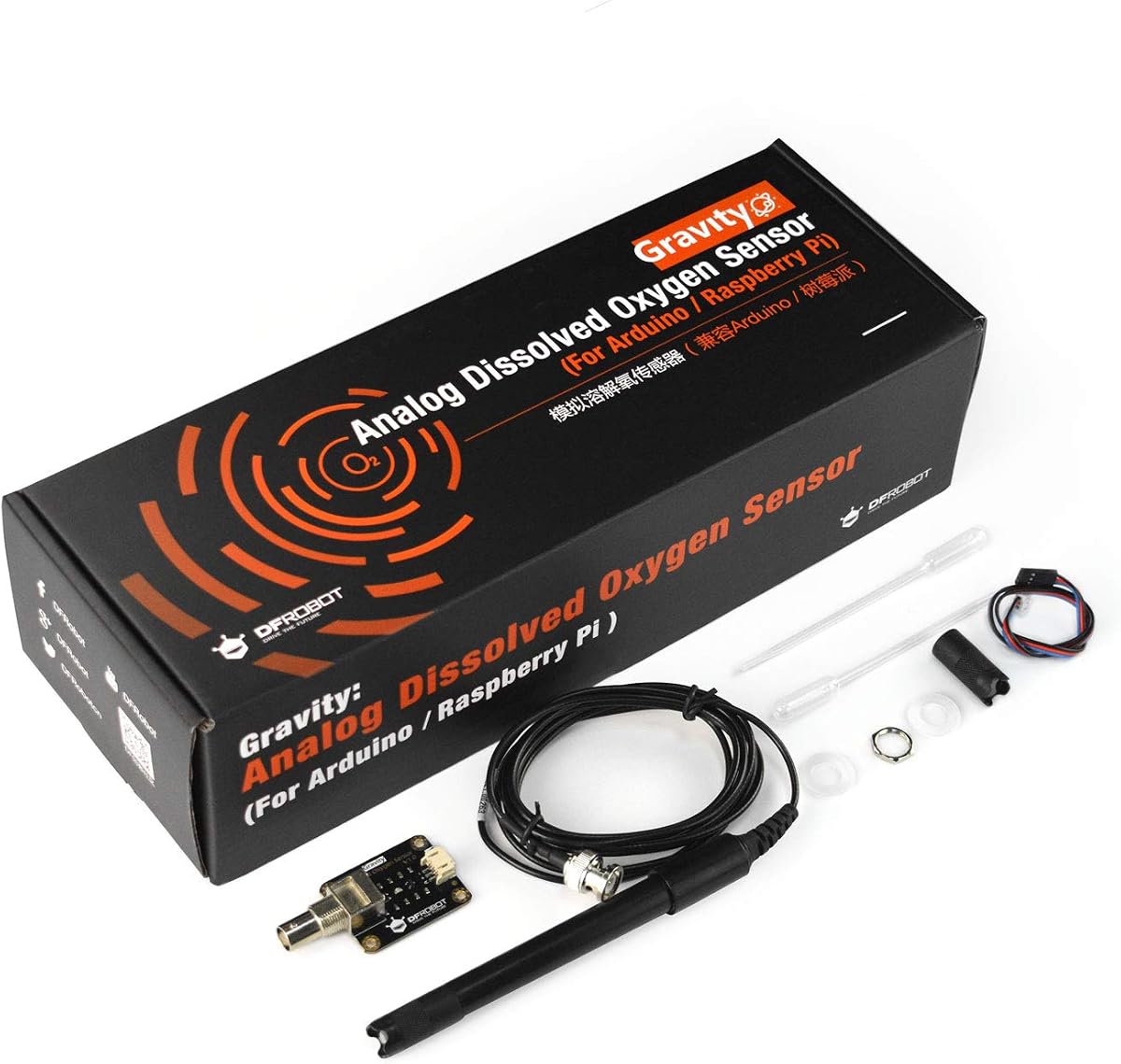
The Gravity Analog Dissolved Oxygen Sensor Kit stands out as a top choice for IoT and aquaculture applications. With a 4.4 rating, it offers instant readings without polarization, making it ideal for intermittent power systems.
We may earn a commission when you buy through this link, at no additional cost to you.
Its galvanic probe and hardware filtering ensure stable signals without complex software. The kit supports single or two-point calibration and includes open-source code for easy deployment.
While the filling solution is not included due to shipping constraints, the replaceable membrane cap reduces long-term costs. Users should note the need for an ADC module on microcontrollers.
This kit is perfect for developers building water quality monitors. Its combination of ease of use, low maintenance, and compatibility with common microcontrollers makes it a highly recommended choice.
The galvanic probe eliminates the need for pre-heating or polarization time, allowing for immediate measurements whenever needed.
Compatible with Arduino, ESP32, and Raspberry Pi, the kit provides a standard Gravity 3-pin interface for easy connection and use.
We may earn a commission when you buy through this link, at no additional cost to you.
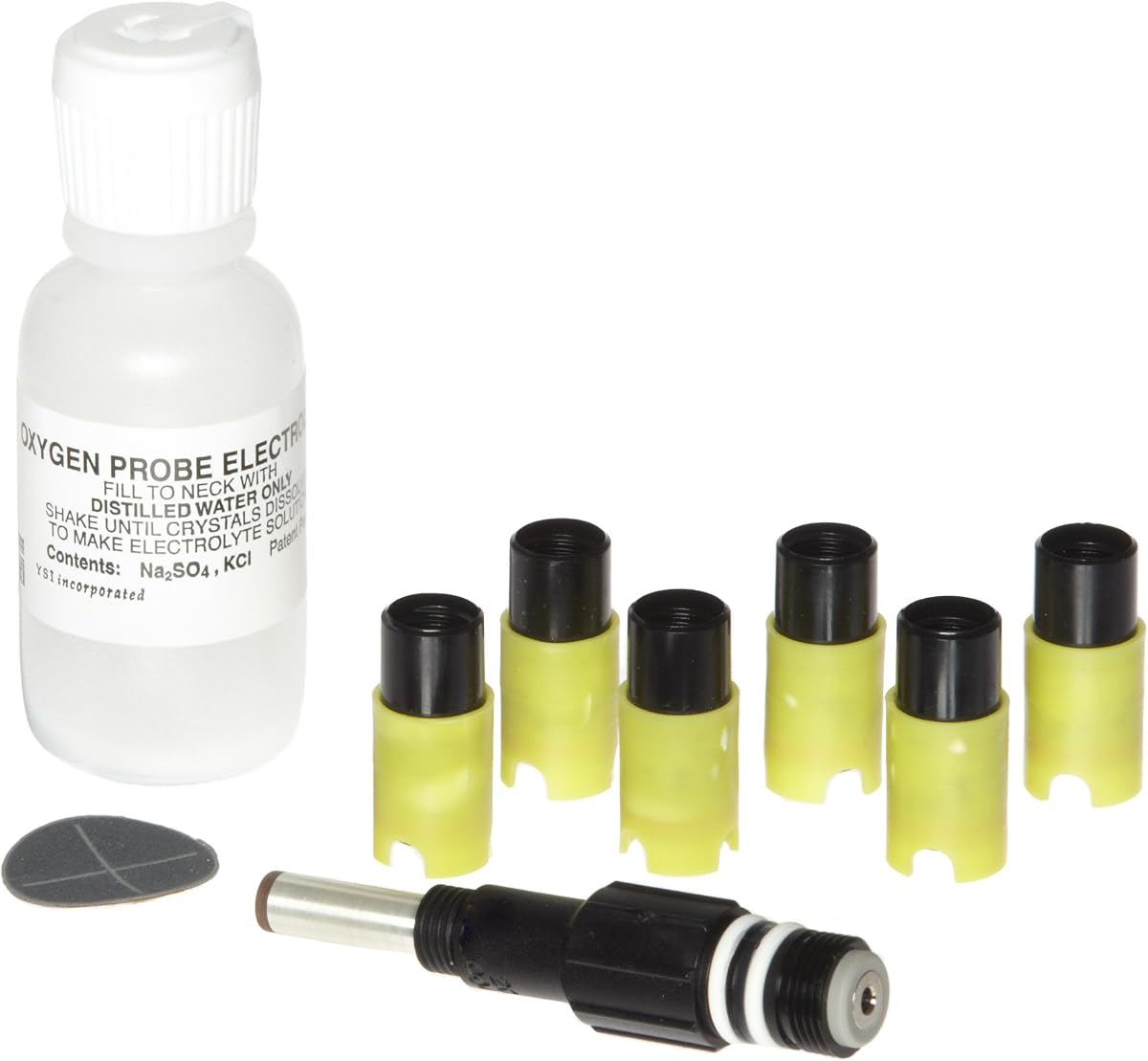
The YSI-605202 Pro Series sensor earns a strong 4.8 rating for its user-friendly design. It features a replaceable sensor that requires no tools, simplifying maintenance for professionals.
We may earn a commission when you buy through this link, at no additional cost to you.
Its screw-on cap membranes make changes quick and easy. The package includes six membrane caps and a bottle of solution, ensuring readiness for extended use.
The main trade-off is the limited specification detail provided in the listing. Users should verify compatibility with their existing systems before purchase to ensure a seamless fit.
This sensor is ideal for those prioritizing maintenance convenience. Its ease of replacement and high rating make it a solid choice for frequent monitoring needs.
The sensor is designed for easy user-replaceability without the need for any tools, saving time during routine maintenance tasks.
With six membrane caps and a bottle of solution included, users can perform multiple replacements without immediate additional purchases.
We may earn a commission when you buy through this link, at no additional cost to you.
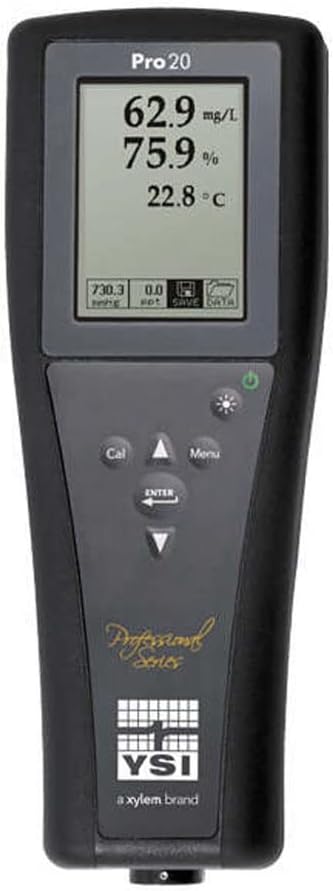
The YSI 6050020 Pro20 Handheld Meter is a robust choice for field work. It features One Touch Cal for fast calibration and stores 50 data sets, eliminating manual recording.
We may earn a commission when you buy through this link, at no additional cost to you.
Its graphic, backlit display and glow in the dark keypad enhance usability in various lighting conditions. Automatic barometric pressure compensation ensures accurate readings across environments.
Note that this listing is for the meter only, so a compatible probe may need to be purchased separately. This could add to the overall setup cost and complexity.
For professionals needing reliable data logging in the field, this meter is an excellent tool. Its speed and data management features make it a top contender for environmental monitoring.
One Touch Cal allows easy DO calibrations within 3 seconds with the press of a button, saving valuable time during field testing.
The device stores 50 data sets, allowing users to track measurements over time without the need for external logging devices.
We may earn a commission when you buy through this link, at no additional cost to you.
The YSI 6900 ProDSS Optical Dissolved Oxygen Sensor represents the premium choice for optical technology. While user ratings are not available, its design promises high accuracy and reliability.
We may earn a commission when you buy through this link, at no additional cost to you.
Optical sensors typically eliminate the need for membrane changes and electrolyte refills, significantly reducing maintenance requirements. The ProDSS compatibility ensures it works with advanced multi-parameter systems.
The primary drawback is the higher price point compared to galvanic or polarographic options. Users must also confirm compatibility with their existing ProDSS systems before purchasing.
For those seeking low-maintenance and high-precision measurements, this sensor is a top investment. Its advanced technology makes it suitable for demanding environmental and research applications.
Optical sensors use fluorescence-based technology to measure dissolved oxygen, offering a stable and accurate reading without membrane degradation.
Unlike galvanic sensors, optical sensors do not require frequent membrane changes or electrolyte refills, reducing long-term maintenance costs.
We may earn a commission when you buy through this link, at no additional cost to you.
This Dissolved Oxygen Meter with ATC is an affordable option for general water quality testing. With a 4.3 rating, it offers an extended range up to 40 mg/L and includes calibration accessories.
We may earn a commission when you buy through this link, at no additional cost to you.
Its Automatic Temperature Compensation ensures precise results across various temperatures. The clear digital display and auto power-off feature add to its user-friendly design.
The lack of a backlight may limit use in low-light environments. Additionally, the basic feature set may not suit advanced professional requirements compared to higher-end models.
For hobbyists and small aquaculture setups, this meter is an excellent budget choice. It provides reliable measurements and essential features without a high cost.
With a range of 0.0-40.0 mg/L, this meter surpasses the standard 0.0-20.0 mg/L range, supporting a wider variety of applications.
The package includes electrode filling fluid and anaerobic water calibration powder, ensuring you can calibrate the meter right out of the box.
We may earn a commission when you buy through this link, at no additional cost to you.
The Dissolved Oxygen Meter for Pond is designed specifically for aquatic life monitoring. It includes a 3.6-ft cable and backlit display, making it easy to use in ponds and aquariums.
We may earn a commission when you buy through this link, at no additional cost to you.
It offers two measurement units (mg/L and %) and comes with multiple calibration solutions. The 2-point calibration ensures high accuracy for critical environments.
With a 3.6 rating, some users may find the build quality basic. However, for entry-level monitoring, it provides the necessary tools to maintain healthy oxygen levels.
This meter is a practical tool for small-scale aquaculture. Its focus on pond applications and included accessories make it a good value for specific users.
The meter features a 3.6-ft electrode cable, allowing for easy measurements in small fish ponds and aquariums without disturbing aquatic life.
The kit includes zero-oxygen water calibration solution, electrolyte solution, and membranes, ensuring you have everything needed for accurate testing.
We may earn a commission when you buy through this link, at no additional cost to you.
This meter features an 11.48 ft cable, ideal for deep water applications. With a 4.0 rating, it offers multi-parameter testing and a 99-data memory for comprehensive tracking.
We may earn a commission when you buy through this link, at no additional cost to you.
It measures DO, temperature, salinity, and barometric pressure, making it a versatile tool for various environments. The stability indicator ensures accurate readings for critical applications.
The complexity of features may be overwhelming for casual users. Additionally, the basic probe type may require more maintenance compared to optical sensors.
For industrial or research settings needing deep-water capabilities, this meter is a strong candidate. Its multi-parameter support and large memory make it a practical choice for detailed analysis.
The 11.48 ft cable allows for measurements in deep tanks or ponds without the need for additional extensions.
Measures DO, temperature, salinity, and barometric pressure with high resolution, providing a comprehensive water quality profile.
We may earn a commission when you buy through this link, at no additional cost to you.
The Milwaukee MW600 is an economy meter designed for educational and basic analysis use. With a 4.2 rating, it offers a simple interface and 3m polarographic probe for field testing.
We may earn a commission when you buy through this link, at no additional cost to you.
Its two-point manual calibration ensures accuracy within its range. The LCD screen and portable design make it easy to use in classrooms or simple lab setups.
The range is limited to 19.0 mg/L, which may not suit all applications. Additionally, manual calibration requires more effort compared to automatic options.
For educational institutions or simple monitoring needs, this meter is a cost-effective solution. Its reliability and simplicity make it a good choice for teaching water quality concepts.
The MW600 provides essential dissolved oxygen measurement features at an affordable price point, making it accessible for educational institutions.
Two-point manual calibration allows users to set precise reference points for accurate measurements within the meter's specified range.
We may earn a commission when you buy through this link, at no additional cost to you.
The Apera Instruments AI480 DO850 Kit represents the top premium choice for dissolved oxygen testing. With a 4.8 rating, it offers hassle-free optical technology and minimal maintenance.
We may earn a commission when you buy through this link, at no additional cost to you.
Its optical sensor eliminates the need for solution refills or frequent membrane changes. The IP67 waterproof rating ensures durability in harsh environments.
The price is higher than entry-level meters, but the long-term maintenance savings may offset this. Users should verify their specific needs to justify the investment.
For professionals requiring reliable, low-maintenance measurements, this kit is a top-tier solution. Its complete package and robust design make it an excellent choice for demanding applications.
The optical DO sensor does not require solution refills or frequent membrane changes, significantly reducing maintenance tasks over time.
With an IP67 waterproof and dust-proof structure, the meter is ideal for use in harsh outdoor or industrial environments.
We may earn a commission when you buy through this link, at no additional cost to you.
The YSI-605203 Pro Series sensor is designed for laboratory applications. With a 4.6 rating, it features polarographic technology and meets standard lab supply classifications.
We may earn a commission when you buy through this link, at no additional cost to you.
Its lightweight design and standard dimensions make it easy to integrate into existing lab setups. The Pro Series reputation suggests reliability and precision for research.
Limited technical specifications are provided in the listing, so users should contact the manufacturer for detailed compatibility information. It is also sold as a sensor only.
For laboratory professionals needing a standard polarographic sensor, this is a solid option. Its rating and classification make it a trusted choice for research and analysis.
This sensor is classified as a lab supply, ensuring it meets the standards expected for laboratory environments and research applications.
As part of the YSI Pro Series, this sensor benefits from proven technology and design standards for professional-grade performance.
We may earn a commission when you buy through this link, at no additional cost to you.
Selecting the right dissolved oxygen sensor depends on your specific needs, environment, and budget. Understanding key factors can help you find the most suitable sensor for accurate and reliable measurements.
Dissolved oxygen sensors generally fall into galvanic, polarographic, or optical categories. Galvanic sensors require no external voltage and are good for simple applications. Polarographic sensors use an external voltage and are common in laboratory settings. Optical sensors use fluorescence technology and offer minimal maintenance and high stability.
Choose a sensor type based on your maintenance tolerance and accuracy requirements. Optical sensors are ideal for low maintenance, while galvanic and polarographic may suit budget-conscious users.
Ensure the sensor covers the expected dissolved oxygen range for your application. Most standard sensors measure up to 20 mg/L, but some models extend to 40 mg/L for industrial or deep-water needs.
Check the specific measurement range to avoid limitations. An extended range provides flexibility for varying water quality conditions.
Response time determines how quickly the sensor reaches 98% of the final reading. Faster response times are critical for real-time monitoring and dynamic environments.
Look for sensors with response times under 2 minutes for optimal performance. Quick responses improve efficiency in time-sensitive testing.
Calibration ensures accuracy. Some sensors offer automatic calibration, while others require manual two-point calibration. Automatic calibration saves time but may be more expensive.
Select a calibration method that fits your workflow. Manual calibration is cost-effective, while automatic calibration is convenient for frequent use.
For field or harsh environments, look for IP ratings indicating water and dust resistance. Rugged designs protect the sensor from physical damage and extend its lifespan.
Prioritize sensors with high IP ratings and durable construction if used outdoors or in industrial settings.
Advanced sensors offer data memory to store readings and connectivity options like Bluetooth or IRDA for data transfer. This eliminates manual recording and supports detailed analysis.
Choose sensors with memory and connectivity if you need to log data over time or integrate with software systems.
Some sensors require regular membrane changes or electrolyte refills. Optical sensors typically minimize these needs. Consider the long-term cost and effort involved in maintenance.
Opt for low-maintenance sensors if you prefer ease of use. Frequent replacements can add to the total cost of ownership.
Prices vary widely from budget-friendly handheld meters to premium multi-parameter systems. Balance the cost against the features and accuracy you need.
Set a budget that aligns with your application. A basic sensor may suffice for hobbyists, while professionals may require higher-end models.
To begin, calibrate the sensor using standard calibration solutions. Follow the manufacturer's instructions for two-point or automatic calibration to ensure accurate baseline readings.
Submerge the sensor probe into the sample water and wait for the reading to stabilize. Ensure the probe is fully immersed and free from air bubbles that could interfere with the measurement.
After use, rinse the probe with clean water and store it in the recommended storage solution. Regular maintenance and proper storage extend the sensor's life and maintain measurement precision.
The lifespan varies by sensor type. Galvanic and polarographic sensors typically last 1-3 years with proper maintenance, while optical sensors can last longer due to reduced wear. Regular care and calibration extend lifespan.
Calibration frequency depends on usage. For frequent use, calibrate weekly or before each session. Occasional users can calibrate monthly. Always calibrate after replacing membranes or if readings seem inconsistent.
Yes, many sensors support salinity compensation for saltwater. However, check the specific sensor's salinity range to ensure it covers your needs. Proper calibration accounts for salinity effects on oxygen levels.
Galvanic sensors use a chemical reaction without external voltage and require frequent membrane changes. Optical sensors use fluorescence technology and need minimal maintenance. Optical is typically more expensive but offers better stability.
Store the sensor in the recommended storage solution, often provided with the sensor. For polarographic sensors, keep the membrane moist. Never leave the sensor dry, as it can damage the membrane and reduce accuracy.
Temperature, salinity, and barometric pressure all affect dissolved oxygen levels. Accurate sensors include compensation for these factors. Always ensure the sensor accounts for current environmental conditions to avoid reading errors.
Dissolved oxygen is vital for the health of aquatic life. Low oxygen levels can stress or kill fish and other organisms. Monitoring ensures optimal conditions for growth and survival in aquaculture systems.
A sensor alone requires a compatible meter to display readings. If you have an existing system, check sensor compatibility. Otherwise, a bundled meter and sensor kit offers ease of use and guaranteed compatibility.
This guide reviewed ten top dissolved oxygen sensors suitable for various needs. The Gravity kit, Apera Optical Kit, and Budget ATC meter stand out for their balance of features and value.
Prioritize sensor type, measurement range, and maintenance requirements when making your choice. Ensure the sensor aligns with your application, whether it is for aquaculture, hydroponics, or field research.
Prices and availability may change over time. Check current prices and product details before purchasing to ensure you get the best value for your investment.