
Nomo Medical Alert System with Fall Detection
4.1Editor score
24/7 emergency response trial
Two-way voice communication hub
Automatic fall detection tags
This guide compares ten top elderly monitoring systems to help families choose the right safety technology for seniors based on features and reliability.
Keeping seniors safe at home requires reliable technology that alerts caregivers when help is needed. Elderly monitoring systems range from simple bed alarms to advanced video cameras with two way audio. These devices provide peace of mind for families managing remote care.
We reviewed ten leading products to find the most effective solutions for different needs. Our comparison covers wireless sensors, medical alert pendants, and video monitors. Each option offers unique features for fall prevention, wandering alerts, and communication.
Every pick includes detailed specs, pros, cons, and real world use cases. You will see how each system works to protect your loved ones. Prices and availability change frequently so check current listings before purchasing.
4.1Editor score

4.4Editor score

4.1Editor score
This table provides a side by side look at the key features and capabilities of each monitored selected. Use it to quickly identify which system fits your specific caregiving situation and budget constraints.





The Lunderg system is designed to alert caregivers when a senior begins to rise from bed. It uses a wireless pager that you carry to keep the alert discreet and convenient. The system rates highly for its unique pre-rise detection technology.
We may earn a commission when you buy through this link, at no additional cost to you.
Its patented hip-level sensor pad triggers before the senior fully leaves the bed. This allows time to respond before a fall occurs. The pager connects wirelessly without needing Wi-Fi or smartphone apps.
Some users may find the pager volume adjustment essential for sleeping environments. The sensor pad is not designed for other rooms. It focuses solely on bed exit prevention.
This system is ideal for families concerned about night-time bed exits. It balances dignity with safety effectively. We recommend it for caregivers who want proactive alerts.
The hip-level placement ensures alerts trigger early in the movement process. This timing gives caregivers a crucial window to assist safely.
The portable pager allows you to move freely while staying connected. You do not need to stay glued to a bedside receiver.
We may earn a commission when you buy through this link, at no additional cost to you.
Nomo offers a complete security system designed for seniors aging in place. It combines wearable tags with a central smart hub for robust protection. The system supports fall detection and emergency alerts through a secure network.
We may earn a commission when you buy through this link, at no additional cost to you.
Two-way voice communication allows seniors to speak directly to responders. The hub acts as a communication center without needing a phone. Range extenders ensure coverage throughout the entire home.
Subscription costs apply after the initial trial period. The setup involves multiple devices which may be complex for some users. It requires power outlets for the hub and satellites.
Families seeking a full-service medical alert system will appreciate this option. It bridges the gap between smart home tech and emergency safety. The fall detection is a key premium feature.
The RapidSOS integration connects seniors to emergency services quickly. This feature provides a safety net that standalone systems often lack.
The central hub coordinates signals from various tags and extenders. It simplifies the monitoring process for families managing complex homes.
We may earn a commission when you buy through this link, at no additional cost to you.
This video monitor provides a private and secure way to check on seniors without internet. It includes a portable screen and camera that work independently of home networks. The two-way talk feature enables real-time communication.
We may earn a commission when you buy through this link, at no additional cost to you.
Features like medication reminders and temperature alerts add value beyond basic monitoring. The infrared night vision ensures visibility in dark rooms. The one-touch SOS button simplifies emergency calls for seniors.
The portable screen must be charged regularly to function away from power. The range is limited compared to internet-based systems. It works best within a specific home zone.
Families prioritizing privacy will find this system appealing. It avoids cloud data risks while offering clear visual confirmation. The simplicity of use is a major benefit for seniors.
Using a direct connection avoids sending video data to external servers. This approach protects senior privacy and reduces data security risks.
Medication and meal reminders help seniors manage daily routines independently. This feature supports cognitive health and reduces caregiver burden.
We may earn a commission when you buy through this link, at no additional cost to you.
This system offers a budget-friendly entry into digital caregiving. It connects call buttons to a smartphone app through home Wi-Fi. The wearable wristband adds mobility to the monitoring capability.
We may earn a commission when you buy through this link, at no additional cost to you.
The app allows family members to receive notifications anywhere globally. You can customize tones and volumes for different buttons. The setup is plug-and-play for most standard networks.
Reliability depends heavily on internet stability and signal strength. The hardware is basic compared to dedicated medical systems. It may not suit critical care scenarios.
Caregivers looking for low-cost alerts will find this practical. It bridges the gap between simple alarms and smart home tech. It is a strong choice for light supervision.
Notifications can be shared with multiple family members via the app. This ensures someone is always available to respond to alerts.
The absence of subscription fees makes this affordable for long-term use. Families can add multiple buttons without incurring extra costs.
We may earn a commission when you buy through this link, at no additional cost to you.
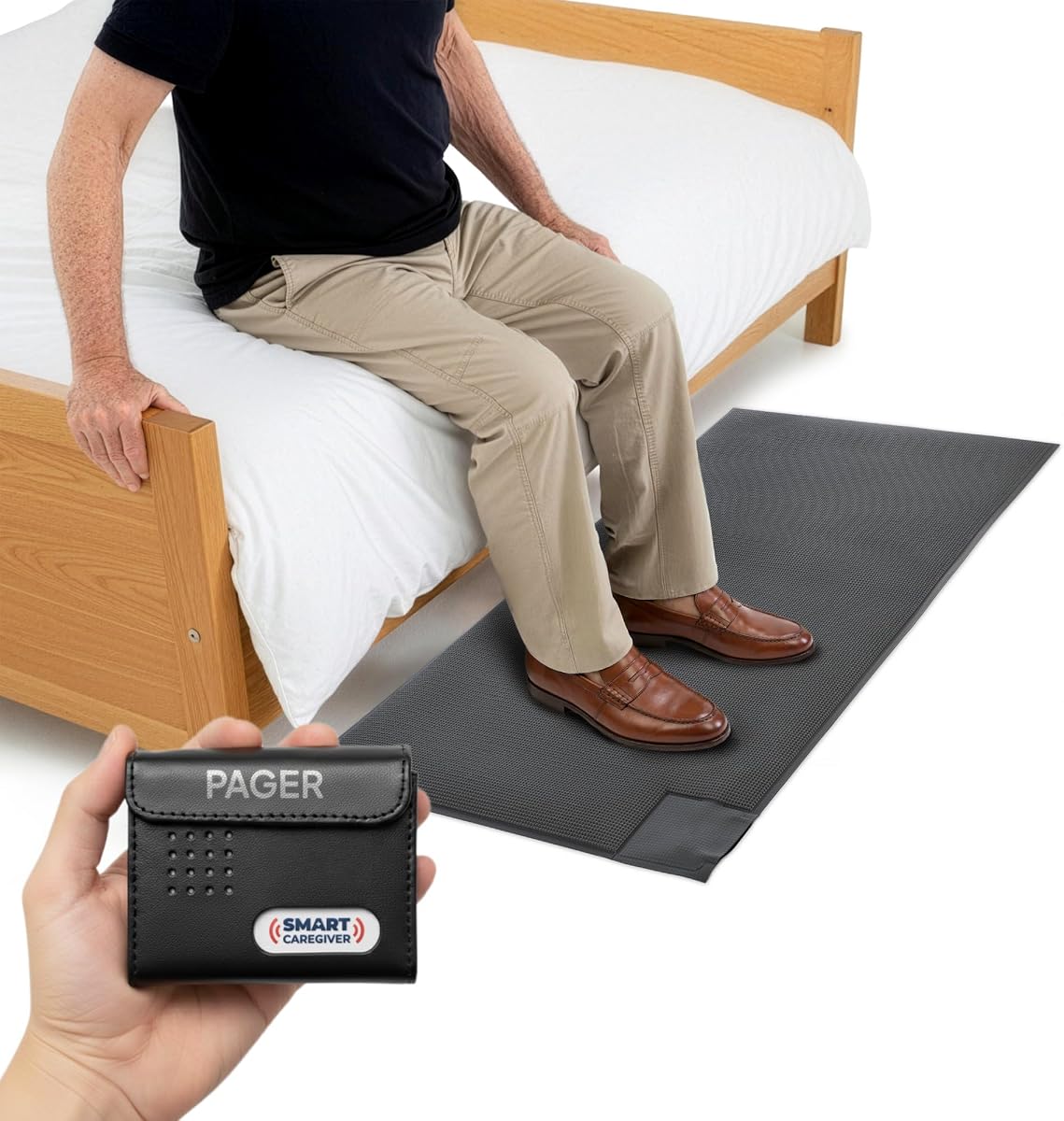
This floor mat system detects movement when a senior steps out of bed. The large sensor covers the landing area effectively. The wireless pager keeps the caregiver alerted without noise in the room.
We may earn a commission when you buy through this link, at no additional cost to you.
The 300-foot range allows for movement throughout the house. It is suitable for homes with open floor plans. The vibration option prevents startling the resident during monitoring.
The mat requires batteries that must be replaced periodically. Placement must be exact to avoid false triggers from pets or drafts. It is a specialized tool for exit prevention.
This product works well in care facilities or large homes. It provides reliable alerts without complex technology. The durability of the mat supports long-term usage.
The pager vibrates or beeps quietly to avoid disturbing others. This keeps the environment calm while ensuring the caregiver knows.
The wide mat size captures footfalls reliably. This reduces the risk of false negatives when seniors move naturally.
We may earn a commission when you buy through this link, at no additional cost to you.
The SecuLife pendant connects seniors to family directly without a call center. It uses cellular networks to send GPS location data and alerts. The device is waterproof so it can be worn daily.
We may earn a commission when you buy through this link, at no additional cost to you.
Fall detection triggers automatic notifications to preselected contacts. Two-way calling allows seniors to speak to family instantly. The interface is simplified for ease of use.
Full features require a monthly fee which may increase costs. Battery life depends on tracking frequency settings. It relies on cellular coverage for operation.
Active seniors who go outside will benefit from the GPS tracking. It offers a mobile solution that goes beyond the home. The direct-to-family approach simplifies emergency response.
GPS tracking ensures caregivers know where the senior is located. This is essential for those prone to wandering or getting lost.
Alerts go straight to personal phones rather than a center. This reduces response times by involving loved ones immediately.
We may earn a commission when you buy through this link, at no additional cost to you.
This monitor is a portable option that prioritizes privacy and battery power. The camera and screen are both rechargeable for mobility. It does not require Wi-Fi for a secure direct link.
We may earn a commission when you buy through this link, at no additional cost to you.
The push-to-talk button on the monitor simplifies communication. Night vision ensures visibility in dark environments. The system is compact for easy transport.
Battery life may be shorter than fixed power models. It relies on the connection range between camera and screen. It is best for indoor monitoring.
Families who move frequently will find this convenient. It supports privacy-focused monitoring without internet dependencies. The simplicity makes it easy to set up quickly.
The rechargeable camera can move to follow senior activity. This adaptability helps caregivers check on seniors in different spots.
The system uses a dedicated link for video and audio. This avoids data exposure through public internet networks.
We may earn a commission when you buy through this link, at no additional cost to you.
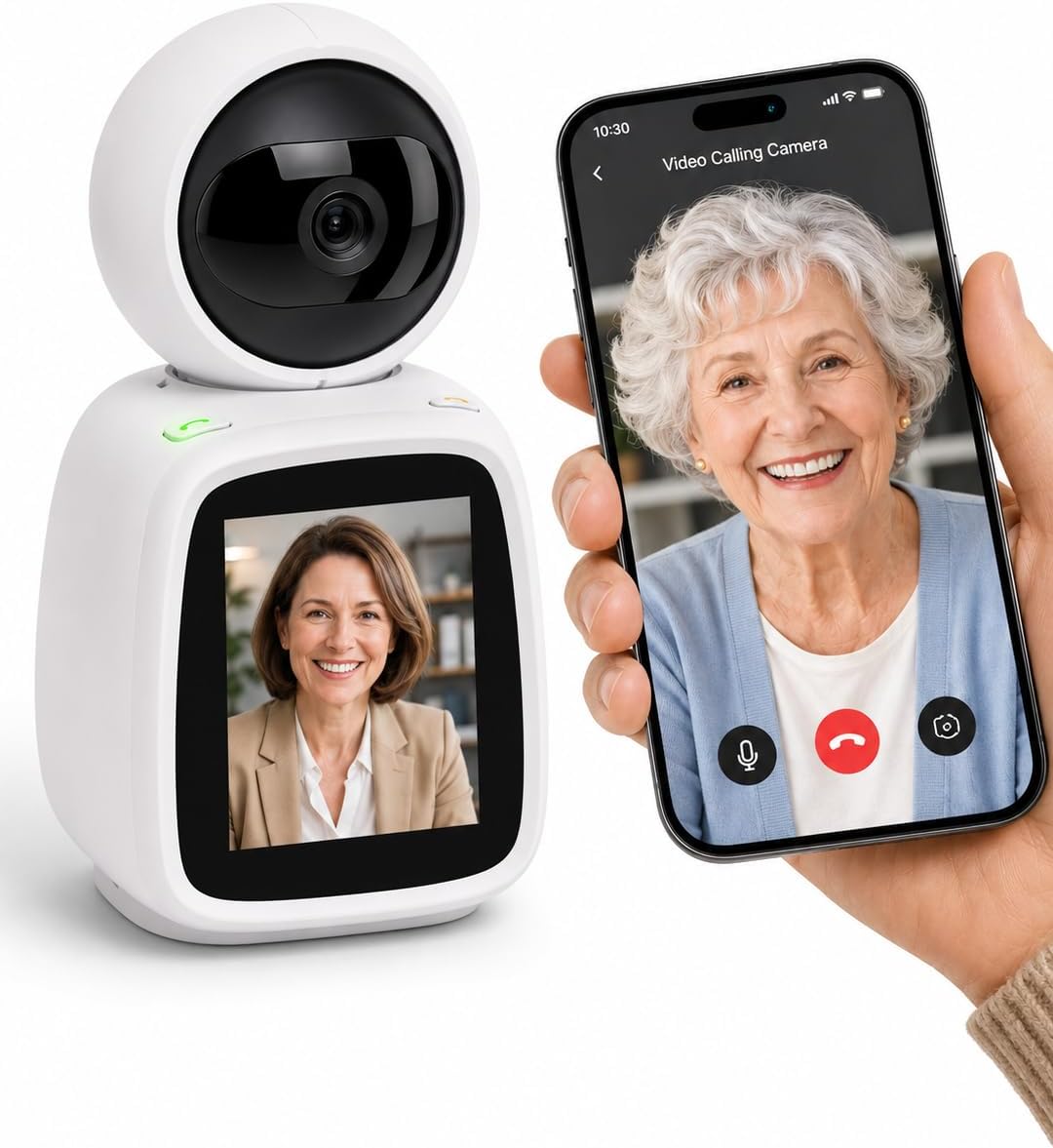
SYMYNELEC focuses on connection with a camera that supports video calls. The senior presses a button to see their family on a screen. It also supports local storage for recording clips.
We may earn a commission when you buy through this link, at no additional cost to you.
Family photos can be displayed to reduce feelings of isolation. The privacy mode physically blocks the lens for comfort. Automatic tracking keeps the senior in view.
The camera must remain plugged in which limits placement options. It does not have a battery backup for power outages. The screen size is limited compared to tablets.
Loneliness is a major concern for seniors and this addresses it well. It bridges the digital divide for video interaction. The ease of use is its strongest feature.
Video calls allow seniors to see faces rather than just hear voices. This visual connection improves emotional well-being significantly.
The physical shutter gives seniors control over monitoring. This respects their dignity and provides peace of mind.
We may earn a commission when you buy through this link, at no additional cost to you.
This monitor uses a secure FHSS signal for privacy. It offers two-way audio with a one-touch SOS button. The portable receiver fits in a pocket for mobile caregivers.
We may earn a commission when you buy through this link, at no additional cost to you.
Temperature sensors alert to extreme room conditions. The night vision ensures visibility at all times. It is designed for seniors with cognitive challenges.
Battery life varies and may need frequent charging. The screen resolution is basic compared to high-end devices. It is a functional tool for daily checks.
Caregivers managing dementia patients will find the SOS button helpful. The simplicity of operation reduces confusion. The privacy focus avoids internet risks.
FHSS technology prevents interference and eavesdropping. This ensures the video feed remains private and stable.
The SOS button provides a quick way to get help. Daily alerts help seniors with routine tasks.
We may earn a commission when you buy through this link, at no additional cost to you.
This motion sensor system offers a basic way to detect movement. It is mountable near exits to alert caregivers of wandering. The wireless pager ensures alerts are not missed.
We may earn a commission when you buy through this link, at no additional cost to you.
The range allows it to work in large spaces. It is a simple alternative to complex systems. The mounting bracket is adjustable for placement.
Batteries are required for both units. It does not distinguish between people and pets. It is a simple alert tool.
For seniors prone to wandering this is a practical choice. It is affordable and easy to manage. It supports basic supervision needs.
The motion sensor detects movement at exits quickly. This allows for intervention before a senior leaves home.
The bracket allows the detector to be positioned anywhere. This flexibility ensures it covers the intended area.
We may earn a commission when you buy through this link, at no additional cost to you.
Selecting the right system depends on specific needs like fall prevention or communication. This guide explains the key factors to consider.
Some systems require Wi-Fi or cellular networks while others work directly. Direct connection systems often offer better privacy and stability. Wi-Fi based systems allow remote access via apps.
Automatic fall detection is a vital feature for medical safety. It triggers alerts without the senior needing to press a button. Ensure the device is tested for reliable accuracy.
The range determines how far the pager can move from the sensor. Large homes need systems with extenders or high range. Verify the range covers all necessary rooms.
Battery-powered devices offer mobility but need regular replacement or charging. Rechargeable units reduce long-term costs but require planning. Check the expected duration per charge.
Secure connections protect the senior's privacy from external access. Avoid systems that store data on public servers if privacy is a concern. Look for encryption and direct links.
Seniors with limited dexterity need simple interfaces and large buttons. The setup process should be straightforward for caregivers. Avoid complex configurations that require technical skills.
Alerts can be sound, vibration, or app notifications. Choose methods that suit the environment and caregiver preferences. Silent modes are useful for night monitoring.
Features like video calling or temperature alerts add value. Consider if these extras justify the cost. Focus on what is truly needed for daily care.
Place sensors in strategic locations like doorways or bedside tables to maximize effectiveness. Ensure the range covers all key areas where seniors spend time.
Check battery levels regularly and charge devices when needed to prevent gaps in monitoring. Most systems alert when power is low so respond promptly.
Test the system periodically by simulating alerts to verify connectivity. This ensures the pager receives signals as expected when real emergencies occur.
Many models operate without Wi-Fi using direct radio signals. This ensures privacy and reliability. Some premium options do require internet for app access.
Yes, systems with Wi-Fi or cellular connectivity allow remote alerts via smartphones. Direct connection systems are limited to local range.
Modern sensors use movement analysis to detect falls. Accuracy varies by device placement and movement patterns. Always verify reliability before deployment.
Direct connection systems usually do not have monthly fees. Medical alert services with professional response typically charge monthly subscriptions.
Some systems escalate alerts to other family members automatically. Ensure multiple contacts are listed to avoid missed emergencies.
Yes, many portable units are suitable for facilities. Check facility rules regarding Wi-Fi usage or interference.
Choosing the right system depends on specific needs like fall detection or two-way communication. The Lunderg and Nomo systems offer robust features for different scenarios.
Prioritize range and battery life to ensure consistent monitoring. Safety features like fall detection provide the highest peace of mind for families.
Always verify current availability and features before purchasing. Technology evolves rapidly so check for updates to these models.