Garmin 010-01550-00 Striker 4
4.6Editor score
Clear Vu scanning
Chirp Sonar
Simple interface
Finding the right fish finder for your small boat can significantly enhance your angling experience. Whether you are kayaking or boating, the right device helps locate fish and structure efficiently.
We have evaluated ten top-rated models based on sonar quality, GPS features, ease of use, and value. Each product offers unique strengths tailored to different small boat fishing scenarios and budgets.
This guide details every pick with specifications, pros, cons, and expert insights. Prices fluctuate frequently, so verify current costs before purchasing to ensure you get the best deal available today.
4.6Editor score

4.7Editor score

4.4Editor score
As an Amazon Associate we earn from qualifying purchases.
Here is a side-by-side comparison of all ten selected fish finders. Review their key specifications to determine which model best fits your small boat setup and fishing style.



The Garmin STRIKER Vivid 4cv stands out as a top choice for small boat anglers seeking quality sonar without excessive complexity. It features a 4-inch color display and Vivid scanning sonar for clear fish identification.
We may earn a commission when you buy through this link, at no additional cost to you.
Its standout strength lies in the Vivid scanning sonar color palettes which make distinguishing fish and structure remarkably easy. The device includes a GT20 transducer offering both CHIRP traditional sonar and CHIRP ClearV scanning sonar.
While mapping capabilities are solid with Quickdraw contours, they may lack the depth of premium chartplotters. This trade-off is acceptable for casual anglers focused on finding fish rather than detailed navigation.
This model is ideal for small boats needing reliable sonar and GPS. Its user-friendly interface ensures you spend less time adjusting settings and more time enjoying your fishing trip.
The Vivid scanning sonar provides high-resolution images that help you see structure and fish with unprecedented detail on a small budget.
Designed with simplicity in mind, the interface allows quick adjustments even in bright sunlight or rough water conditions.
We may earn a commission when you buy through this link, at no additional cost to you.
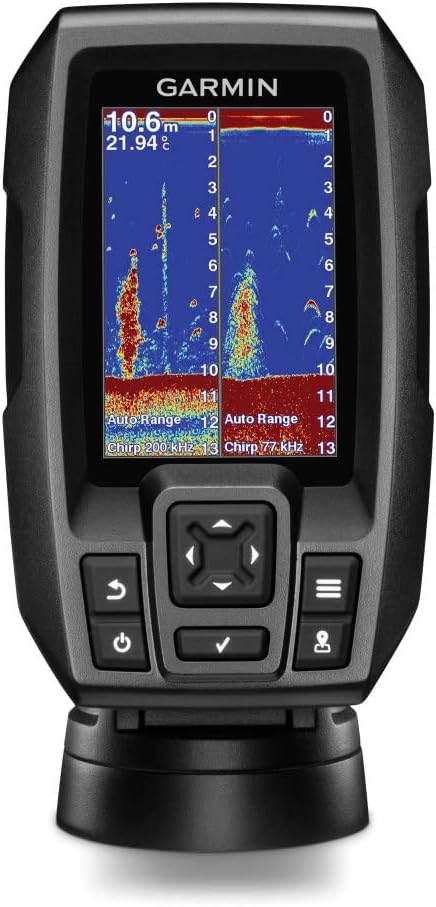
For budget-conscious anglers, the Garmin Striker 4 delivers essential fish finding tools without breaking the bank. It offers Clear Vu scanning Sonar and Chirp technology at an entry-level price point.
We may earn a commission when you buy through this link, at no additional cost to you.
Its Chirp Sonar sends continuous frequencies for better target separation, producing crisper fish arches. The Clear Vu scanning adds near-photographic images of objects and structure around your boat.
The 3.5-inch display is compact and may limit visibility in direct sunlight compared to larger screens. However, its simplicity and portability make it perfect for kayaks or small dinghies.
Buy this if you need a reliable, no-frills fish finder. It covers basic navigation with waypoints and handles freshwater and saltwater depths efficiently for casual fishing trips.
This model proves you don't need to spend a fortune to get accurate sonar readings and GPS waypoint marking on your small boat.
Chirp and Clear Vu technologies ensure you see fish and structure clearly, even in challenging water conditions or deep environments.
We may earn a commission when you buy through this link, at no additional cost to you.
The Humminbird Helix 5 Chirp GPS G3 is a premium option offering advanced sonar and mapping capabilities. It features Dual Spectrum CHIRP Sonar for flexible scanning modes tailored to your needs.
We may earn a commission when you buy through this link, at no additional cost to you.
Its Enhanced GPS Navigation includes Humminbird Basemap covering over 10,000 lakes. AutoChart Live allows real-time mapping of depth contours and vegetation while you boat, providing deep customization.
The keypad control is reliable but menus can be dense compared to simpler units. Learning the system takes time, yet the depth of features justifies the investment for serious small boat anglers.
Choose this for top-tier mapping and sonar performance. It excels in complex environments where precise navigation and detailed structure scans are critical for success.
AutoChart Live lets you create custom maps on the fly, revealing bottom hardness and vegetation patterns instantly.
Dual Spectrum CHIRP offers both wide coverage and detailed scanning, adapting to any fishing scenario you face.
We may earn a commission when you buy through this link, at no additional cost to you.
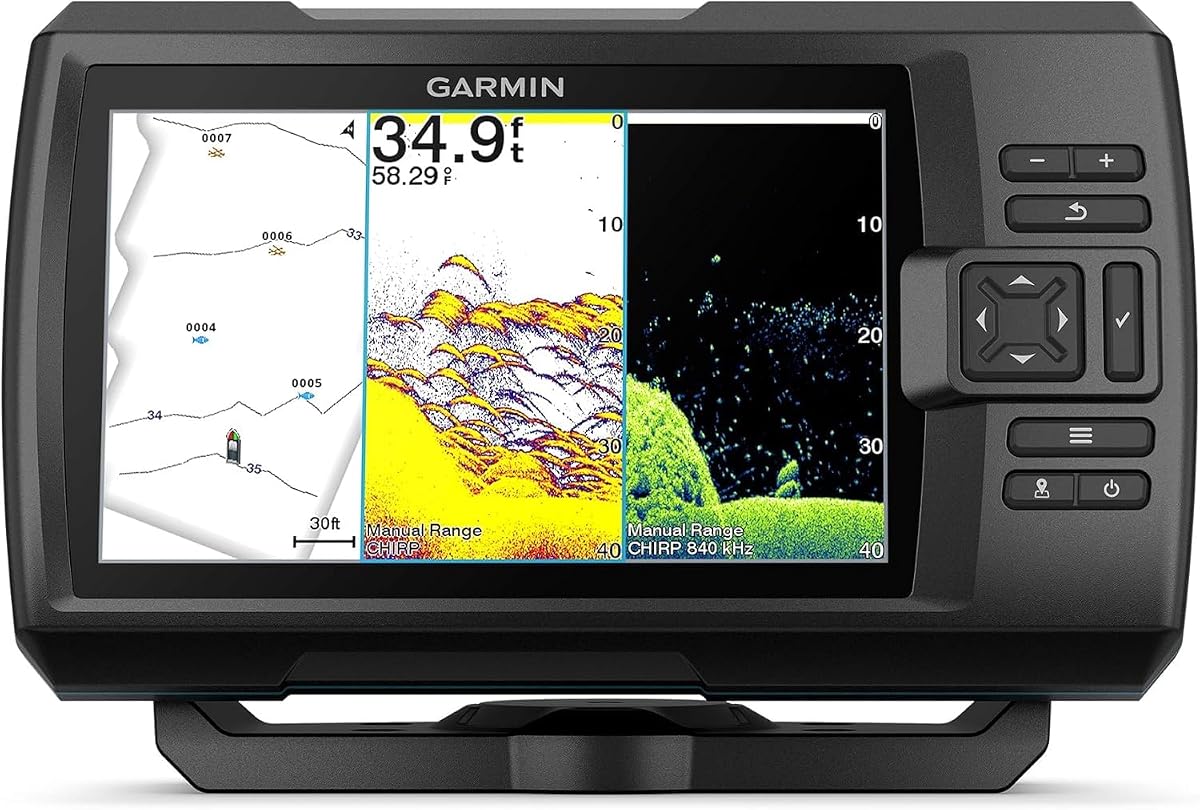
The Garmin Striker Vivid 7cv brings a larger viewing area to small boats that can accommodate it. Its 7-inch color display enhances visibility of fish and structure during long outings.
We may earn a commission when you buy through this link, at no additional cost to you.
It includes Wi-Fi connectivity to link with the ActiveCaptain app for smart notifications and data transfer. This modern feature adds convenience for managing waypoints and updates remotely.
Its size requires adequate mounting space and power. On smaller kayaks or dinghies, the bulk might be impractical compared to compact models.
This model suits those wanting a big screen and connectivity. It combines classic Vivid scanning sonar with modern wireless capabilities for a versatile small boat experience.
The 7-inch screen ensures you can see target details clearly even from a distance or in varying light conditions.
Wi-Fi lets you manage data via smartphone, keeping your boat setup streamlined and up to date effortlessly.
We may earn a commission when you buy through this link, at no additional cost to you.
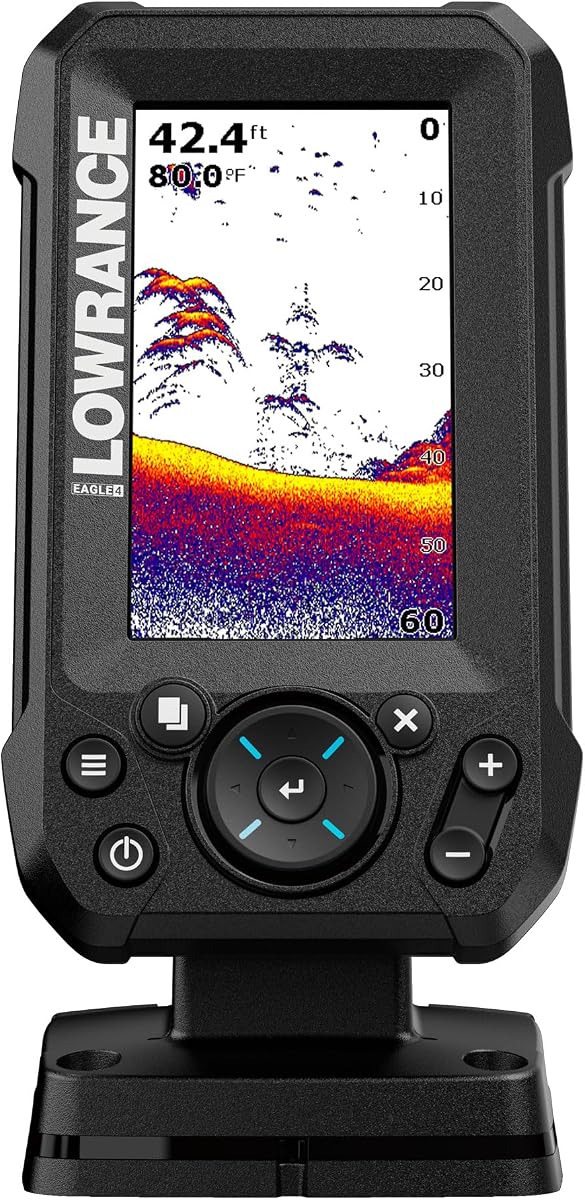
The Lowrance Eagle Fish Finder focuses on simplicity and clarity with its IPS portrait screen. It remains visible in bright sunlight and through polarized sunglasses for effortless viewing.
We may earn a commission when you buy through this link, at no additional cost to you.
Auto-Tuning Sonar optimizes settings automatically, reducing the need for manual adjustments. This allows you to focus on fishing rather than configuring complex sonar settings constantly.
The twist-lock connector simplifies installation and removal, making it great for portable setups. However, chart options are limited compared to premium GPS chartplotters on the market.
Buy this for a straightforward, easy-to-read display. Its user-friendly design suits beginners or those prioritizing quick setup and clear visuals over advanced mapping.
IPS technology ensures wide viewing angles and high contrast, so fish icons and depth numbers are always legible.
With twist-lock connectors and a compact design, you can install and remove this unit in minutes without tools.
We may earn a commission when you buy through this link, at no additional cost to you.
The LUCKY Kayak Portable Fish Finder offers unmatched freedom with wireless operation and a castable sensor. This allows you to explore areas unreachable by traditional transom mounts or trolling motors.
We may earn a commission when you buy through this link, at no additional cost to you.
Its massive 853ft operation distance ensures you can place the sensor precisely without long cables. The floating sensor ties easily to your line, acting like a bobber for spot checks.
Battery life is finite, requiring occasional recharging for consistent use. While depth ranges are limited to 147ft, this is sufficient for most shallow water and ice fishing scenarios.
This model is perfect for kayakers and shore anglers. Its portability and wireless tech make it ideal for quick spot checks on the go.
Lightweight and pocket-sized, this unit fits easily in any tackle box without adding significant weight to your gear.
Cast the sensor like a bobber to target specific areas like weed beds or structure where traditional sonar can't reach.
We may earn a commission when you buy through this link, at no additional cost to you.
The Garmin Striker Plus 4 combines dual-beam sonar with reliable GPS in a compact 4.3-inch format. It offers crystal-clear images for target separation and structure identification.
We may earn a commission when you buy through this link, at no additional cost to you.
Built-in Quickdraw contours lets you store maps of up to 2 million acres. This feature is great for tracking fishing spots over seasons without needing external charts.
Bluetooth support exists but functionality is limited compared to newer models. If you need full navigation capabilities, this may feel basic but still effective for sonar focus.
Buy this for a rugged, reliable unit. Its brightness and map storage make it a solid all-around pick for freshwater small boat fishing.
Dual-beam and Chirp traditional sonar ensure you see fish and structure clearly across varied water depths.
Store your favorite fishing spots directly on the unit for quick reference and repeat trips.
We may earn a commission when you buy through this link, at no additional cost to you.
The Humminbird PiranhaMAX 4 DI adds Down Imaging to the classic PiranhaMAX series. This provides sharp views of what's happening directly below your boat for better structure analysis.
We may earn a commission when you buy through this link, at no additional cost to you.
Its 4.3-inch color LCD offers a redesigned interface that is even easier to navigate. Fish ID+, alarms, and zoom features help manage alerts and depth monitoring effectively.
Chart capabilities are limited to basic GPS without detailed mapping options. Still, for sonar-focused fishing, the imaging quality is impressive for the price.
This unit suits anglers needing Down Imaging without high costs. It balances essential tools with clear visuals for effective small boat fishing.
See timber, brush, and rocks below you with enhanced detail that helps locate precise fish-holding structures.
The redesigned interface ensures you can adjust settings and view data without getting lost in menus.
We may earn a commission when you buy through this link, at no additional cost to you.
The Garmin STRIKER 5CV offers a balanced package with a 5-inch display and CHIRP traditional plus ClearV scanning sonar. It delivers reliable imaging for both fish and underwater structure.
We may earn a commission when you buy through this link, at no additional cost to you.
Built-in Quickdraw contours mapping lets you create custom depth contours and store them locally. This supports repeat visits to productive spots without needing external chart subscriptions.
It lacks Wi-Fi connectivity found in newer Vivid models. For users preferring simplicity and focused sonar performance, this limitation is minor.
Choose this for a robust mid-range option. It provides essential mapping and clear sonar in a bright, rugged format ideal for small boats.
Dual sonar types ensure you can switch between traditional depth views and detailed scanning as needed.
Quickdraw contours allow you to build your own map library right on the device for easy recall.
We may earn a commission when you buy through this link, at no additional cost to you.
The Humminbird PiranhaMAX 4 is a classic entry-level fish finder focusing on core sonar performance. Dual Beam Sonar offers both narrow and wide options for detail or coverage.
We may earn a commission when you buy through this link, at no additional cost to you.
It includes a tilt and swivel mount for quick viewing angle adjustments. This flexibility helps you find the best screen position regardless of boat or weather conditions.
Lacking GPS means you must rely on manual marking. For anglers on a strict budget, this trade-off is acceptable for the quality of basic fish-finding tools.
Buy this for simplicity and value. It is an excellent starter device for small boats where essential sonar is the priority.
Switch between narrow beams for detail and wide beams for coverage depending on your fishing environment.
The tilt swivel mount lets you position the screen easily for better visibility while fishing.
We may earn a commission when you buy through this link, at no additional cost to you.
Selecting the right fish finder depends on your specific needs, boat size, and budget. This guide breaks down the most important factors to consider before making a purchase.
Display size significantly impacts readability in bright sunlight. Larger screens make identifying fish arches easier but require more mounting space. Look for IPS or color displays for better contrast.
Choose a screen that balances visibility with your available space. A 3.5 to 5-inch screen is usually ideal for small boats like kayaks or dinghies.
Sonar technology like Chirp and ClearV scanning provides clearer images than standard sonar. Chirp sends continuous frequencies for better target separation. Scanning sonar offers near-photographic detail for structure.
Prioritize models with Chirp and scanning options. These technologies significantly improve your ability to find fish and structure accurately.
GPS features allow you to mark waypoints and record routes for future trips. Mapping software like Quickdraw contours lets you build local maps without external charts.
Ensure the unit includes built-in GPS if you navigate often. Basic mapping helps track productive spots without extra costs.
Small boats often have limited space, so portable or tilt swivel mounts are essential. Wireless models offer freedom from cables but rely on battery life for operation.
Select a mounting solution that fits your boat's hull. Check cable lengths to ensure they reach from transom to cockpit.
Your device will be exposed to splashes and weather, so water resistance is critical. Look for ratings like IPX7 which guarantee protection against temporary immersion.
Verify waterproof ratings before buying. A rugged build ensures longevity in harsh marine environments.
Fish finders range from entry-level budget models to premium chartplotters. Determine which features matter most to you to avoid overspending on unnecessary tools.
Balance cost with essential needs. Often mid-range models offer the best performance-to-price ratio for small boats.
The transducer sends and receives sonar signals. Ensure it is compatible with your water type and depth. Some models offer through-hull or transom mounts.
Check if the transducer matches your boat setup. Incompatible units may require additional purchases or professional installation.
Modern units often offer Wi-Fi or Bluetooth to connect with smartphones for updates or data transfer. This allows access to communities or smart notifications.
Consider connectivity if you plan to update maps or share data. It keeps your device current without cables.
Install the transducer securely on your boat's transom ensuring it sits flat and is submerged. Adjust the angle to avoid bubbles or noise that interfere with sonar accuracy.
Power on the device and let it acquire GPS signals. Use the menu to select appropriate sonar settings for your water depth and fishing conditions.
Regularly clean the screen and transducer with fresh water to prevent salt buildup. Store the unit in a dry place when not in use to extend its lifespan.
Yes, fish finders are valuable even for small boats as they help locate fish and structure accurately. They reduce search time and increase catch rates significantly. Even basic models provide essential depth and sonar info.
CHIRP traditional sonar and ClearV scanning are excellent for small boats. CHIRP offers better target separation while scanning provides high detail. Both help identify fish and structure effectively.
For kayaks, a 3.5 to 5-inch screen is optimal to save space. Larger screens may interfere with paddling or mounting. Ensure it is visible in sunlight.
GPS is highly recommended if you fish in areas you want to revisit. It allows you to mark waypoints and create routes. Without it, navigation relies on memory.
Yes, most modern fish finders are designed for both freshwater and saltwater. Check the depth ratings and ensure the transducer is rated for salt corrosion.
Batteries vary by model but portable units typically last 8 to 12 hours. Some require constant vehicle power. Check specs for battery life if using away from shore.
Wireless fish finders offer great mobility but have limited depth ranges. They are reliable for shallow water and spot checking. Ensure the range fits your fishing needs.
Rinse the device and transducer with fresh water after each use. Store it in a dry place. Keep software updated for best performance and compatibility.
Choosing the right fish finder can transform your small boat fishing experience. The Garmin STRIKER Vivid 4cv leads as the best overall with its vivid scanning sonar and ease of use.
Prioritize features that match your specific needs whether it is portability, sonar quality, or mapping capabilities. Budget models like the Striker 4 offer solid value without unnecessary complexity.
Always verify current prices before purchasing as deals fluctuate often. Invest in a device that supports your fishing goals and grows with your skills.