
SURAIELEC Light Sensor Socket
4.0Editor score
360-degree sensor rotation capability
Spring loaded contact design
Compact size for discreet installation
Discover the top-rated light sensor sockets for outdoor and indoor use. We compare features, installation, and performance to help you choose the best dusk to
Light sensor sockets offer a seamless way to automate your lighting without complex wiring. These devices screw into standard fixtures and use built-in photocells to turn lights on at dusk and off at dawn. They are ideal for enhancing home security and saving energy effortlessly.
We evaluated ten leading models based on sensor accuracy, build quality, and ease of installation. Our analysis covers various designs including dual sensors, rotatable heads, and motion activation options. Each product was assessed for reliability and compatibility with common bulb types.
Every pick highlights key strengths and potential limitations to guide your decision. We focus on practical performance in real-world scenarios like porches and garages. Please note that prices and availability may change, so verify details before purchasing.
4.0Editor score

4.8Editor score
5.0Editor score
This table provides a side-by-side overview of all ten models. It highlights key specifications such as sensor range, bulb compatibility, and special features to help you find the right fit for your lighting needs.


This product stands out with its built-in timer ensuring lights stay on even when sensors are confused by overcast skies. It holds a strong rating of 4.8 stars indicating high user satisfaction with its performance and reliability.
We may earn a commission when you buy through this link, at no additional cost to you.
The 300-degree adjustable sensor allows precise positioning to avoid false triggers from streetlights or porch shadows. It works seamlessly with standard E26 bulbs up to 150 watts making it versatile for most outdoor fixtures.
While it lacks weatherproofing for direct exposure its compact size blends well into existing fixtures. The timer feature is a unique advantage that prevents lights from turning off prematurely during dull weather.
Buyers seeking a smart upgrade for porch or garage lighting will appreciate its balance of features and ease of use. It is an ideal choice for those wanting automation without complex wiring or smart home integration.
The 12-hour timer-off ensures your light shuts off even on cloudy days or sensor interference for worry-free lighting.
Flexible rotatable sensor lets you customize the sensing angle to reduce interference from porch lights, streetlights, or shadows.
We may earn a commission when you buy through this link, at no additional cost to you.
This model offers an accessible entry point into automated lighting with a focus on safety and basic functionality. It holds a 4.0-star rating reflecting solid performance for its low price and simple design.
We may earn a commission when you buy through this link, at no additional cost to you.
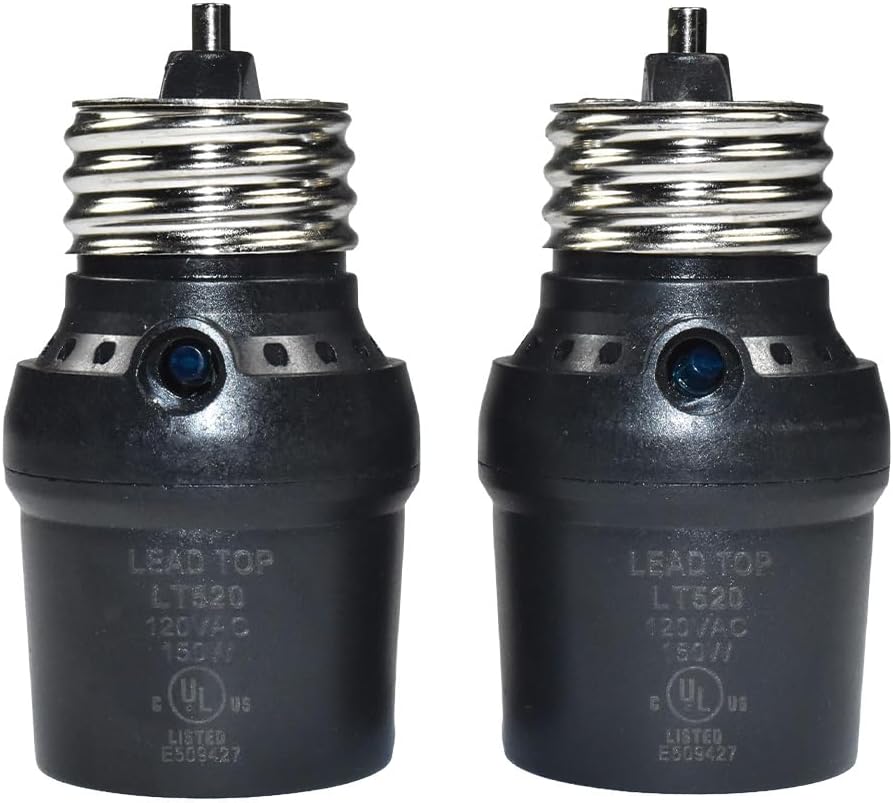
The spring-loaded contact design ensures a secure connection while the 360-degree rotation allows easy alignment to natural light sources. It supports bulbs up to 150 watts making it suitable for standard outdoor porch and garage lights.
While it lacks advanced features like timers or dual sensors it delivers the core dusk to dawn experience reliably. Its compact size means it does not alter the appearance of your existing fixtures significantly.
Homeowners on a budget looking to automate multiple lights without spending much will find this 2-pack ideal. It is a practical solution for adding convenience to entryways and pathways without breaking the bank.
Upgraded design of spring-loaded central electrode allows the adjustable photocell sensor socket to be 360-degree rotated.
UL listed for safe use with maximum power up to 150W and works with standard E26/E27 base bulbs.
We may earn a commission when you buy through this link, at no additional cost to you.
This model delivers top-tier performance with a flawless 5.0-star rating reflecting exceptional reliability and build quality. It is designed for demanding outdoor environments where consistent operation is critical.
We may earn a commission when you buy through this link, at no additional cost to you.
Its weather-resistant design withstands temperatures from -40°C to +70°C and high humidity making it ideal for harsh climates. The 360-degree sensor ensures optimal light detection regardless of fixture orientation or placement.
While it commands a higher price the durability and safety certifications justify the investment for long-term use. It offers the same core automation features as others but with superior environmental resilience.
Those prioritizing longevity and reliability in exposed outdoor locations should choose this premium option. It transforms standard fixtures into robust automated lights without requiring additional wiring or complex setup.
Rated to operate in extreme temperatures from -40°C to +70°C and withstanding humidity up to 96%.
UL listed with power consumption of under 0.7 watts at 120VAC for energy efficient operation.
We may earn a commission when you buy through this link, at no additional cost to you.
This model features two photocell sensors to ensure at least one faces natural light preventing false triggers. It has earned a 4.6-star rating for its smart design and reliable performance in varied lighting conditions.
We may earn a commission when you buy through this link, at no additional cost to you.
The dual symmetrical design increases detection reliability compared to single sensor models. Its off-delay function prevents flickering caused by sudden light changes making it stable for porch or garage use.
Though it lacks a timer it covers the basic needs of dusk to dawn automation efficiently. The heat-resistant material ensures longevity even with frequent bulb changes or high wattage usage.
Buyers wanting enhanced detection without complex setup will appreciate the dual sensor approach. It is a solid mid-range option for those seeking improved reliability over standard single-sensor sockets.
Dual symmetrical design ensures at least one sensor faces natural light preventing obstruction and improving detection.
Equipped with off delay feature to prevent flickering caused by frequent exposure to unnatural light sources.
We may earn a commission when you buy through this link, at no additional cost to you.
This unit offers full 360-degree rotation allowing precise alignment to any light direction. It holds a 4.5-star rating for its flexible design and durable construction.
We may earn a commission when you buy through this link, at no additional cost to you.
The retractable spring contact ensures tight connections while the off-delay prevents nuisance flickering. Its heat-resistant PET material supports long-term use even with frequent bulb changes or high heat.
While it lacks advanced timers its mechanical flexibility gives it an edge for tricky placements. It works well with standard bulbs and fits most existing fixtures without modification.
Users needing maximum sensor orientation control will value this model's adjustability. It is a practical choice for fixtures where sunlight direction changes with seasons or time of day.
Adjust the light sensor to face the sun's direction with a 360-degree range ensuring no need to worry about looseness.
Retractable spring contact design ensures tight connections and adjusts the sensor direction easily.
We may earn a commission when you buy through this link, at no additional cost to you.
This model provides a straightforward way to automate lighting with reliable dusk to dawn detection. It has earned a 4.4-star rating for its consistent performance and ease of use.
We may earn a commission when you buy through this link, at no additional cost to you.
The built-in sensor requires no programming and works immediately upon installation. Its off-delay function stops bulbs from flickering due to sudden light changes improving overall stability.
While basic in features it covers essential automation needs for most homes. The ETL listing ensures safety standards are met for household electrical use.
Those wanting a simple plug-and-play solution without advanced features will find this 2-pack useful. It is ideal for basic porch or entryway lighting where standard automation suffices.
No wiring and programming needed simply screw light bulb into dusk to dawn light sockets and attach to fixtures.
Equipped with delay OFF function to prevent bulbs from repeatedly flickering due to sudden light sources.
We may earn a commission when you buy through this link, at no additional cost to you.
This motion-activated socket provides hands-free lighting ideal for indoor utility spaces. It holds a 4.2-star rating for its functional design and ease of setup.
We may earn a commission when you buy through this link, at no additional cost to you.
The adjustable sensor head allows positioning to cover specific entry points like stairs or storage areas. Users can adjust time and sensitivity to suit their specific environment needs.
While limited to indoor use it excels where movement triggers are preferred over ambient light sensing. It works with standard E26/E27 bulbs making it easy to retrofit existing fixtures.
Homeowners looking to automate closets or basements without wiring will appreciate this motion-based approach. It offers a practical alternative to photocell sockets for interior lighting needs.
Motion Sensor Head can be adjusted 160 degrees left and right and also 160 degrees front and back for precise positioning.
Time Button adjustment sets duration and Lux Button sets ambient light level for accurate day and night detection.
We may earn a commission when you buy through this link, at no additional cost to you.
This socket uses infrared technology to detect motion and turn lights on automatically. It has a 4.0-star rating reflecting steady performance for straightforward indoor tasks.
We may earn a commission when you buy through this link, at no additional cost to you.
Users can adjust time and lux settings to prevent false triggers from ambient light. It converts ordinary bulbs into sensor lights with a simple screw-in process.
While it lacks advanced features its simplicity makes it effective for utility rooms. It works well in basements or corridors where consistent movement triggers are expected.
Those wanting basic motion automation for indoor spaces will find this a cost-effective choice. It offers convenience without the need for electricians or complex wiring.
The motion sensor detects when someone is approaching and utilizes infrared energy from humans as control signal source.
Can be used in basement pantry room storage room closet stairs corridors etc suitable for various demands.
We may earn a commission when you buy through this link, at no additional cost to you.
This 4-pack offers the same dual-sensor reliability as the 2-pack but in larger quantity. It maintains a 4.4-star rating for consistent performance across multiple units.
We may earn a commission when you buy through this link, at no additional cost to you.
The dual photocell design prevents obstruction issues ensuring one sensor always faces natural light. Its off-delay function minimizes flickering which protects bulb longevity.
While it lacks a timer the bulk format suits homeowners needing multiple fixtures automated simultaneously. The heat-resistant material ensures durability even with frequent bulb changes.
Those outfitting entire properties with automated lighting will find this pack efficient and economical. It combines reliability with bulk value for comprehensive home automation projects.
The 4-pack provides cost-effective coverage for multiple fixtures requiring simultaneous automation.
Two advanced built-in dusk-to-dawn sensors ensure lights turn on at dusk and off at dawn based on natural light levels.
We may earn a commission when you buy through this link, at no additional cost to you.
This model focuses on simplicity with a compact design that fits discreetly into fixtures. It has a 4.2-star rating for its straightforward functionality and easy installation.
We may earn a commission when you buy through this link, at no additional cost to you.
The 300-degree rotatable sensor allows users to avoid interference from nearby lights. It supports bulbs up to 150 watts making it compatible with most standard options.
While it lacks advanced features like timers it delivers reliable core automation at a low price. Its compact size ensures it does not alter the aesthetic of your fixtures.
Buyers looking for an affordable and unobtrusive upgrade will find this model suitable. It provides hands-free lighting for basic needs without adding visual clutter to outdoor spaces.
Rotatable photocell sensor allows you to set the detection angle precisely reducing interference from nearby lights or shadows.
The compact size blends into most fixtures and works best with a clear or open cover for optimal performance.
We may earn a commission when you buy through this link, at no additional cost to you.
Choosing the right light sensor socket depends on your specific needs for automation and environment. This guide outlines key factors to consider to ensure you select a model that meets your expectations.
Light sensor sockets use photocells to detect ambient light levels. Dual sensors offer better reliability by reducing blind spots from fixture obstructions. Single sensors are simpler but may require careful positioning to avoid false triggers.
Look for models with adjustable or rotatable sensors to optimize detection angles for your specific location. This ensures the socket responds correctly to natural light changes regardless of fixture orientation.
Some models include timers that keep lights on for a set duration even if sensor signals are inconsistent. Off-delay functions prevent flickering caused by sudden light changes like car headlights or passing shadows.
These features enhance stability and protect bulbs from frequent switching cycles. Consider whether you need these functions based on your local lighting conditions.
Ensure the socket supports your existing bulb types such as LED CFL or incandescent. Most models work with E26 or E27 bases which are standard in North America. Check the maximum wattage rating to avoid overloading the socket.
Matching the socket to your bulb requirements guarantees safe operation and consistent performance. Verify compatibility before purchasing to avoid returning incompatible products.
Outdoor sockets must withstand weather elements such as rain and temperature extremes. Indoor sockets often lack protective ratings and are designed for controlled environments. Confirm the product rating for outdoor exposure if installing outside.
Using the wrong type can lead to premature failure or safety hazards. Always check the product description for weather resistance and certification labels.
High-quality sockets use heat-resistant materials like PET or ABS to prevent melting under high loads. Look for certifications such as UL or ETL that indicate safety standards compliance.
Durable construction ensures longevity even with frequent bulb changes or environmental stress. Invest in a quality model to reduce replacement frequency and maintenance costs.
Most light sensor sockets require no wiring since they screw directly into existing fixtures. Check if tools are needed beyond a standard bulb replacement process to ensure easy setup.
Simple installation saves time and money compared to hardwired systems. Verify that your existing fixture supports screw-in sockets before purchasing.
Cost varies based on features such as dual sensors timers and weather resistance. Bulk packs often offer better value for multi-light projects but require higher upfront investment.
Balance your budget against necessary features to avoid overspending on unnecessary options. Consider total value over time including potential energy savings and convenience benefits.
To install turn off power to the fixture and screw out the old bulb. Screw the sensor socket into the fixture and replace the bulb ensuring it is not covered by opaque materials. This ensures the photocell receives natural light for accurate detection.
Position the sensor facing an open outdoor area away from other artificial light sources. Test the socket after installation by covering it temporarily to trigger activation. Adjust the angle if lights turn on unexpectedly due to nearby sources.
Regularly clean the sensor window to remove dust or insect debris that may block light detection. Inspect the socket for signs of weather damage if used outdoors. Replace the socket if performance declines to maintain reliable lighting automation.
Yes most models are compatible with LED bulbs as long as the wattage does not exceed the maximum rating. Ensure the LED bulb has a clear or non-frosted cover for optimal sensor detection. Check the product specifications to confirm compatibility before installation.
No opaque or frosted glass shades block the sensor from detecting natural light. It is recommended to use clear covers or open fixtures for accurate dusk to dawn detection. Using frosted glass may cause the light to stay on or off incorrectly.
Most photocell sockets operate on power from the light fixture so no batteries are needed. Some motion-activated models may require batteries for sensor functionality. Always check the product description for power source requirements before purchasing.
Yes but only models rated for outdoor use should be installed outside. Look for weather-resistant materials and safety certifications like UL or ETL for outdoor installations. Indoor models may fail or pose risks if exposed to rain or extreme temperatures.
Flickering often occurs due to rapid light changes affecting the sensor. Use models with an off-delay function to stabilize operation after triggering. Adjust the sensor angle to avoid detecting nearby artificial light sources that cause false triggers.
Yes they can operate independently without interference if installed in separate fixtures. Ensure each is positioned correctly to avoid sensing each other's lights. This allows automation across multiple outdoor areas without complex wiring.
Our top picks include the Light Sensor Socket with Timer for versatility and HQRP for premium durability. Each model offers reliable automation suitable for different installation environments and budget levels.
Prioritize features like dual sensors or timers if you experience inconsistent natural light or weather. Ensure compatibility with your bulbs and fixtures to avoid installation issues.
Prices and availability change frequently so verify current details before making your final decision. These sockets offer an easy way to enhance home safety and efficiency without complex wiring.