
G650-04686-01 Coral M.2 Accelerator B+M Key
5.0Editor score
4 TOPS Peak Performance
Debian Linux Compatible
TensorFlow Lite Support
Discover the top M2 Accelerator Cards for AI and storage. This guide compares performance, compatibility, and features to help you choose the right hardware.
M2 Accelerator Cards are essential for boosting AI inference and storage speed in modern computing setups. They offer specialized processing power and efficient data handling for demanding workloads.
We evaluated ten leading models based on performance metrics, compatibility, power efficiency, and developer support. Each product was analyzed to ensure it meets rigorous standards for reliability and speed.
Every pick highlights key strengths and ideal use cases for different users. Please note that pricing and availability can change frequently, so verify details before purchasing.
5.0Editor score

4.3Editor score

4.6Editor score
This table provides a side-by-side overview of all ten products, highlighting key specifications and features to help you compare them easily.


The MX3 M.2 AI Accelerator stands out as a top choice for users needing high-performance vision processing. It delivers exceptional efficiency while integrating smoothly into existing Linux systems.
We may earn a commission when you buy through this link, at no additional cost to you.
Its specialized hardware is optimized for demanding AI workloads, making it ideal for computer vision tasks. The included SDK simplifies deployment, allowing developers to focus on innovation rather than configuration.
While the performance is strong, users should note the hardware requirements for specific boards like Raspberry Pi 5. This ensures optimal operation but may limit flexibility for some setups.
Buyers seeking a reliable AI accelerator for edge computing will find this card well-suited. It balances power and efficiency effectively for professional and hobbyist applications.
The comprehensive SDK reduces setup time and provides tools for efficient model deployment.
Low power consumption ensures sustained performance without excessive heat or energy costs.
We may earn a commission when you buy through this link, at no additional cost to you.
This adapter features two Google Edge TPU accelerators, delivering robust ML inference capabilities in a compact module. It is ideal for applications requiring simultaneous model processing.
We may earn a commission when you buy through this link, at no additional cost to you.
With 8 TOPS total performance and 2 TOPS per watt efficiency, it handles vision tasks effectively. The dual TPU setup allows for parallel processing of different models or streams.
The M.2 2230 E-key form factor may not fit all slots, so compatibility checks are essential. This specificity ensures high-speed communication but limits universal installation.
Developers building edge AI systems will appreciate the balanced performance and power efficiency. It is a solid choice for projects needing dedicated ML acceleration.
Dual TPUs enable running multiple models simultaneously for complex workflows.
Small size fits easily into tight spaces without sacrificing processing capability.
We may earn a commission when you buy through this link, at no additional cost to you.
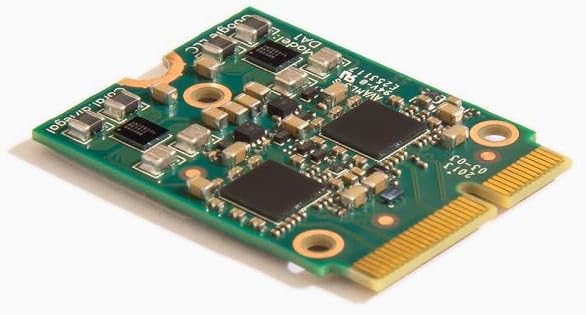
The Coral M.2 Accelerator offers exceptional value with its powerful Edge TPU coprocessor. It delivers 4 TOPS for rapid inference, making it a favorite for developers on a budget.
We may earn a commission when you buy through this link, at no additional cost to you.
It integrates seamlessly with Debian-based Linux systems, supporting TensorFlow Lite models out of the box. This eliminates the need for complex model recompilation from scratch.
While performance is high, the card is optimized for Linux environments which might limit Windows users. However, for embedded projects, it is highly efficient and reliable.
Budget-conscious buyers looking for reliable AI acceleration will find this card ideal. It provides the perfect balance of cost and capability for learning and production.
Built-in support for Debian makes setup straightforward for common Linux distributions.
Affordable price point makes advanced ML accessible to more users and projects.
We may earn a commission when you buy through this link, at no additional cost to you.
This expansion card is designed to enhance storage and network performance significantly. It supports two high-speed NVMe SSDs alongside a dedicated 10GbE port for fast data transfer.
We may earn a commission when you buy through this link, at no additional cost to you.
Ideal for QNAP NAS users, it allows for flexible caching and storage options. The 10GbE port ensures that network throughput does not become a bottleneck.
While powerful, compatibility is primarily focused on QNAP ecosystems which limits general use. Users need to verify their system supports this specific expansion card.
Network administrators and NAS owners seeking to upgrade will find this card valuable. It provides a straightforward way to boost both storage and connectivity speeds.
NVMe caching and 10GbE networking provide rapid access to stored data.
Compatible with Windows, Linux, and QNAP operating systems for broad utility.
We may earn a commission when you buy through this link, at no additional cost to you.
The Rocket 1604L supports up to four M.2 NVMe devices natively through PCIe 5.0. This ensures maximum bandwidth and future compatibility for high-performance storage needs.
We may earn a commission when you buy through this link, at no additional cost to you.
Its ability to work with Intel, AMD, and ARM platforms makes it versatile for various computing environments. Native support for mainstream operating systems simplifies installation and use.
Investing in this card requires a compatible PCIe 5.0 motherboard to realize its full potential. Without such hardware, the benefits may not be fully utilized.
Users planning upgrades or building future-proof workstations should consider this card. It offers unmatched capacity and speed potential for data-intensive workflows.
PCIe 5.0 delivers double the bandwidth of previous generations for faster transfers.
Support for multiple architectures ensures wide usability across different setups.
We may earn a commission when you buy through this link, at no additional cost to you.
This adapter allows two Coral M.2 Accelerator Cards to operate simultaneously within a single PCIe slot. It transforms standard systems into powerful dual-TPU workstations for advanced analytics.
We may earn a commission when you buy through this link, at no additional cost to you.
With a PCIe Gen3 x4 interface split into two Gen2 x1 lanes, it ensures stable communication between cards. The included heatsink prevents overheating during intensive processing tasks.
Users need to purchase two separate Coral cards to utilize this adapter fully. This adds to the initial cost but provides scalability without multiple slots.
Teams requiring high-volume AI inference will benefit from this scalable design. It maximizes existing hardware investments effectively for growing workloads.
Single slot usage saves motherboard space compared to using separate PCIe slots.
Ideal for TensorFlow models and custom vision applications without complex setups.
We may earn a commission when you buy through this link, at no additional cost to you.
This card supports four NVMe drives with server-grade reliability, delivering up to 512 Gbps bandwidth. Active cooling ensures unthrottled transfer speeds for critical data transfers.
We may earn a commission when you buy through this link, at no additional cost to you.
The two-phase power solution supports high-wattage drives, preventing performance drops during heavy usage. RAID functions across platforms enable bootable arrays for redundancy.
Installation requires a 6-pin power connector which may not be available on all motherboards. Additionally, the large heatsink demands physical space within the chassis.
Enthusiasts and professionals needing massive storage speed should consider this card. It is robust enough for workstations requiring consistent high-throughput operations.
Active fan reduces SSD temperatures to prevent thermal throttling under load.
Supports bootable RAID arrays across different platform configurations.
We may earn a commission when you buy through this link, at no additional cost to you.
Powered by the Hailo-8 processor, this module delivers 26 TOPS for unmatched edge inferencing. It supports multiple streams and models simultaneously, ideal for complex vision tasks.
We may earn a commission when you buy through this link, at no additional cost to you.
With typical power consumption of 2.5W, it is efficient even for demanding workloads. It supports frameworks like TensorFlow and PyTorch, easing integration for developers.
The module-only design requires proper housing or a compatible carrier for installation. While versatile, this may add complexity to physical deployment.
Advanced users needing high-power AI in a compact form will find this module ideal. It balances premium performance with exceptional energy efficiency.
Handles multiple video streams simultaneously for comprehensive real-time analysis.
Supports major frameworks allowing flexible model deployment and training.
We may earn a commission when you buy through this link, at no additional cost to you.
This variant of the Coral accelerator focuses on industrial reliability with a wide operating temperature range. It integrates Edge TPU for efficient ML inference in harsh environments.
We may earn a commission when you buy through this link, at no additional cost to you.
Support for Windows and Linux ensures flexibility across different application scenarios. The 2 TOPS per watt efficiency makes it ideal for energy-sensitive deployments.
Users must have a compatible A+E key slot which limits some older systems. However, its durability makes it worth the requirement for robust applications.
Professionals deploying AI in factories or outdoor settings will appreciate this reliability. It offers consistent performance without the need for additional cooling.
Built to withstand extreme temperatures ensuring reliability in tough conditions.
Compatible with both Linux and Windows for broader project flexibility.
We may earn a commission when you buy through this link, at no additional cost to you.
This adapter is designed exclusively for Coral Dual Edge TPU modules to maximize inference performance. It ensures proper electrical alignment and secure physical mounting for stability.
We may earn a commission when you buy through this link, at no additional cost to you.
With upstream and downstream bandwidth optimization, it maintains high throughput during data transfers. The included mounting screw prevents vibration issues in industrial settings.
Users must ensure they have specific Coral TPU modules as it is incompatible with other devices. This specificity prevents buyer errors but reduces versatility.
Developers building custom AI rigs with Coral modules will find this adapter essential. It provides the necessary interface for reliable dual-TPU operations.
Screw-in fixation ensures stability in environments with vibration or movement.
Gen2 lanes split correctly to maintain full throughput for dual units.
We may earn a commission when you buy through this link, at no additional cost to you.
Selecting the right M2 Accelerator Card depends on your specific workload, compatibility, and performance needs. Understanding these factors ensures you choose hardware that delivers maximum value.
The total number of Tera Operations Per Second (TOPS) determines how quickly the card can process ML models. Higher TOPS ratings generally mean faster inference times and better handling of complex tasks.
Look for cards with at least 4 TOPS for basic vision tasks and higher for multi-stream processing.
M2 cards come in various key configurations such as M-key, B-key, A+E-key, or E-key. Ensuring your motherboard or single-board computer supports the required key type is critical for physical installation.
Always verify the physical slot and PCIe lane requirements before purchasing to avoid compatibility issues.
Most accelerators are optimized for Linux distributions like Debian or Ubuntu, but some support Windows. Check if the software stack matches your development environment.
Linux support is often more comprehensive for AI tools and drivers.
Energy-efficient cards consume less power per TOPS, which is vital for edge devices or battery-operated systems. Look for specs indicating watts per TOPS.
Efficiency ensures sustained performance without overheating or high energy costs.
A good SDK simplifies model compilation and deployment. Some providers offer extensive documentation and pre-compiled models for common frameworks like TensorFlow.
Strong SDK support reduces development time and troubleshooting.
Passive cooling is common, but active heatsinks or fans help maintain performance under load. Proper thermal design prevents throttling during long inference sessions.
Consider cards with dedicated cooling solutions for continuous operation.
Choose hardware that allows adding more compute units later. PCIe Gen5 or Gen4 support may offer longer relevance as models grow more complex.
Future-proofing ensures your investment remains useful for longer periods.
Consider whether you need image classification, object detection, or audio processing. Some accelerators specialize in vision while others are more general purpose.
Select a card aligned with your primary application tasks.
Install the card carefully into the appropriate slot ensuring the pins align correctly. Secure it with screws or locking mechanisms to prevent disconnection during operation.
Install the necessary drivers and SDK provided by the manufacturer. Follow documentation to compile and deploy models specifically designed for the accelerator.
Monitor temperature and power consumption regularly. Clean dust from heatsinks and ensure adequate airflow to maintain long-term reliability.
M2 AI accelerators contain dedicated processors for running machine learning models locally. Storage cards focus on holding data using flash memory without specialized compute capabilities. They serve different purposes in system architecture.
Most accelerators require Linux distributions like Debian or Ubuntu for full support. Some offer limited Windows compatibility but drivers and SDKs are often optimized for Linux environments. Check manufacturer documentation.
Check your motherboard or device manual to identify available slot types. Common types include M-key, B-key, and E-key which are not interchangeable. Mismatched keys prevent physical installation.
Some setups allow multiple accelerators using PCIe splitters or dedicated adapters. This requires sufficient PCIe lanes and power. Ensure your platform supports multi-device configurations for scaling.
Specific models are designed with Raspberry Pi 5 HAT interfaces or M-key slots. Always verify manufacturer compatibility lists before purchasing to ensure proper connection and power.
TOPS stands for Tera Operations Per Second and measures AI processing speed. Higher TOPS means faster inference for tasks like object detection. It helps compare performance across different models.
Most M.2 powered cards draw energy directly from the slot. However high-performance PCIe cards may need extra power connectors. Verify the power requirements listed in product specs.
You typically install drivers and SDKs provided by the manufacturer. Follow their documentation to compile models and deploy them to the device. Ensure OS compatibility before installation.
The MX3 M.2 AI Accelerator leads as the best overall choice for its balance of performance and efficiency. The Coral variants offer excellent budget options for developers needing reliable inference.
When choosing prioritize compatibility with your system's slot type and operating environment. Ensure the hardware supports your specific AI workloads and power requirements.
Verify current pricing and availability as details may change. Selecting the right card today ensures you meet your computational needs effectively and reliably.